“Getting out of the coalition in such a hurry does not serve Romania” – Daniel Daianu, harsh warning about the political crisis

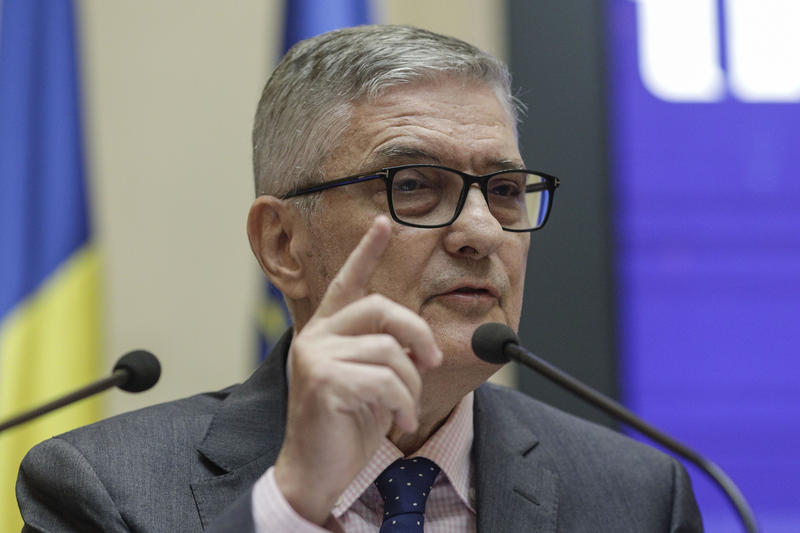
Daniel Daianu, the president of the Fiscal Council, sounded the alarm during a conference on economic topics organized by the Bursa newspaper: Romania is facing a political crisis that he considers “avoidable”, but also a fiscal crisis. His message: a solution must be found urgently to limit the damage to the country.
A coalition broken up with scandal, at the worst time
Referring to the breakup of the governing coalition, Daianu was blunt: “If it was considered at the beginning that the ideologies were not close enough, they should not have gotten married. But to come out with so much bickering and scandal after agreeing on a program does not serve Romania.”
The President of the Fiscal Council did not want to prescribe concrete political solutions – the institution he leads does not have this mandate -, but he emphasized that the perception of the financial markets towards Romania is, at the moment, “very bad”. And that, in addition to the external shock and fiscal pressures, the country is now also facing a political crisis “which was avoidable, like the war”. By the way, the costs at which Romania borrows have exceeded 7% after the political crisis, and each additional percentage point to the cost of the debt means 240 million euros.
His conclusion was sober: “A solution must be found that limits the damage to the country.”
The deficit – Romania's structural curse
Daianu's intervention focused largely on Romania's fiscal-budgetary situation, which he described as one of the most fragile in the European Union.
In 2024, the budget deficit exceeded 9% of GDP, while the economic growth was only 0.7% – “basically, we were very close to stagnation, although the economy had been pumped a lot”, said Daianu. Wages and pensions were increased, but the money went into the deficit, not into real development.
The target for 2025 is a deficit of 6.2% – which would represent a return to the level of 2023. “You understand what happened in 2024,” he stressed. And the road does not stop there: the deficit must be gradually brought to 3% by the end of 2026.
Why Romania is not Japan
Dăianu explained why Romania's vulnerability is deeper than it seems at first glance: unlike other states with high debts, Romania not only has a high budget deficit, but also a significant current account deficit – a double imbalance that directly exposes it to dependence on international capital markets.
“We are not Japan, where citizens buy all government bonds. We invest in international markets,” he explained. That means any deterioration in risk perception translates immediately into higher funding costs.
If in 2026 the fiscal correction stopped at 6%, public debt could rise to 80% of GDP in a few years. “And we would turn everything upside down”, Dăianu warned.
What else can Romania do: collection, not new taxes
The economist ruled out tax increases as a medium-term solution – “that would be a lethal attitude for any government” – instead betting on radical improvements in collection.
The VAT collection gap is around 30%, but the profit tax gap exceeds 40% – figures that, in his opinion, show that the problem is not the level of taxes, but the fraud of the budget. “The public budget is a cash cow – not only by state-owned companies with chronic losses, but also by private enterprises that milk the budget through various mechanisms.”
Proposed solutions: radically reformed insolvency legislation, firmer account freezes and an institutional coalition – ANAF, judiciary, honest business environment – to destroy the “ecosystem of corruption”. Daianu went so far as to say that reducing the deficit is “a matter of national security”.
Defense – an unavoidable additional burden
At the end, Dăianu drew attention to the increase in defense spending, from 2.3% of GDP currently to at least 3.5% – an additional pressure of more than one percentage point of GDP, against the background of an already overburdened budget. Any talk of 5% of GDP for defense, circulated at the NATO level, seemed, for now, impossible to manage without serious consequences.