After a year full of surprises and turbulence, the airline industry is hoping that 2026 will bring something rare: a period of relative calm. Whether that will happen remains to be seen, but even in a calmer year, travelers can expect significant changes: from long-promised premium upgrades starting to become widely available, to more pleasant and comfortable airports, to continued airline consolidation that will reshape the market.
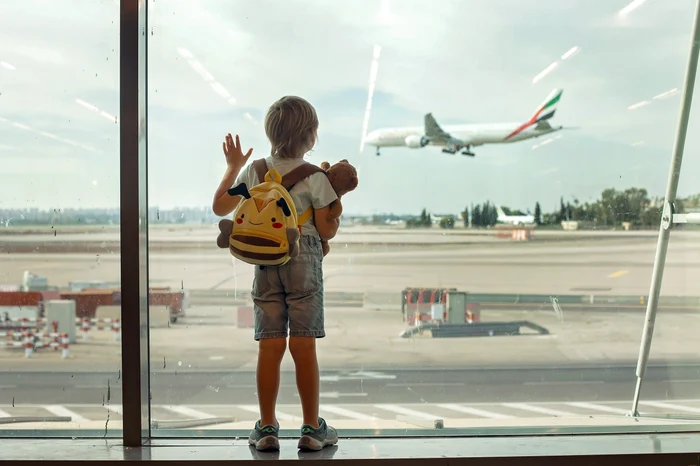
Growing demand for premium travel/PHOTO: Shutterstock
Added to this are geopolitical changes and the rising cost of living, which are putting pressure on travel budgets globally, shaping a far from boring 2026, reports CNN.
“Premiumization” in full swing
“The premium experience — things like in-cabin products, luxury airport lounges and more direct routes — is the best it's been in decadesi,” travel deals website Going wrote in its 2026 predictions.
From American Airlines to JetBlue, Southwest Airlines and Swiss Air, long-promised premium products—from lounges to seats—will become widely available, rather than limited to a few aircraft. These investments will provide travelers willing to pay – or redeem points – for more stylish and comfortable seats at the front of the plane.
American Airlines Chief Financial Officer Devon May described December 2026 as an “execution” year for initiatives unveiled years ago. The carrier introduced its long-awaited new Flagship business and premium economy seats on a Boeing 787 mid-year and on the Airbus A321XLR in December. But by this time next year, the new deals will be available on dozens of planes, including American's largest plane, the Boeing 777-300ER, which flies routes around the world.
“We are excited to be a premium global airline,” May stated. “We think that's where demand trends will continue to go.”
IATA data shows solid demand for premium travel, especially in Asia, Europe and North America, with premium traffic consistently growing faster than economy. Even Southwest, known for its egalitarian approach, will start selling extra-legroom seats for the first time in January, and CEO Bob Jordan has hinted at expanding the premium offering, including through airport lounges.
Friendlier and more attractive airports
Air travel is in the midst of a golden age for airport lounges. Airlines are trying to one-up each other with increasingly refined spaces, like JetBlue's new BlueHouse in New York. Credit card companies invest heavily to attract new customers. The result is a richer and more accessible airport lounge offer than ever before.
Airports follow suit. Gone are sterile hallways with mediocre shops and waiting areas with rows of identical seats. Local food and retail outlets, art-filled terminals, varied seating options and, in some cases, outdoor patios have sprung up.
Global architecture firm Gensler refers to this vision as the “living room for all.” The concept recognizes that travelers spend more and more time in secure areas of airports, which offer improved facilities, a more attractive design and, inevitably, numerous opportunities to spend money.
“The airport area of the future will be much more than just a mall, but a variety of spaces that intertwine and give passengers a little more freedom to choose their own adventure”said Ty Osbaugh, aviation leader and principal at Gensler.
Airports in Denver, Portland, OR, and San Francisco already feature many of these ideas. New York's JFK and Seattle-Tacoma airport terminals, due to open in 2026, are expected to follow suit.
Mergers and consolidations that change the landscape
Air France-KLM and Lufthansa in Europe, Korean Air in Asia and Alaska Airlines in the US are preparing mergers that will significantly influence travel. Air France-KLM aims to take majority control of SAS Scandinavian Airlines, Lufthansa integrates ITA Airways and Korean Air completes the integration of Asiana Airlines. In the US, Alaska Airlines is nearing completion of its merger with Hawaiian Airlines.
On the other hand, the future of Spirit Airlines remains uncertain, as does the possible acquisition of Sky Airline by the Abra group in Latin America.
Geopolitics remains a decisive factor
The decisions of world leaders will continue to influence travel. In the EU, the ETIAS program will require visa-free travelers to register and pay a €20 fee. In the US, the Trump administration has proposed requiring ESTA applicants to provide five years of social media and 10 years of email histories, which could affect international tourism. Conflicts in Ukraine and the Middle East will continue to influence routes and ticket prices.
Spending on premium travel continues to rise, but lower-income passengers are feeling the cost pressure. This supports the premium market, but slows down growth in the economy segment.
More moderate air traffic growth
All these factors lead to a more moderate increase in air traffic in 2026. IATA estimates passenger growth of 4.9%, lower than the forecast of 5.2% for 2025. At the same time, the companies will launch interesting routes: Alaska Airlines will fly to Rome, Reykjavik and London, and United Airlines will add destinations such as Santiago de Compostela and Split. Other European companies such as Aegean, Iberia and Air Canada will inaugurate new flights on long routes, including non-stop.
2026 is thus shaping up to be a year of adjustment and innovation for the airline industry, with more comfort for premium payers, more welcoming airports and mergers that will reshape the map of international travel.
Life or baggage? The behavior that alarms airlines
Mobile phone footage of emergency evacuations shows a behavior that is increasingly worrying the aviation industry: passengers stopping to retrieve their luggage from overhead compartments instead of leaving the aircraft immediately, The Telegraph writes.
The phenomenon, considered extremely dangerous, has led airlines to seek the help of psychologists to understand why more and more people are choosing to risk their lives — and those of those around them — for personal items.
The International Air Transport Association (IATA) warns that this type of behavior could inevitably lead to tragedies. The organization is to launch, in the coming months, a study dedicated to the psychological mechanisms underlying this reaction.
“It is a dangerous phenomenon, which occurs more and more frequently during evacuations,” said Willie Walsh, director general of IATA and former head of British Airways. “The images are extremely disturbing. It's just crazy. There is nothing in your luggage more important than life.”
Safety rules call for the complete evacuation of an aircraft within a maximum of 90 seconds
Safety rules call for a full evacuation of an aircraft in no more than 90 seconds, using only half of the exits. In reality, this goal is far from being achieved, says Nick Careen, IATA's head of safety and security.
The problem became apparent after analyzing video footage of passengers going down the exit chutes or staggering out of the plane with their luggage in their hands. “Fortunately, there have been no casualties so far, but our goal is to prevent such a scenario,” Careen said.
A recent example is a Delta Air Lines plane that overturned on landing at the Toronto airport in February with 80 people on board. 21 of these were injured. “The plane skidded and overturned on the runway, and yet there were images of passengers fleeing with their suitcases,” the IATA official explained.
He pointed to the contrast between the urgency of the situation and the reaction of passengers, with flight attendants usually shouting at the top of their voices, asking people to leave the aircraft immediately and leave everything behind.
Changing travel habits
One factor that could contribute to this behavior is changing travel habits: more and more passengers prefer cabin luggage, which is “handy” in moments of panic. “Laptop, electronic devices, personal things are right above your head. It's a temptation,” explained Careen.
The IATA study will also look at whether passengers act individually or if a herd effect occurs, where more people take their bags after seeing the first person do so. The research will also look at cultural differences in compliance with safety rules.
“In Japan, passengers get off the plane immediately. In North America, we see much more frequent baggage claim delaysCareen said, adding that US aviation authorities are also alarmed by situations where people cross the airport runway with suitcases after evacuation.
For airlines, the stakes are clear: understanding this behavior could make the difference between a successful evacuation and tragedy.