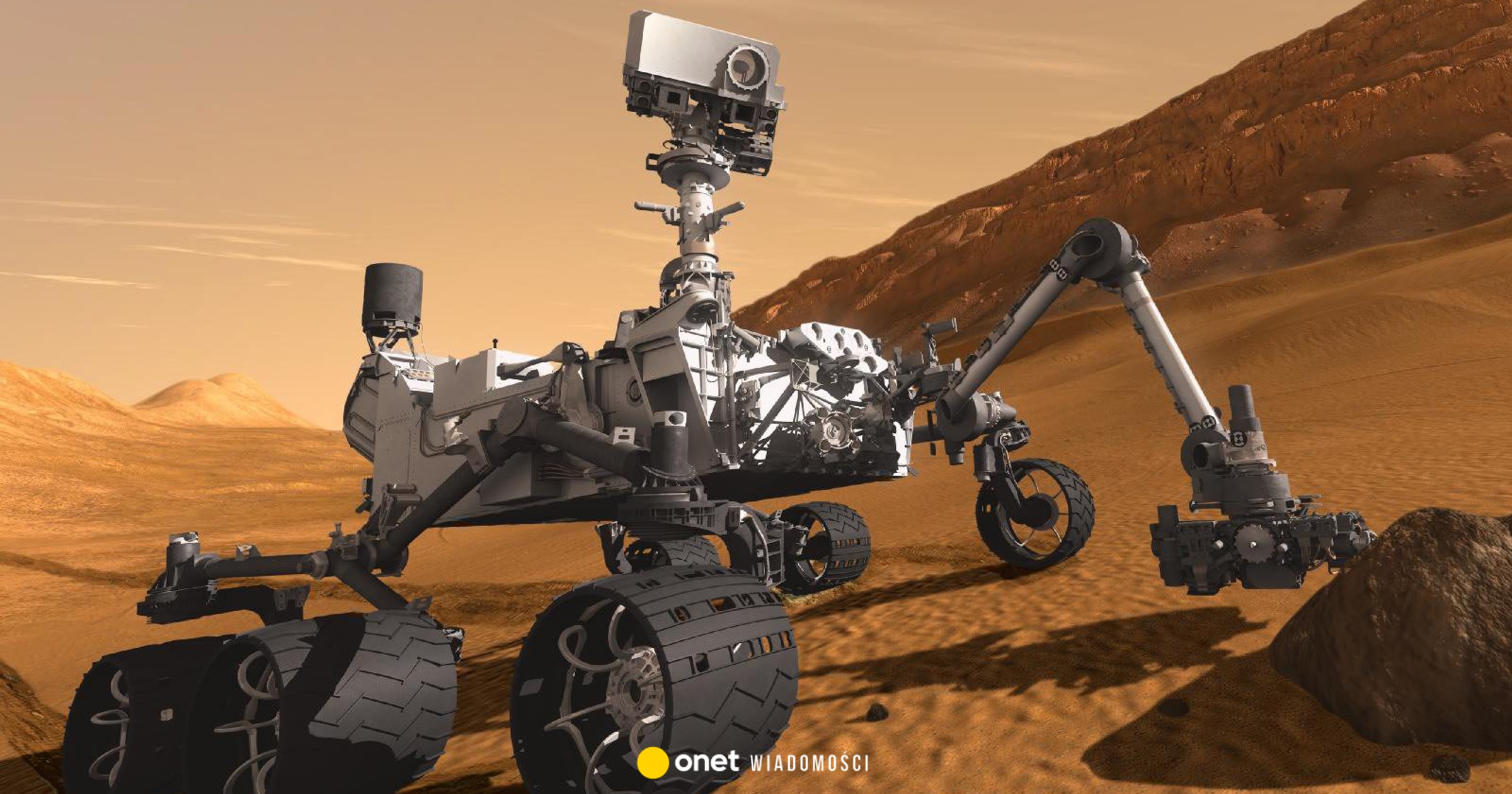
The research is being carried out in the Gale Crater, in the Glen Torridon region, which may have supported ancient biological activity. The SAM instrument used the TMAH reagent to detect more than 20 organic molecules in 3.5 billion-year-old clay sandstones, we read in Nature Communications.
These include compounds containing nitrogen and sulfur, similar to those that preceded the emergence of life on Earth. However, scientists do not know whether their source was biological or purely geological processes. The results suggest that Mars has preserved a greater diversity of organic matter than previously thought, despite billions of years of radiation and diagenesis.
Life on Mars. This is how long large organic molecules can survive
The TMAH experiment shows that large organic molecules can survive on the Martian surface for long periods of time. This increases the chances of detecting possible biosignatures in future studies. Scientists emphasize that subsequent generations of instruments will be able to extract and analyze such compounds more effectively. Ultimately, Curiosity's discoveries expand the catalog of known Martian organic molecules and confirm the presence of macromolecular carbon on the Red Planet.