The new secret weapon of the Ukrainian F-16s. Why Russian missiles are shot down one after another


The Ukrainian Air Force announced that it had intercepted 34 of the 35 cruise missiles fired by Russia at Ukrainian cities on the night of December 22-23 – a success rate of about 97 percent.
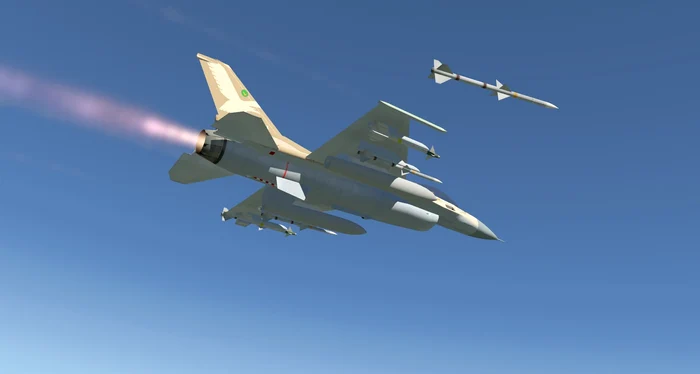
F-16 plane/PHOTO:X
According to Colonel Iurii Ihnat, spokesman for the air force, most of the missiles were shot down by recently introduced F-16 aircraft from European NATO member states.
The result marks a significant improvement in air defense and highlights the role of new equipment that greatly increases the capabilities of these aircraft.
Modernized F-16s, at an intense pace of operations
Ukraine has so far received about 50 of the approximately 90 F-16s promised in 2023 by a consortium of Belgium, Denmark, the Netherlands and Norway. Since the first combat missions in August 2024, four machines have been lost in accidents or shot down.
The remaining aircraft are in heavy use: jamming Russian radars, hitting ground positions with satellite-guided munitions, and patrolling to intercept cruise missiles and Shahed drones. New sensor systems installed recently seem to have increased their effectiveness.
What do Sniper pods add?
In early December, the first images appeared showing Ukrainian F-16s equipped with under-fuselage Sniper targeting pods. These systems include optical and infrared cameras as well as a laser designator.
Although the aircraft's main radar remains a key element, the Sniper pod adds an important advantage: it is a passive sensor that does not emit detectable signals. Thus, the pilot can operate with the radar off, reducing the risk of being located, but still identifying and engaging targets.
More effective and cheaper shots
The integrated laser in the Sniper pod allows the use of laser-guided weapons. Once a cruise missile or drone is detected, the pilot can “mark” the target with the laser, guiding the munition with high precision.
The first images of Sniper-equipped F-16s also show launchers for APKWS missiles – laser-guided missiles with a range of up to 11 kilometers. They are considered particularly suitable for intercepting drones and cruise missiles, being much cheaper than classic air-to-air missiles.
A Shahed drone is estimated to cost around $50,000. An AIM-9 air-to-air missile can exceed $500,000, while an APKWS missile costs around $35,000 – one of the few options in the Ukrainian arsenal cheaper than the target it destroys.
A new ability: hit moving targets
Equipping Sniper pods also opens up other possibilities. In 2024, the UK promised Ukraine Paveway IV guided bombs, which use mainly laser guidance, with GPS and inertial systems as backup.
Unlike GPS-guided bombs only, which hit fixed coordinates, the Paveway IV can track a laser beam, allowing it to attack moving targets. This includes convoys of vehicles, mobile air defense systems or even ships.
So far, no images have emerged of Ukrainian F-16s equipped with such bombs. But with the introduction of Sniper pods, the combination could become operational in the near future.