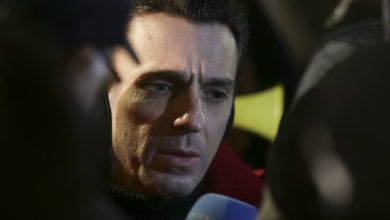
INTERVIEW. “If it wasn't like that, I wouldn't be staying here.” X-ray taken of Bucharest by a French journalist who has lived here for over 20 years


He came to Bucharest in 2003 to make a report and, shortly after, he thought of moving here. “Romanians have a way of being a little more relaxed in the face of a crisis. Yes, they say “fatalist”, but I don't like the adjective very much. It's something else… it's a kind of awareness that life goes through ups and downs,” says the journalist in an interview for HotNews.
- The French journalist Laurent Couderc has been living in the Capital for over 20 years. He teaches at the Faculty of Journalism, often rides the tram and “maps” the city as he walks. “I think it would be good to have politicians on public transport more often. It seems superficial, but it's not just a detail,” says the journalist in a discussion about Bucharest and the reasons that made him stay in this city.
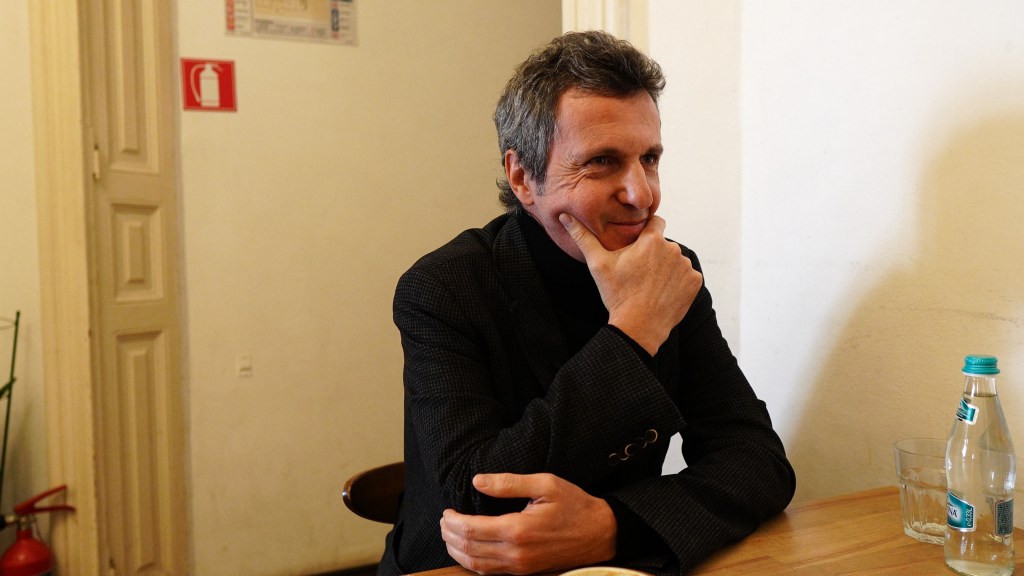
We meet Laurent Couderc in a cafe in the Popa Nan area, where he lives. Originally from the south of France, from Montpellier, Laurent Couderc fell in love with this neighborhood.
“I have to go back to Bucharest”
He arrived in Romania for the first time in 2003, to document a report about economy, politics and society. He was 30 years old and only intended to spend a few weeks here. “We interviewed many people from the political world. It was a wide material, to see what Romania is, in fact, outside of what is known and outside of clichés.”
He returned to France, but something from that Bucharest, with problems “deeper than now”, continued to follow him. He pondered for months where he could work as a journalist in Europe, without initially having a specific country in mind. Then, one morning, he felt a certainty: “I have to go back to Bucharest.”
In Paris, he contacted French newsrooms interested in the region. That's how he became, in 2003, a freelance correspondent from Bucharest for L'Express and La Croix. And it stayed here.
Laurent Couderc is a lecturer at the Faculty of Journalism in Bucharest, director, since 2008, of the French-language publication Regard and producer of the show “Le micro du soir” on RFI Romania. Until 2022, he was president of the Francophone Press Union in Bucharest and worked as a freelancer for publications in France and Belgium, such as L'Express or the France Presse agency.
“I don't want friends calling me in the winter to tell me they don't have hot water”
Public transport is his place of observation and daily routine. He likes to go by tram the most. “When I'm on a trolley I notice. I don't sit on my smartphone, I look and listen curiously to what's happening around me. Public transport, for me, is always like a small sociological study of the city.”
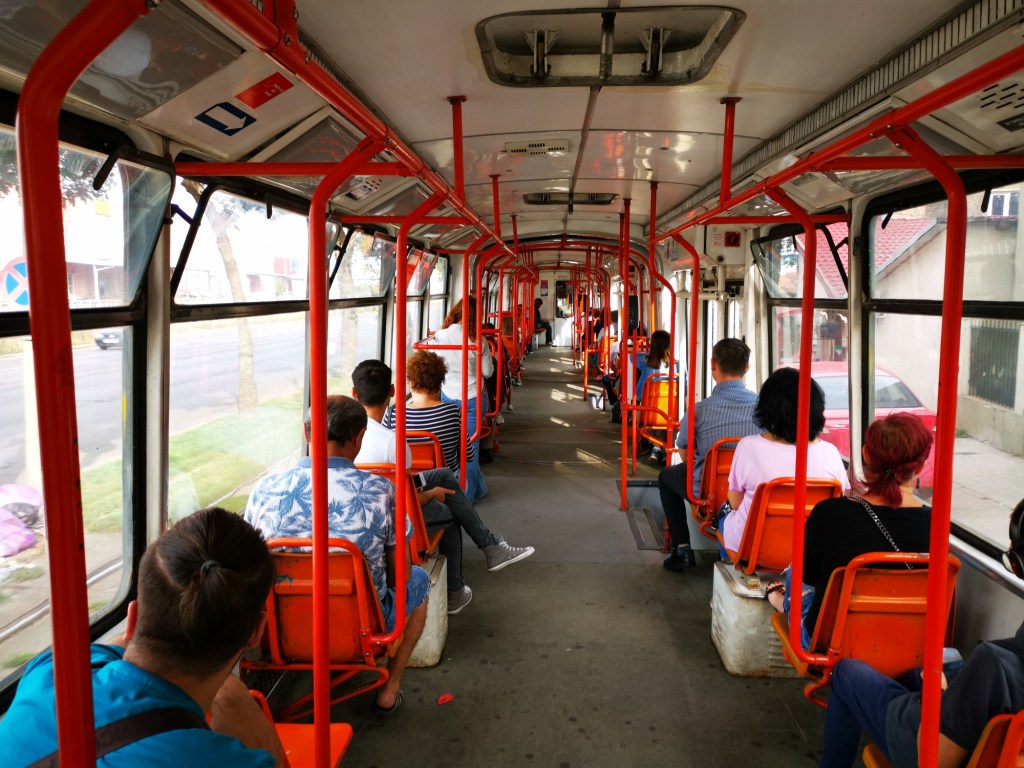
He says he would like to see politicians on public transport – not as a symbolic gesture, but as a sign that they understand the daily life of the city: “I think it would be good to have politicians on public transport more often. It seems superficial, but it's not just a detail.”
Among his priorities are very concrete things: green spaces, thermal infrastructure, traffic. “In terms of infrastructure, I don't want friends calling me in the winter to tell me they don't have hot water,” he says, although he is aware that the problem cannot be solved quickly. Public transport is his place of observation and daily routine. He likes to go by tram the most. “When I'm on a trolley I notice. I don't sit on my smartphone, I look and listen curiously to what's happening around me. Public transport, for me, is always like a small sociological study of the city.”
Regarding traffic, he maintains the same sincerity: he does not drive, but he understands the attachment of Romanians to the car. However, he believes that the city would be more breathable if part of the roads were made on foot or by public transport: “I understand that, for Romanians, the car is important. But let's also try public transport in Bucharest, let's walk more”.
He finds the city, in many places, pleasant to walk through, especially compared to Western European cities, with higher density: “In Madrid or Barcelona you have to “sneak” between people. I walk very easily in Bucharest and it's very pleasant.”
“We believe that the politicians “must do their job”, and we, the citizens, should take care of our lives and that's it”
Big changes in the city, he believes, start from small, individual behaviors. “If we take care of the green spaces and leave the car in the garage a little longer, we already have a completely different city.”
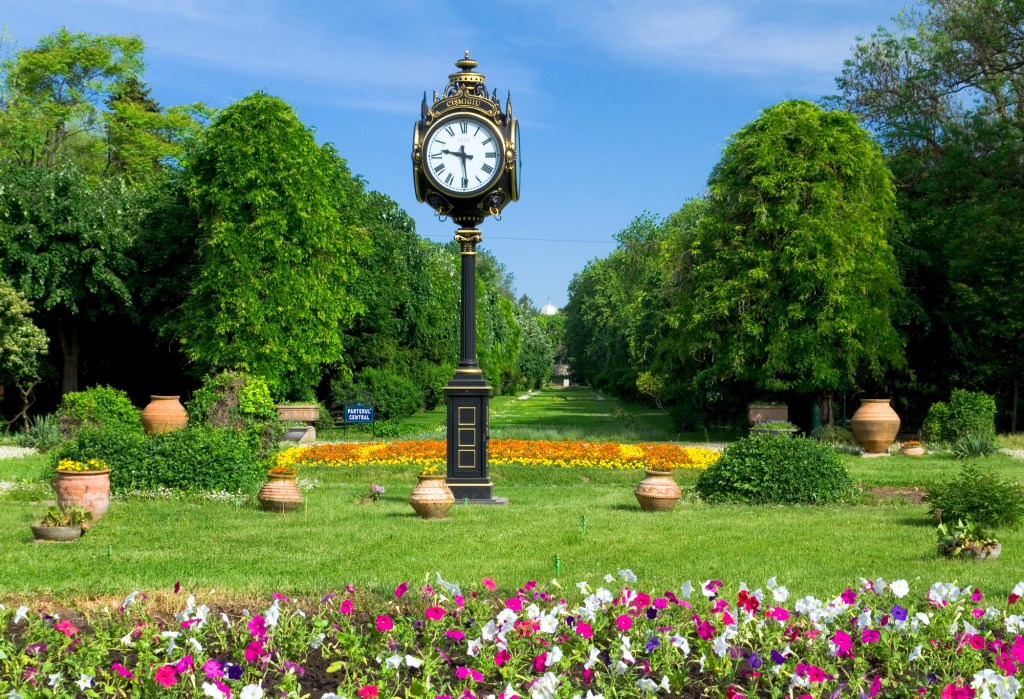
For Laurent Couderc, life in a city is not only defined by infrastructure or administration, but also by how people relate to each other – from short greetings in the neighborhood to how you behave in a crowded tram.
“I think that if this society respects itself a little more, we will end up having – and it is already the case – better politicians.”
When he says this, he's not referring to formal activism or public gatherings: “I'm not necessarily talking about civic involvement in an association. I'm talking about the moment when we leave the apartment or the house and have a certain 'way' of being.”
Couderc observes that very often the political class is perceived, in Romania, as a completely separate category from the rest of society. We believe, he remarks, that politicians “”have to do work”, and we, as citizens, have to take care of our lives and that's it”. In reality, he says, the distance is smaller than it seems: “Obviously, we need politicians to do their job, but politicians don't come from another planet: they are part of society, they went to school with others, to university with us.”
Moreover, he is intrigued by the Romanian ideal of the “savior” politician, the exceptional figure who comes from somewhere “above”: “There is this idea that a political leader is necessarily someone exceptional.”
In his opinion, expectations should be different: “The way people behave in their everyday life is also reflected in the way the political class looks.”
Extremism, he says, is not a Romanian peculiarity. It's something he sees all over Europe, and it doesn't surprise him that it's showing up here, too. “Extremism is growing everywhere in Europe, not just here,” he points out.
However, the way Romanians voted in the last elections was quiet. “The Romanians chose something else. I don't think I could live in a country where the leader would be from a radical, extremist party. It would have hit me very hard.”
“When we look around – what is happening in Bulgaria, where there is political chaos and the problem of organized crime; what is happening in Serbia, in Hungary; in Ukraine, obviously – Romania and the Republic of Moldova have, at the moment, two presidents who are not radicals, they are not extremists.”
“I felt Romanian”
During the discussion, Couderc says something that perhaps best sums up the 20 years spent here: “I felt Romanian!”. Not as an administrative identity, because he does not have Romanian citizenship, but as a relationship to the world, to the rhythm of life and to the way he reacts in certain situations.
He comes from a culture where rigor and perfection are strong norms both in the profession and in personal life. In Romania, he says, he discovered a different rhythm: “You feel a kind of relaxation, a kind of 'je-m'en-foutisme', as they say in French.”
It states, however, that the expression has two sides – one negative and one positive. On the positive side, this relaxation helped him to breathe, to live less in the tension of perfection: “Romanians have a way of being a little more relaxed in the face of a crisis. Yes, they say 'fatalist', but I don't really like the adjective. It's something else… it's a kind of awareness that life goes through ups and downs and that, again, 'that's it!'”
This attitude, he says, has served him well. It soothed areas of him that were too rigid, too controlled: “For me, it was rebalancing.”
The Romanian beaches that reminded him of the south of France
When he gets to talk about the places in Romania he has visited, Couderc chooses the Danube Delta.
“For me, personally, the place that seems the most beautiful, extraordinary, maybe also because it reminds me of a place in the south of France, the Camargue, is the Danube Delta.”
“I also went to Corbu and Vadu and there I had a very strange experience: they reminded me a lot, down to the sand, of the beaches in the south of France where I'm from. There are many similar things, a linear landscape that I like a lot. I really liked the area. It seems to me something extraordinary and I hope it will remain a protected area.”
Couderc says that although he has traveled a lot in Romania in the last 20 years, there are still cities he has not been to yet. One of them is Oradea.
He also talks about his friends in France, most of them settled in Paris. He says that he rarely visits them, because they are geographically scattered, but that they have come to Romania several times. “My closest friends live in Paris… And yes, of course, they have come to Romania many times and they really liked it.”
Romanian is the fourth language he speaks, after French, Spanish and English. “I really like the Romanian language, I'm glad I speak it”
The language also brought him closer to the Republic of Moldova, where he has been several times in recent years. “If you look geographically at Romania and the Republic of Moldova, it is quite a large space with a common language, the Romanian language. We must take care of this language.”
“When I think of the future, I think of Romania”
When we ask him what gives him hope for the coming years, Laurent Couderc says that, naturally, his thoughts always turn to his adopted country. “When I think of the future, I think of Romania,” he points out.
He explains that he sees a clear difference compared to Romania 20 years ago and today: the economic situation has improved, corruption has decreased, a middle class has strengthened.
We ask him what makes him optimistic when he looks at people. He says that their way of reacting in difficult situations is essential: “When I see a Romanian, I see a very intelligent man, very sensitive and, again, with this ability to live life as it is and to move on.”
Then, he adds something he noticed in other contexts – that the Romanians' way of being was one of the reasons why he stayed here: “I feel that you are a people with a very good heart, and if it wasn't like that, I wouldn't have stayed here.”
In 20 years in Bucharest, Laurent Couderc says that he has not found a perfect capital, “the ideal location does not exist”, but one where he feels at home. For him, this remains the most important.