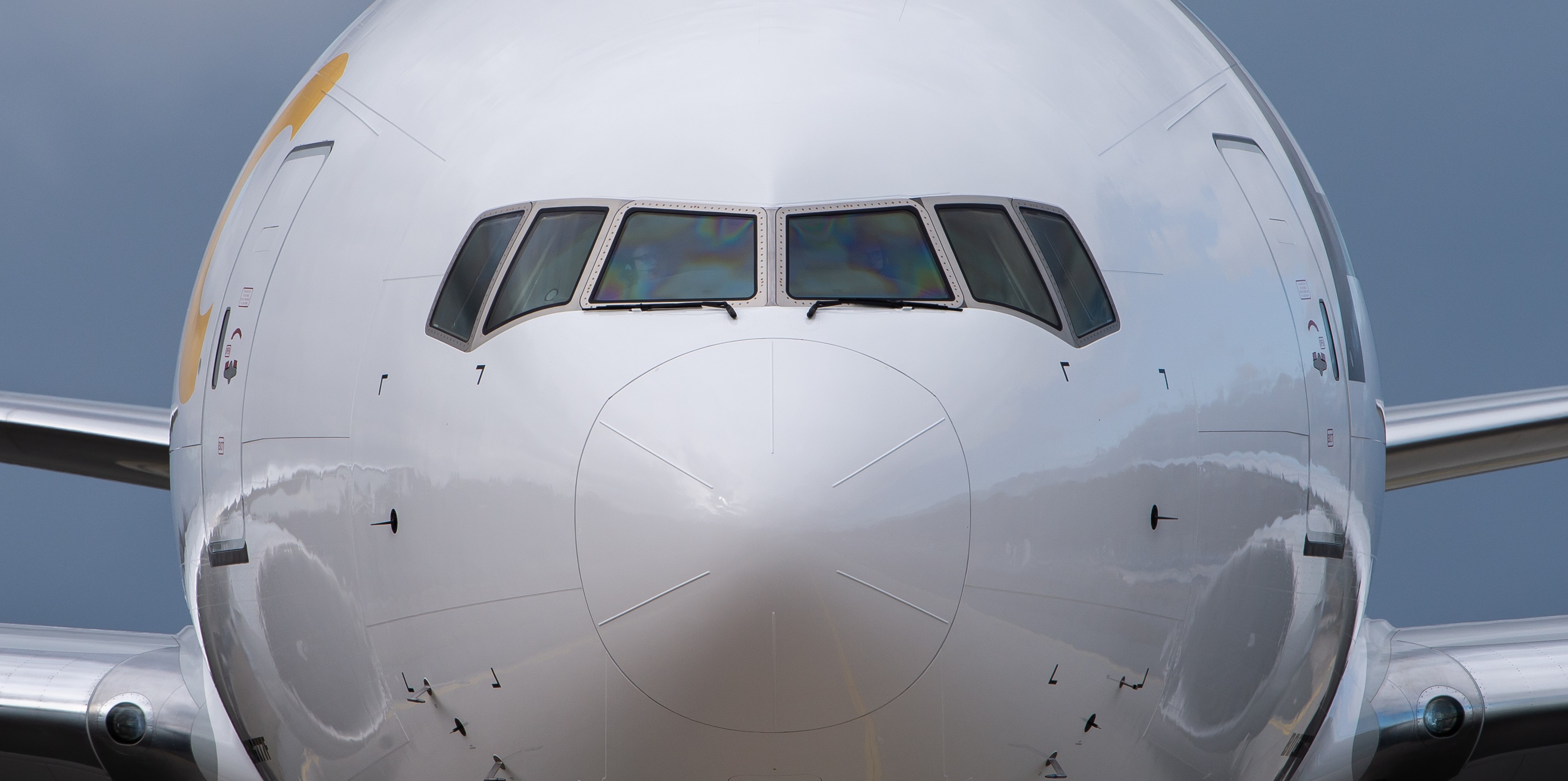

Boeing 777F of the cargo company Aerologic. Photo: Silas Stein / DPA / Profimedia
Boeing Co has asked the Federal Aviation Administration for a waiver from aircraft emissions rules to sell 35 more Boeing 777F cargo planes, citing strong customer demand and delays in certification of the next-generation plane, Reuters reports.
The rules will take effect in 2028. Boeing said the next-generation 777-8 freighter, which is expected to meet emissions limits, won't be ready until after that date.
Boeing stressed that the waiver would allow it to meet expected customer demand for freighters before the 777-8F enters service.
The company said it is seeking approval by May 1. Boeing said it expects to deliver the first 777-8F about two years after the first delivery of the 777-9, which is currently slated for 2027.
Under the presidency of Joe Biden, the FAA issued final rules in February 2024 that adopt international standards to reduce carbon dioxide pollution from most large aircraft flying in US airspace. The rules do not apply to aircraft in service before this date.
Boeing pointed out that large wide-body cargo aircraft are essential for the export of goods: “Of the $600 billion in goods exported by air in 2024, more than $260 billion was transported by large wide-body cargo aircraft.”
It also stated that each 777F jet exported to a foreign customer contributes $440 million (list value) to a positive trade balance, indicating that without an exemption more than $15 billion in the value of US exports could be lost.
According to the aviation giant, the 777F is the most fuel-efficient aircraft for the global freighter market and the only high-capacity freighter in production.
Last year, Congress passed a law that allows Boeing to continue producing the 767 freighter for another five years, until 2033, in the United States, exempting it from FAA efficiency rules that take effect in 2028.
Last year, the FAA said civil aircraft are responsible for 9 percent of domestic transportation emissions and 2 percent of all U.S. carbon pollution. Under Biden's leadership, the US has unveiled a climate action plan aimed at achieving net zero greenhouse gas emissions from the US aviation sector by 2050.