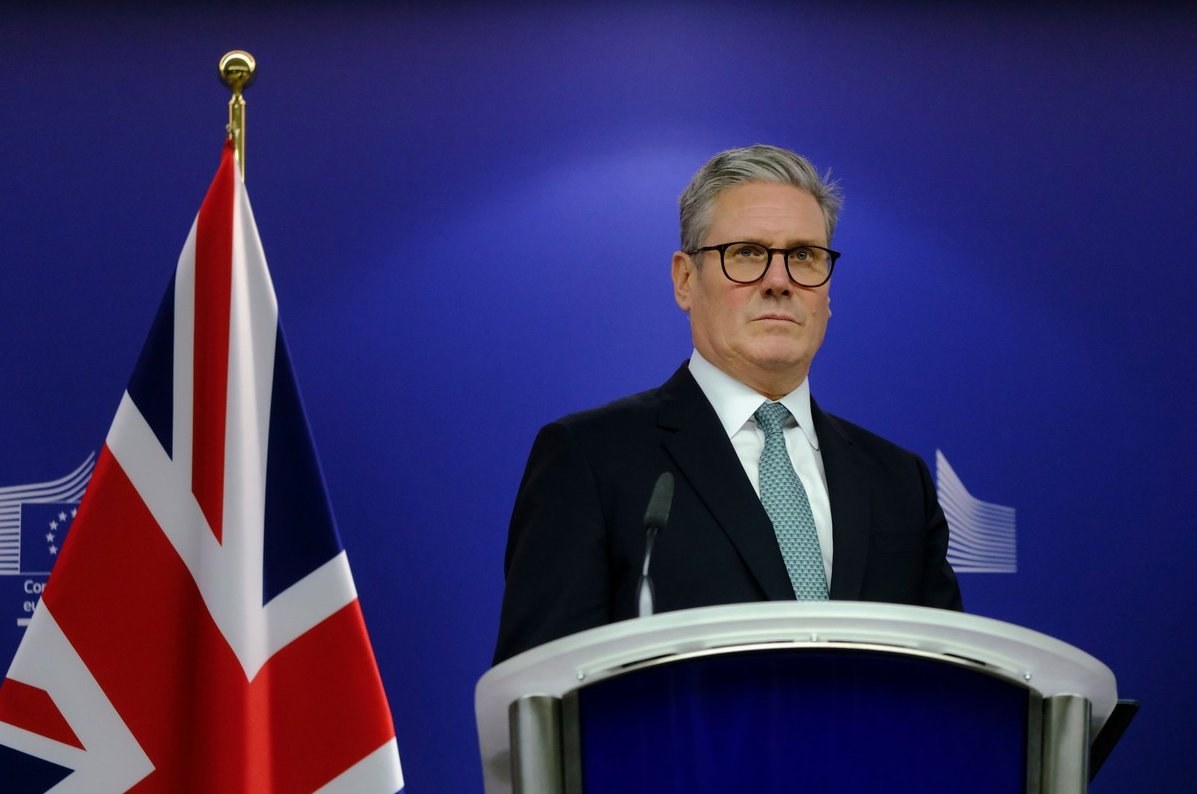
Mateusz Madejski, journalist of Business Insider Polska: You are celebrating your thirtieth birthday in our country.
Brian Olsen, managing director of Netto Polska: Yes, it all started in 1995 in Szczecin. Of course, since then we have achieved many milestones, for example, in 2021 we took over some of the Tesco stores.
Our owner – Sailing Group – wants to focus heavily on Poland and believes that there is fantastic potential for further development here. It's a big country that's constantly developing – and there are lots of interesting things you can do here.
The rest of the article is below the video
You plan to have 1,000 on our market. points.
That's right, we're now just under 700. How are we growing? On the one hand, we are growing organically, but we also have a special team that is looking for new locations. We try to be flexible.
Our standard format is 1k. m, so that the shopping area itself exceeds 700 m. But as you can see, around the corner (next to the Netto Polska headquarters there is a city store of the chain – ed.), we also have smaller points that do not have parking lots in front of the entrance. Such stores also make sense, they are doing really well on the Polish market – although we don't have too many of them yet. However, we want and can be in many different locations, not only in the suburbs.
Of course, such development is not the only path. Another option is, for example, taking over a chain that is already in Poland but is thinking about leaving the country.
There is no denying that there are such networks.
Correct. But this is not the only thing that is interesting on the Polish market. What characterizes Poland is that there are also many smaller, often family chains with 25 to 60 stores, which are looking at selling their businesses because they want to focus on something else. It is also a chance for development for us.
See also: They went to work “for tulips”. We know the Dutch pensions of Poles [KWOTY]
Netto looks at Kraków and Rzeszów
You are strong in the west and north of Poland. What about the rest?
That's true. So there are still a lot of areas where we can grow. An obvious location is Kraków – we really want to grow in this city, although it is not that easy because it is difficult to find available premises. We are also not developed enough in the eastern part of the country, for example in Rzeszów.
Netto is a Danish chain. Do the solutions from this country work on the Vistula River?
Not necessarily. A few years ago, we introduced the 3.0 concept to our Polish stores, which debuted in Netto stores in Denmark. It works great there, but it didn't work in Poland. Polish consumers simply found it chaotic and did not really like shopping this way.
With the needs and habits of our Polish customers in mind, we have developed the 4.0 concept – tailored to the Polish, not Danish, consumer. It's about the way the goods are displayed, but also where the individual categories are located.
In Denmark, for example, sweets are at the very back of the store. But in the 4.0 concept that we have been implementing since last year, they are at the very beginning – it works.
What else has been changed in the “Polish version”?
Of course, we want to provide the greatest possible convenience to the customer where he wants it, for example by extending the aisles in stores. But also organizing and highlighting promotional offers in the store. Promotions are an important driver for customers and today every third product added to the cart is a promotional product.
The Polish trade market is considered exceptionally difficult and demanding. Do you agree with this?
Definitely. This is one of the most difficult markets in the retail industry in Europe – and perhaps not only in Europe. In this country, there are many large chains competing with each other, staffed by very experienced and talented people.
Of course, the country is developing extremely quickly, which creates opportunities, but also means there is great competition. And there is something else: Polish customers are demanding. Very demanding.
More than Danish?
I will answer this – the approaches of customers from both countries are quite similar, but the requirements in Poland are higher. The Dane and the Pole want low prices, high quality and shopping comfort. But research shows that in all these parameters, the Polish customer simply expects more from the store than the Danish customer. What's more interesting, the Polish customer is ready to spend more time comparing offers from different stores than the one from Denmark.
The Polish market is crowded – there are many different players. Will it consolidate?
There are a lot of players, but on the other hand, about 10 percent trade are still small, independent shops. In my opinion, there will be some consolidation and chains will take over such points. This is influenced by many factors – competition from chains, but also EU regulations, which are often a challenge for independent, small players. There will be fewer and fewer small corner shops.
Will there be as many players on the Polish retail market in the future as there are now? In my opinion, no. In Denmark, we also saw chains that withdrew from the market because they were no longer able to compete. In my opinion, it will also be similar in Poland. It was similar on the German market. Moreover, no large chain not originating from Germany has survived there – apart from Netto.
What does Netto offer to Polish customers? How do you want to stand out in such a crowded market?
We believe that ease of shopping is key. It may sound trivial, but it is not trivial. The idea is to find an interesting product as easily as possible, compare its price, do it quickly and conveniently, and then leave the store quickly and easily. However, to make it easy and quick for the client, we have to work hard (laughter – ed.).
Of course, prices are key, but the price itself is not the most important thing, but rather the value of the price in relation to the quality. So we try to make our bread, fruit and vegetables as fresh as possible and at the most competitive prices.
Another pillar of our offer is the uniqueness of the offer. So that the products are as attractive as possible to the customer. A lot is changing here.
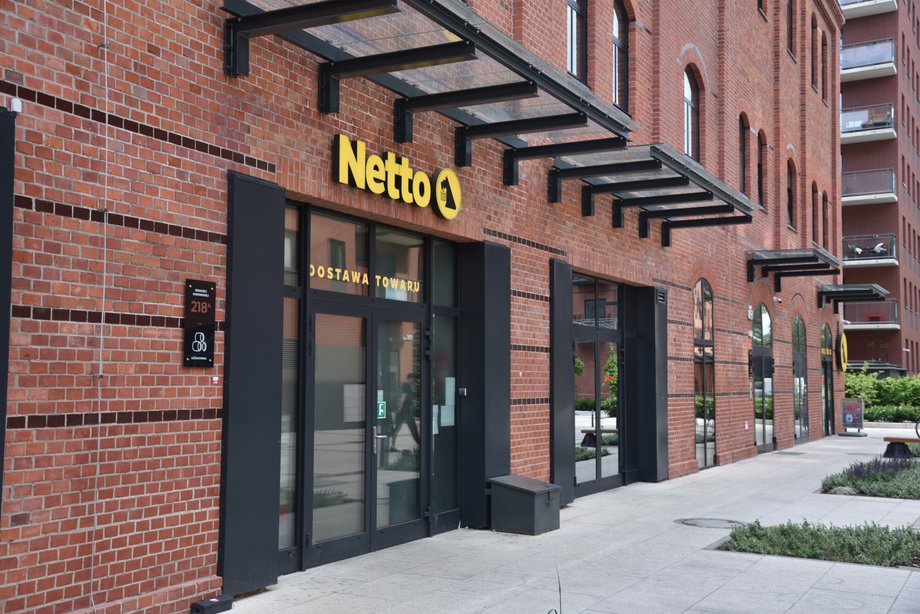
Netto chain store
|
Bartlomiej Magierowski / East News
What do you mean?
Social media is changing commerce a lot. Today, trends appear suddenly and create enormous demand for specific products. Interestingly, these trends are not necessarily created by big brands – there is simply a sudden demand for a certain product. We want to take advantage of these trends and create unique categories that will create value for our customers.
Are you working on something specific?
We have such things in preparation, but unfortunately I cannot reveal the details yet.
We live in challenging times for trade. Demography, geopolitical situation… The list could go on for a long time.
In fact, until recently it seemed that we were living in peaceful times. Then COVD-19 came, a terrible full-scale war broke out in Ukraine, we had to deal with high inflation… This, of course, makes running a business in the trade industry much more demanding.
In addition, of course, there are new regulations – for example, EU ones, to which you have to adapt. Not to mention the AI revolution taking place before our eyes. However, we must focus on the basic goal, which is to provide our customers with the products they expect. If something is missing – for example for environmental reasons – it is our job to provide suitable alternatives to such products.
If we're talking about AI. How is artificial intelligence changing and will change the way we shop?
It will definitely change, it is already happening. Of course, we don't want to just look at it, which is why, among other things, We have created a special Salling Seeds investment fund in the Saling Group to invest in start-ups that want to create the future of trade, focusing on creating solutions in areas related to sustainable development or retail technologies.
Can you imagine if we send robots to do our shopping?
I would really like to know the answer to such questions (laughter – ed.). For now, I don't think this solution makes sense – robots are simply expensive, and the delivery shopping area is quite well developed. The share of home shopping deliveries is growing both in Poland and Denmark. The trade industry will definitely move in this direction. Since customers are busy, this solution simply saves them time.
And where is AI in all this? The algorithms will probably predict what we will want to buy and will send appropriate orders to the store for us. The store will bring our purchases home. This doesn't sound like a very distant future.
Are you considering introducing a franchise model?
No, we are not considering it at this time. I'm not saying it doesn't work at all – in Denmark we have examples of networks that have implemented it successfully. But we're not thinking about that at the moment.
Bananas are a big hit in Poland
Are there any differences in shopping habits between Poland and Denmark?
In Denmark, for example, we eat much more red meat than in Poland. There is one more difference – in Denmark, organic products are very popular, in Poland this trend is developing, but still at a very, very low level compared to my homeland. Although it is also clearly growing. But there are also similarities – large, well-known brands are popular in both markets.
What is the most popular Netto product?
I would say bananas. They are definitely at the top of shopping lists in Poland.
See also: Second-hand is already mainstream. The H&M manager has no doubts