“Max”, the app used by the Russian state for surveillance, becomes an e-passport and bulletin board

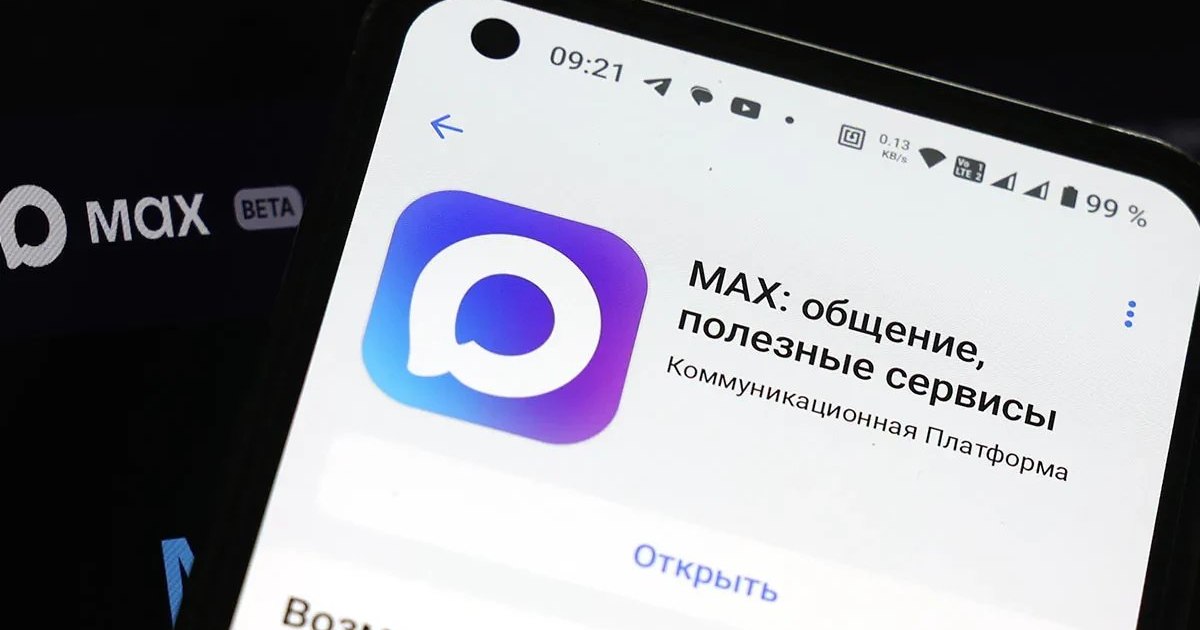
The Kremlin regime is taking another step towards total control: the Max messaging app, touted as a “sovereign” alternative to WhatsApp and Telegram, will be turned into an official identification tool, functioning as an e-passport and bulletin for Russian citizens.
The messaging application Max, a “sovereign” alternative to WhatsApp and Telegram PHOTO: @DetectorMediaEn
Vladimir Putin's regime plans to turn Max, the state app that has largely replaced WhatsApp and other social networks in Russia, into an official identification tool. According to The Moscow Times, the application will be used for age verification when buying alcohol, as an electronic ticket for concerts and entertainment events, for participating in lotteries and purchasing so-called “information products”.
The announcement was made by Serghei Boarski, the president of the commission for “information policies” of the State Duma, which declared that Max will become an integral part of administrative and commercial life in Russia. The necessary amendments, proposed by a group of deputies of the ruling United Russia party, were approved on Tuesday by the committee on information policy, which recommended their adoption by the Duma.
“Sovereign” application, required by law
Russian authorities began aggressively promoting the Max app after Vladimir Putin promulgated a law in June making the messaging app “sovereigntySince September 1, Max is pre-installed on all electronic devices sold in Russia.
In addition, registration on Max has become mandatory for obtaining electronic signatures. All government officials, employees of state-owned companies and those in the public sector were required to use the app.
The Ministry of Education, in turn, announced the move of all school communications between teachers, parents and students to this platform. At some universities, students were reportedly threatened with expulsion or expulsion if they refused to install Max. The Ministry of Construction has also ordered the migration of all chats to Max by the end of 2025, a measure that will affect almost a million apartment buildings.
Serious allegations: “data will be transferred on request to the FSB”
Experts warn that Max is more like a spyware application. Mikhail Klimarev, head of the Internet Defense Society, pointed out that the privacy policy explicitly states that “the data will be transferred upon request to the FSB, the Ministry of Internal Affairs, the Federal Tax Service and the Bank of Russia“.
Researchers on GitHub, who analyzed the app's APK file, found that it monitors device processes, collects geolocation data, a complete list of installed apps, and can even record audio, video, and text input.
Blocking WhatsApp and Telegram, amid popular discontent
The Max promotion was accompanied by the blocking of voice and video calls on WhatsApp and Telegram by Roskomnadzor, the Russian telecommunications regulator. Officially, the measure was justified by the desire to protect users from “crooks and terrorists”.
Despite the pressure, an ExtremeScan poll shows that 47 percent of Russians say they would try to avoid installing the app, and 11 percent are undecided. Only 34% said they were willing to download Max, while 8% didn't know it existed. Fearing regime surveillance, many citizens chose to buy a second phone, dedicated exclusively to using the app.
A new tool of the repressive system
Max is considered the latest step by the Putin regime in building a “sovereign internet“, informationally controlled entirely by the state and cut off from the rest of the world. The war in Ukraine has led to a further tightening of domestic repression, with the Kremlin cracking down on any form of anti-war activism through criminal prosecutions and surveillance measures.
Dozens of websites were blocked and content critical of the war was labeled as “extremist” and criminalized. Also this year, online searches containing the name of former dissident Alexei Navalny were classified as extremist, and advertising for VPNs was banned.
Who controls the Max app
The company behind the Max app is effectively controlled by Gazprom and Yuri Kovalchiuk, one of Vladimir Putin's closest allies. The firm is run by the son of an adviser to the Russian president, Sergei Kirienko. Both Kovalchuk and Kirienko are under sanctions imposed by the United States.
Meanwhile, independent media reports that civil servants, bank and hospital employees are under constant pressure to use the app, which is heavily promoted by officials and in massive social media campaigns. Max has also been supported by Russian celebrities and influencers, who have declared themselves impressed that the app can be “used in the parking lot and in the elevator.”