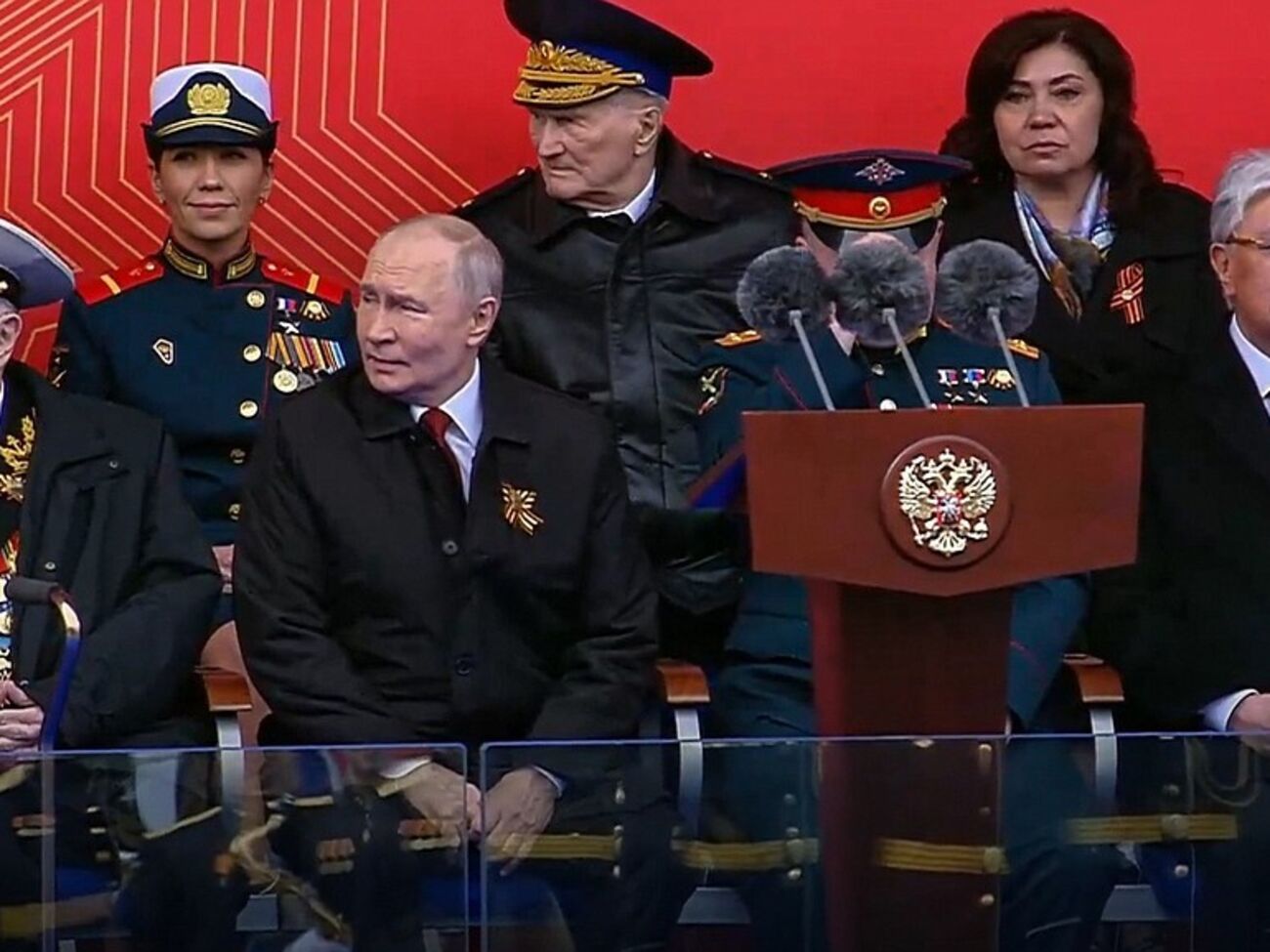
The military parade on Red Square in Moscow, Russia, on May 9 to mark the end of World War II lasted less than an hour. The event was broadcast on YouTube.
CNN describes it as a “stripped-down Victory Parade” and notes a fundamental difference from previous years, because Moscow refused to display heavy military equipment and accepted other restrictions, maximizing security measures.
The parade began with a speech by the illegitimate Russian President Vladimir Putin (the text was published on the website of his administration).
“We will always remember the feat of the Soviet people – that it was they who made a decisive contribution to the defeat of Nazism, saved their country, saved the world, put an end to total, merciless evil, returned sovereignty to those states that capitulated to Nazi Germany and turned into obedient accomplices of its crimes,” he said.
Putin's speech lasted less than nine minutes. He never used the words “Ukraine” or “Ukrainian.” Compared to the speeches of 2022–2023, where there were direct references to the invasion of Ukraine and the thesis about the “war waged against the Russian Federation,” today “SVO” is mentioned only as a continuation of the “feat of the generation of winners.”
He once called Ukraine, defending itself from the Russian Federation, an “aggressive force” that is allegedly being armed by the entire NATO bloc.
Putin’s final phrase “our cause is just” is a quote from the radio speech of the People’s Commissar for Foreign Affairs of the USSR Vyacheslav Molotov on the day of Nazi Germany’s invasion of Soviet territory on June 22, 1941. Then he, and not the head of the USSR Joseph Stalin, addressed the people with the words “our cause is just, the enemy will be defeated, victory will be ours.” The speech of the head of the Kremlin does not include, as in 2025, a list of other allies in the fight against Nazism.
Professor of Russian politics at King's College London Sam Green, in an interview with CNN, states that what is happening “sends a signal that he would not normally want to send,” calling the format “atypical” for Putin.