The controversial end of old coal mines. “What will remain here, we are already beginning to see: ruins and vacant lots”

One of the oldest coal mines in Romania has reached the end of its existence of almost two centuries. The Lonea Mine will be the next mine closed, and in its wake, Valea Jiului will be left with only three coal mines and less than 2,000 miners.
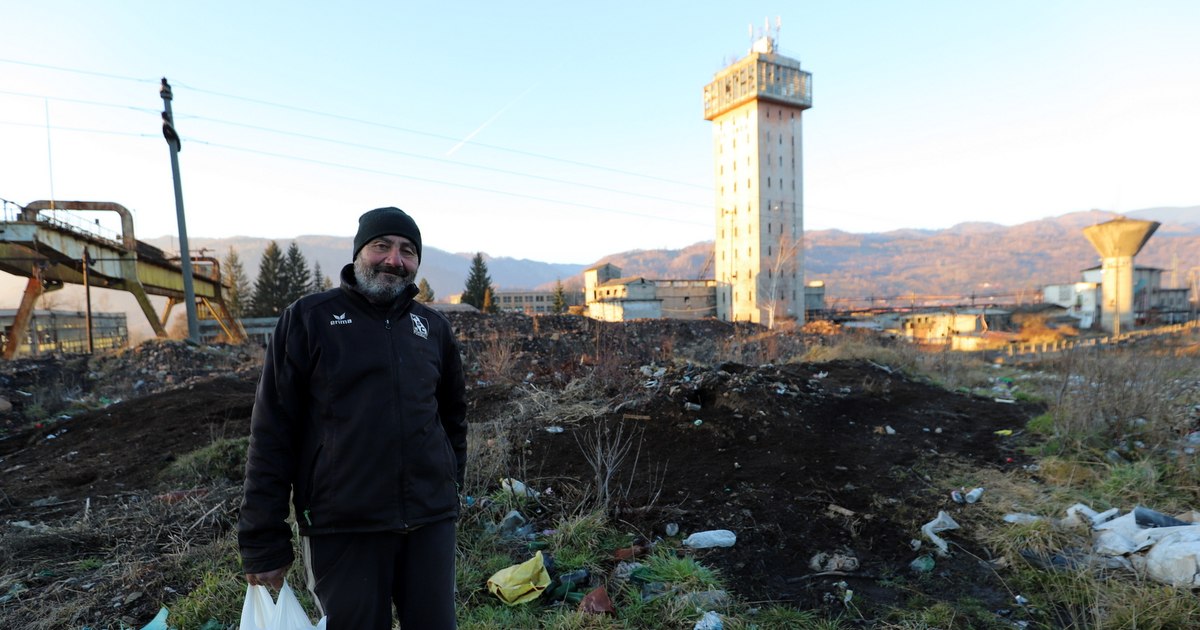
Constantin, a former miner from Lonea. Photo: Daniel Guță. TRUTH
In the East Jiului Valley, which runs through the Lonea and Petrila localities, coal has been mined for almost two centuries.
Before the mining operations transformed the former villages at the foot of the Parâng and Șureanu mountains into important mining centers, the places were populated by “momârlani”, people of the mountain who were engaged in shepherding since ancient times.
Two centuries of mining
In the rapid valleys of the Jiet and Jiului, alluvial gold was searched for in Antiquity by the Romans, but unlike the small gold mines, whose success depended on the luck of the prospectors, coal provided a reliable and long-lasting source of income for the communities on the banks of the Jiului.
The first coal mines operated in the first part of the 19th century, in the area of Petrila, where some thick layers of coal were visible everywhere, or covered only with a thin layer of vegetation. The undergrounds were even richer and supported the economy of the area for the next century and a half.
The Petrila coal mine was closed in December 2015, after years in which its activity was marked by tragedies underground. One of the last disasters, on November 12, 2008, claimed 13 lives.
Ten years after Petrila mining stopped, some of its old buildings were preserved and transformed into the “Petrila Mine Historical Ensemble”, intended to house a mining museum and cultural and entertainment events. Historical installations and buildings from different eras are difficult to maintain and some are on the verge of ruin.
The controversies of the closure of the Lonea Mine
In the vicinity of the former Petrila mine, connected to it by a mining railway that operated for a century and a half, the Lonea mine also reached the end of its existence.
Officially, underground mining ceases its activity on December 31, 2025, and the closure and greening process will have to be completed by the end of 2026, but these deadlines could be extended, say the representatives of the miners. With its closure, only three mines will remain active in Valea Jiului: Lupeni, Livezeni (Petroșani) and Vulcan. The Lupeni mine will cease its activity in 2026, and the other two until 2032, according to the Plan for closing the mines in the Jiului Valley, approved by the Government of Romania.
Recently, the law was adopted for the granting of state aid in the maximum amount of 3.15 billion lei to Societatea Complexul Energetic “Valea Jiului” – SA, for the phased implementation of the Mining Closure Plan, between 2025 and December 31, 2032.
It foresees works for the safety of underground activity, rehabilitation of former mining perimeters, recultivation of surface soils, compensatory payments for personnel who are going to lose their jobs and professional reconversion. For the Lonea and Lupeni mines, the deadlines set in the closure plan are considered unrealistic by the miners' representatives.
Darius Câmpean, the leader of the “Mountain” Union of miners from Valea Jiului, claims, however, that the Lonea and Lupeni mines cannot be closed.
“The EU regulation says the following: a mine closes when the open reserve is exhausted by exploitation. This did not happen at the Lonea mine for various reasons: due to the lack of staff, due to the lack of materials. The same is the case at Lupeni, only that there the horizon is for 2026. So, the two mines cannot be closed according to the old program. What President Nicușor Dan promulgated represents the entire old program, which was implemented a few years ago years. Steps are to be taken to extend the mine. On December 31st, the mine will not be closed. Or, if someone makes a decision, it will not be closed according to the deposit's safety rules.” said Darius Câmpean, for Adevărul.
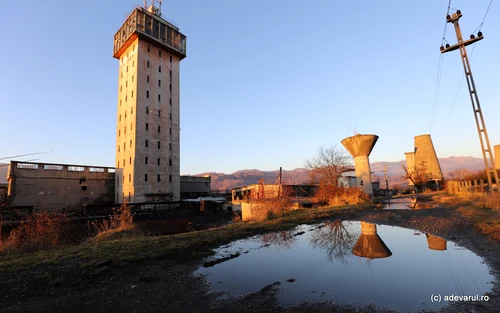
Image 1/17:
Mina Lonea Photo Daniel Guță THE TRUTH (20) JPG
In 2025, the number of employees of the Lonea mine fell below 400 employees. Recently, some of them were transferred to the Livezeni mine in the neighboring city of Petroșani, after, at the beginning of October, the abattoir from which coal was extracted was closed due to the appearance of gases. Since then, the colliery has been isolated, and coal can no longer be mined from here until the danger is removed. The miners will then return underground, continue extracting coal and securing the abattoir area.
Both the Lonea mine and the Lupeni mine are located under residential areas, which complicates the closure procedures. Coal mines involve higher risks than other mining operations due to methane accumulations.
The Jiului Valley will remain without miners after almost two centuries
About 2,000 people are currently employed at the four mines in Valea Jiului (Lonea, Lupeni, Livezeni and Vulcan). In 1990, Valea Jiului included 14 coal mines, strung along a mining field with a length of more than 60 kilometers, which stretched from the east of the region, from Lonea, to its western end, at Valea de Brazi.
Around them, several factories and installations served the mining industry, which provided, at the beginning of the 90s, more than 40,000 jobs. A quarter of the then population of the coal region worked in mining.
Currently, many locals from Valea Jiului are retired from mining, a job that can no longer be an option for young people, given the closure of mining operations. In Petrila, the town of 20,000 where the Lonea and Petrila mines operated, the closure of the Lonea mine, ten years after the Petrila mine ceased operations, is viewed with sadness by some former employees.
“I worked for ten years at Mina Lonea, underground. There was a lot of noise around it. Now you can't hear anything here anymore. The buildings will be demolished, the installations will end up as scrap metal, and we're already starting to see what will remain here: ruins and vacant lots with garbage.” says Constantin Trăilă (video), a former miner.
The land of the Momorlans and the spectacular roads in the mountains
Some buildings from Lonea have already fallen into ruin, rows of wagons and old locomotives are rusting in the mine yard, and its land, strewn with coal, buries the former mining railway lines in mud. Due to seepage from the hills, a reed swamp is gradually taking over the yard of the mining center, which has been left without fences for a long time. Above, on the hills at the foot of Parâng, the archaic households of the Momârlans have withstood the passage of time and the changes brought by a century and a half of mining.
In the Jiului de Est valley, the road that crosses the town of Petrila and the component town of Lonea leaves behind the blocks of blocks from communism and the “colonies” of houses built for miners in different eras, then getting lost in the deep valleys of the mountains, where the villages of Cimpa, Răscoala and Tirici have preserved the architecture specific to the land of the Momorlans.
The main road from Petrila and Lonea leaves behind the two mines covered in silence, branching off in several directions. In some, it is continued by forest roads that plunge into the Șureanu Mountains, towards shepherds' villages, “places where the river turns”, say the locals. Another route goes up to the mountain resort of Parâng, located at the foot of Parâng Mic (2,074 m), which watches, now covered with snow, over the mining towns, and another mountain road (DN7A) crosses the Cheile Jietului, going up to Obârsia Lotrului and continuing over the Parâng Mountains, towards the Transalpina, or over the Lotrului Mountains, towards the Oltului Valley.