Cancer treatment that excites scientists: 'We've only just begun to discover what's possible'

“A real revolution.” This is how Prof. Misty Jenkins, an immunologist at the Walter and Eliza Hall Institute of Medical Research, describes CAR T cell therapy, a booming but still expensive oncology treatment that stimulates the body's immune system to fight the disease, writes The Guardian.
This treatment came to public attention after, at the end of March, the actor Sam Neill, one of the protagonists of the famous films “Jurassic Park”, revealed that he was cured of cancer after a battle of almost five years.
Sam Neill said he was “on the dot”, but after undergoing CAR T-cell therapy in a clinical trial in Sydney, the cancer went into remission thanks to “science at the highest level.
“We've barely scratched the surface of what's possible”
The history of CAR T cell therapy (from “chimeric antigen receptor”) is one of small discoveries accumulated over decades that have led to major advances in patient care.
Launched in the 1990s, the therapy has seen explosive growth in the last decade. Four CAR T cell therapies have been approved by the Therapeutic Goods Administration for use in Australia as of 2018. All are for blood cancers.
The success of these therapies increases the excitement of researchers and clinicians that CAR T cell therapies will soon become a major weapon in the fight against cancer.
It is now being fine-tuned to fight solid tumors, with promising early signs of success tempered by difficulties in adapting T cells to find their target. In the future, it may even become an injectable product.
“It's a very exciting time for cancer immunotherapy because I really feel like we've only just begun to discover what's possible,” Jenkins said.
A GPS for the “killers” of the immune system
The immune system is of astonishing complexity. If we dared to summarize its functions in one sentence, we could say that it defends the body against foreign invasions – such as bacteria, viruses and fungi – and eliminates damaged or cancerous cells.
In its arsenal are a variety of white blood cells that identify threats and eliminate them, including T cells.
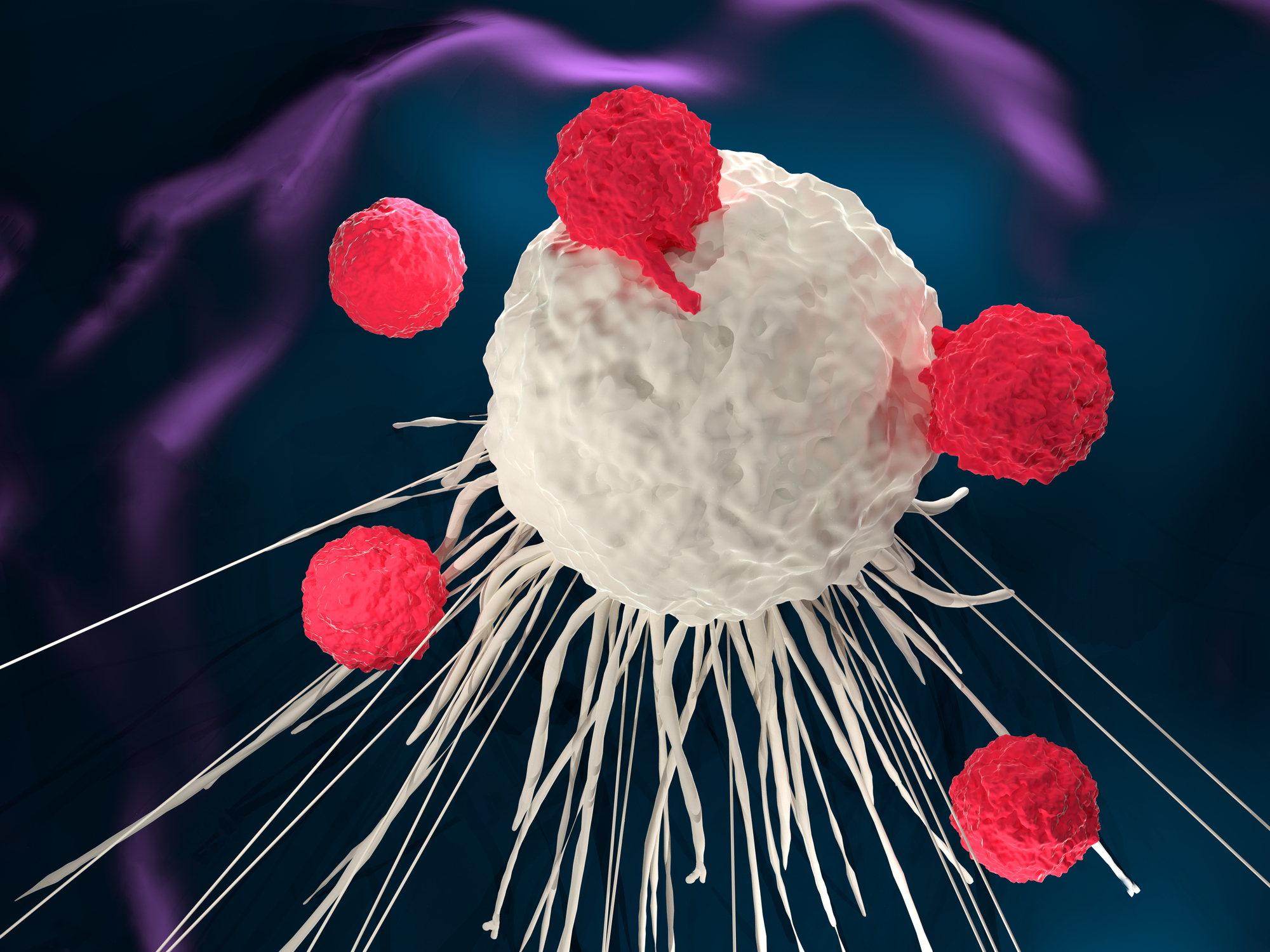
Cytotoxic, or “killer,” T cells are the mercenaries of the immune system. Proteins on their surface attach to invaders or diseased cells, such as cancer cells, and punch holes in their target, destroying the cell.
But cancer cells are good at evading detection. CAR T-cell therapy is a way to strengthen the body's T-cell army to overcome this deficiency. Jenkins describes the therapy as “adding a GPS” to T cells, helping the killers find their targets.
CAR-T cell therapy could replace chemotherapy
Reuters also notes that an early-stage study suggests that a modified version of CAR-T cell therapy could spare blood cancer patients from the need for chemotherapy, which is usually given beforehand.
CAR-T cell therapy involves immune cells called T cells. They are harvested from the patient's blood, modified to produce a protein that targets the cancer, and multiplied until they reach millions, which are then reinfused into the patient. Toxic chemotherapy drugs are usually given beforehand to suppress the immune system and potentiate the effect of the CAR-T cells.
The modified version tested in a phase 1 trial used a specific type of T cell known as memory T stem cells, which can regenerate, survive for years, and differentiate into many other T cell subsets.
For the study, a group of patients with various types of blood cancer who had already been unsuccessfully treated with bone marrow transplants were reinfused with memory T stem cells. The others received standard infusions of CAR-T cells, a therapy that is itself only about ten years old. None received prior chemotherapy.
Complete response rates, in which the cancer became undetectable, were 45 percent in the T-stem cell group, compared with 10 percent in the standard cohort. Overall response rates were statistically similar in the two groups, the researchers reported in the journal Cell.
“The fact that patients achieved complete responses at (low) doses … without chemotherapy preconditioning validates years of preclinical work and opens a new chapter in CAR-T cell design,” study coordinator Luca Gattinoni of the Leibniz Institute for Immunotherapy in Regensburg, Germany, said in a statement.
Photo: Meletios Verras | Dreamstime.com