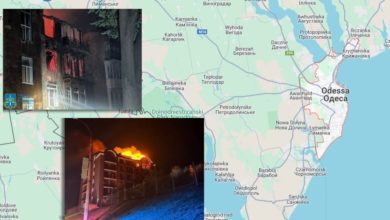
Ukraine began to carry out regular attacks on Russian oil and gas infrastructure in 2024, but since August 2025 their number has increased significantly. At least 77 attacks have been recorded in the last four months, almost twice as many as in the first seven months of 2025. In November, Kiev attacked Russian oil refineries at least 14 times and Russian export terminals four times.
A study by the analytical company Kpler shows that while previously sporadic attacks by Ukraine were aimed at causing temporary damage to Russia, now they are carried out systematically and their aim is to preventing the refinery from being restored to operation. Each hit slows down the pace of their repairs. Moreover, Ukrainians are increasingly using drones to attack not only the refineries themselves, but also the accompanying infrastructure, such as sewage treatment systems.
Purpose: to arouse fear
Sergei Vakulenko, a senior researcher at the Berlin Carnegie Center who worked for many years in the Russian oil and gas industry, confirmed in an interview with CNN that regular fires in refineries cause long-term damage. -Metals don't take it very well. No one knows how many heating and cooling cycles they will last, he said.
In addition to intensified attacks on Russian refineries since August, Ukraine has significantly increased the number of attacks on oil export facilities. She hit, among others: in the ports of Novorossiysk, Tuapse and Ust-Luga, as well as in the Druzhba pipeline supplying Russian hydrocarbons to Hungary and Slovakia. These attacks led to an aggravation of relations between Kiev and Budapest.
At the end of November, twice in four days, Ukrainians attacked the facilities of the Caspian Pipeline Consortium, which exports Kazakh oil. Kazakhstan's Ministry of Foreign Affairs filed an official protest, saying it was damaging “bilateral relations between Kazakhstan and Ukraine.” Around the same time, two Russian shadow fleet tankers were attacked off the coast of Turkey. In connection with this event, Ankara summoned the ambassadors of Russia and Ukraine.
— Ukraine probably wants to create fear and make it expensive for any tankers to enter the Black Sea. I don't think it would generate any sympathy [dla Rosji]and may involve certain costs, Vakulenko said.
Favorable circumstances
According to CNN Two factors contributed to the increase in the intensity of attacks. The first is US President Donald Trump's dissatisfaction with Moscow's reluctance to enter into negotiations. Following his meeting with Vladimir Putin in Alaska, the United States stepped up intelligence sharing with Ukraine. As sources previously reported to CNN, the main focus was on energy sector facilities. A Ukrainian source told the station that The United States “remains an active partner” in Ukraine's attacks on oil refineries on Russian territory.
The second important factor is the global decline in oil prices. According to analysts, the Trump administration, which considers lowering retail gasoline prices in the US an important task, would be unlikely to support Ukraine's attacks on Russian energy infrastructure if oil prices were high. And now, as a Western intelligence source told CNN, global oil markets “may also [ataki] withstand”.
What will be the long-term effects of the attacks on Russia's economy, and to what extent might they affect its ability to continue the war? This is not entirely clear yet. Sergei Vakulenko believes that such strikes it's just “one piece of the puzzle” regarding putting pressure on Putin.
— I think the damage that should be done to Russia [aby nie była w stanie prowadzić wojny]probably exceed those that Ukraine can currently inflict. In an extreme situation, Russia will probably be able to survive on half of its oil and gas exports, he said.
Helima Croft, an analyst at RBC investment bank, told CNN that the most important issue is whether Ukraine and its allies will be able to continue to combine attacks and sanctions pressure on the oil and gas sector. In October, Donald Trump, in an attempt to force Russia to peace, imposed sanctions on Lukoil and Rosneft.
– Combination of infrastructure attacks [energetyczną] and the durability of blocking sanctions could potentially force Russia to enter into negotiations. But it has to be a long-term process, Croft said.