In contrast to past armed attacks, more and more of the suspects accused of violent attacks have outstanding academic records. We are witnessing a new phenomenon, say experts quoted by the WSJ.
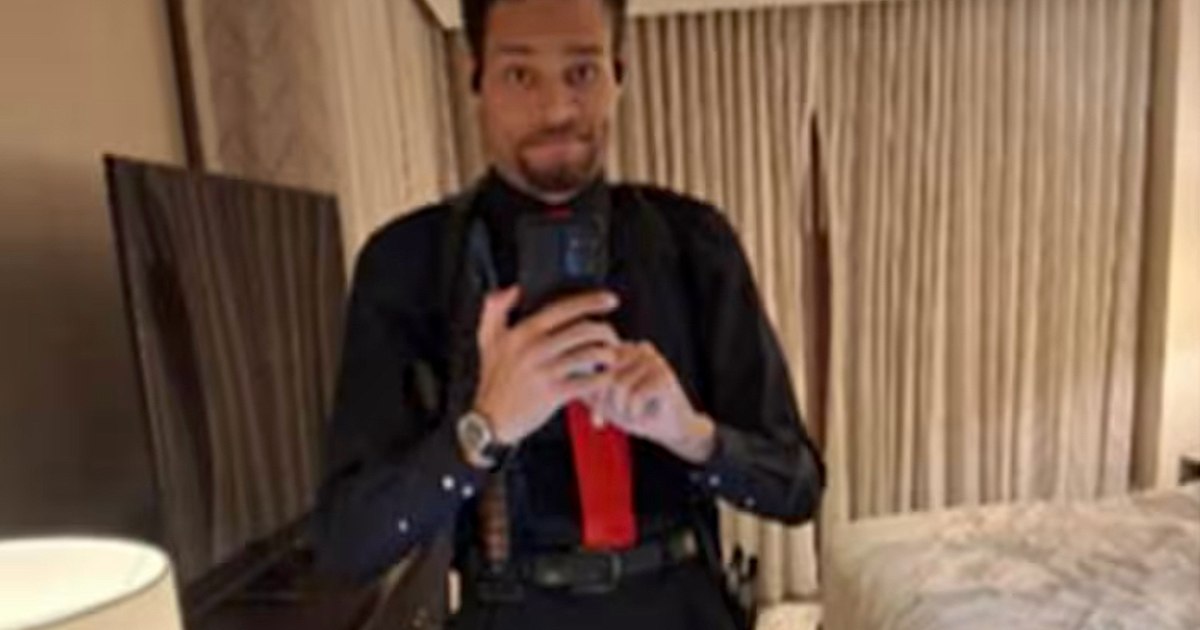
Cole Allen filmed himself in the hotel room armed to the teeth PHOTO: Profimedia
An Ivy League graduate. A budding young engineer with a score of 1530 out of 1600 on the SAT. A high school student with a 4.0 GPA and a scholarship to a prestigious university. And now, a graduate of the California Institute of Technology.
America's growing list of alleged violent attackers stands out for a different reason: Unlike in past decades, they are young men who have excelled academically, sometimes at the highest level.
From Luigi Mangione, accused of murdering the CEO of UnitedHealthcare, to Cole Allen, 31, accused of trying to assassinate US President Donald Trump at a media gala on Saturday, they defy classic profiles of perpetrators.
“We now see a new type of individual, who could have become a university president or run a business, and still felt that this was his calling.” observed Mary Ellen O'Toole, former FBI profiler and coordinator of the forensic science program at George Mason University. “We are witnessing an evolution.”
Mangione pleaded not guilty. At Monday's hearing, Allen's public defender emphasized that he is presumptively innocent.
Over the past three decades, the perpetrators of mass gun attacks in the US have typically been suicidal young people who were struggling academically, professionally or personally. They were often motivated by a desire for notoriety. In the case of some recent political attackers, the motivation seems different, says Russell Palarea, president of the risk assessment firm Operational Psychology Services.
“It is rather an ideological principle, for which they decide to resort to violence, either to trigger a movement or to attract the public's attention,” explained Palarea. “When we're talking about more complex, ideological or philosophical grievances, we're more likely to see intelligent, high-functioning individuals perpetrating such attacks.”
Allen, indicted on Monday for the attempted assassination of Trump, graduated from the California Institute of Technology, one of the most demanding institutions in the US, and later graduated with a master's degree in computer science. Shortly before he allegedly opened fire near the White House Correspondents' Dinner, he allegedly sent the family a document written as an academic paper, which even included a “responses to objections” section.
The document shows that he was fully aware that his choice meant ending a promising career: “I feel like throwing up; I feel like crying for all the things I wanted to do and won't do,” he wrote.
Massacre in the US: eight children killed in a gun attack in Louisiana. The attacker, fatally shot by the police
His public defender emphasized that he had no criminal record. At a press conference, Trump described the attacker as “a lone wolf” and “a deranged one.”
A new type of attacker
Criminals generally have lower IQs than the average population, studies of inmates show, explains forensic psychologist J. Reid Meloy. “Most violent individuals act for emotional reasons – they are angry at someone or very scared, and their reactions are impulsive.”
There have been some famous exceptions, such as Ted Kaczynski, a math professor and Harvard graduate known as the “Unabomber,” who sent explosive packages between 1978 and 1995, killing three people and injuring more than 20.
Mangione seemed fascinated by Kaczynski's writings about the dangers of technological progress. Meanwhile, the 27-year-old, a graduate of the University of Pennsylvania, where he completed his bachelor's and master's degrees in computer science in just four years with flying colors, has become a grim icon for the younger generation.
An anti-AI student who allegedly threw a Molotov cocktail at the OpenAI director's home earlier this month spoke of “applying the Luigi treatment” to tech CEOs before the attack. A 29-year-old Southern California man who complained about wages and set fire to a toilet paper warehouse also sued Mangione.
Other suspects who have been primed for the teaching include Tyler Robinson, accused of murdering conservative activist Charlie Kirk, and Thomas Crooks, killed by a sniper after allegedly trying to assassinate Trump. Robinson pleaded not guilty.
Possible explanations for this phenomenon include an increase in the number of attacks motivated by left-wing extremism, heightened anti-government and anti-corporate sentiments among young people, and an increase in the number of diagnoses of mental disorders.
Forensic psychologists believe that intelligence alone does not protect young people from the powerful influence of so-called “echo chambers” in the online environment. Palarea notes that some virtual groups have developed a phenomenon he calls the “Luigisphere,” where “all these people are talking to each other and amplifying each other's grievances, and some end up being so radicalized that they take violent action.”
On social media, Allen allegedly became increasingly angry at Trump, retweeting posts comparing him to Hitler.
Relatives and friends were shocked by the allegations that these young people chose to give up promising lives. But, former FBI profiler O'Toole explains, attackers don't see things the same way.
“From his perspective, he's not wasting his life, he's doing something that only he can do – he considers himself special and feels he has to take on this mission after much thought,” she explained.