Will Donald Tusk survive as prime minister until the elections? Poles expressed their opinion


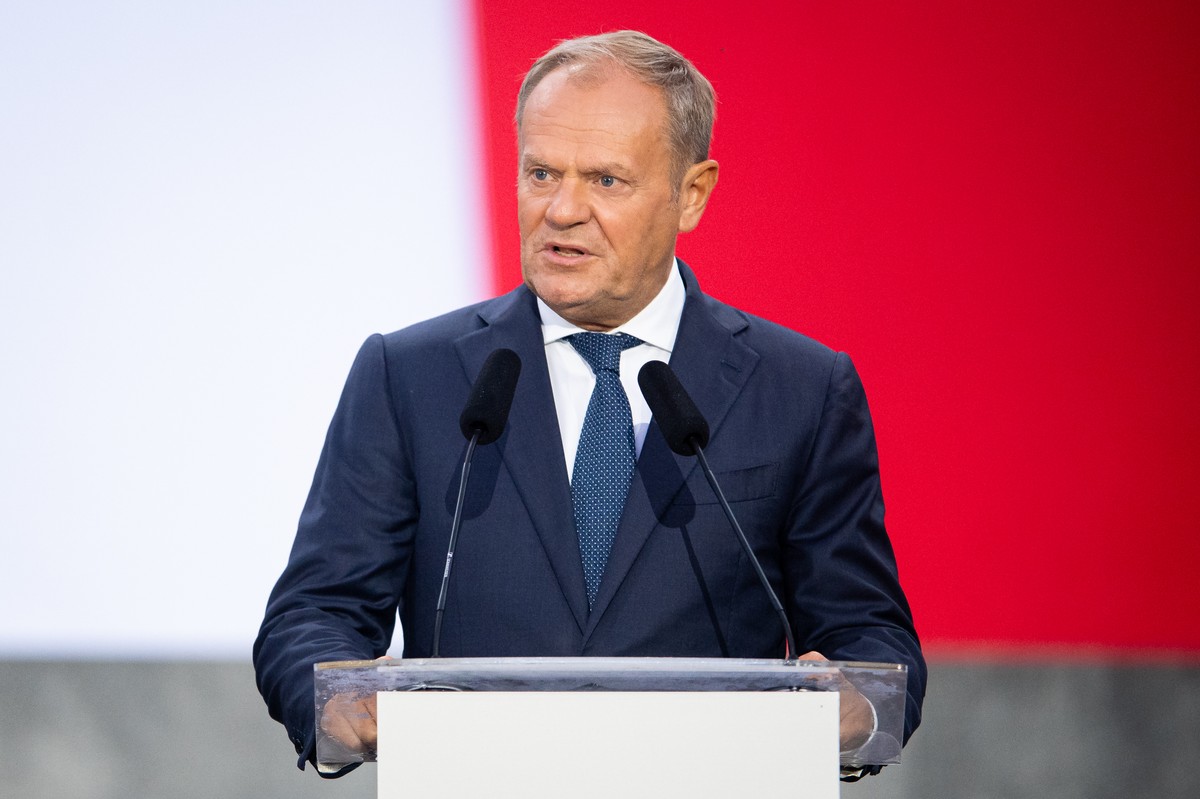
Two years of Donald Tusk's government brought a number of specific actions, but also revealed difficult problems that are still waiting to be solved. The cabinet managed to release funds from the National Reconstruction Plan, introduce raises for teachers and part of the budget, and start the reform of public media. Relations with the EU were sorted out and the dispute over the rule of law ended, which restored full funding from EU programs to Poland. Investments in renewable energy and grid modernization accelerated, and the state launched shields for energy consumers.
Read also: Media: Szymon Hołownia has decided to run for the head of Poland 2050
The rest of the text below the video
However, challenges remain significant. The government continues to grapple with high costs of living and housing problems; judicial reforms are incomplete, and the coalition is arguing about the direction of changes in the prosecutor's office and the media. Political tensions also hamper work on long-term migration and security policy. Tusk managed to stabilize state institutions, but some key reforms are just starting or remain on paper.
After the presidential elections, speculation began as to whether Donald Tusk would remain prime minister until the end of the current term of office of the Sejm. The chief of Polish diplomacy and deputy prime minister, Radosław Sikorski, is mentioned as his main potential successor. One of the most important arguments for replacing Tusk with Sikorski may be the increased popularity of the head of the Ministry of Foreign Affairs among Poles after Rafał Trzaskowski lost the presidential elections.
Society divided over Donald Tusk
It is only later in the study that the scale of the differences becomes visible. Respondents were asked whether Donald Tusk should remain prime minister until the end of the current government term. The responses were distributed in a way that clearly showed polarization.
Read also: Act on cryptocurrencies blocked by Karol Nawrocki. Tusk responds
The group of people supporting Tusk remaining in office was 40.5 percent. Including 21.7 percent answered “definitely yes”, and 18.8 percent “probably yes.” This support, although significant, does not create an advantage that would allow us to talk about a clear social mandate.
The prime minister's opponents dominate, but without much advantage
A larger group of respondents had a different opinion – 45.7 percent indicated that Tusk should not remain prime minister until the end of the term. As much as 26.5 percent chose the answer “definitely not”, while 19.2 percent “I don't think so”. This result suggests growing criticism of the government, but at the same time it is insufficient to speak of a clear rejection of its continued leadership.
It is worth noting that up to 13.8 percent respondents were unable to take a clear position. In conditions of growing polarization, this is an important group that may redirect the political debate on a new track in the future.
The UCE Research survey was conducted using the CAWI method on a representative sample of 1,021 adult Poles between November 25 and 26.