The unique resort in Romania, where the closed road becomes a slope. In the absence of snow, it received a new utility

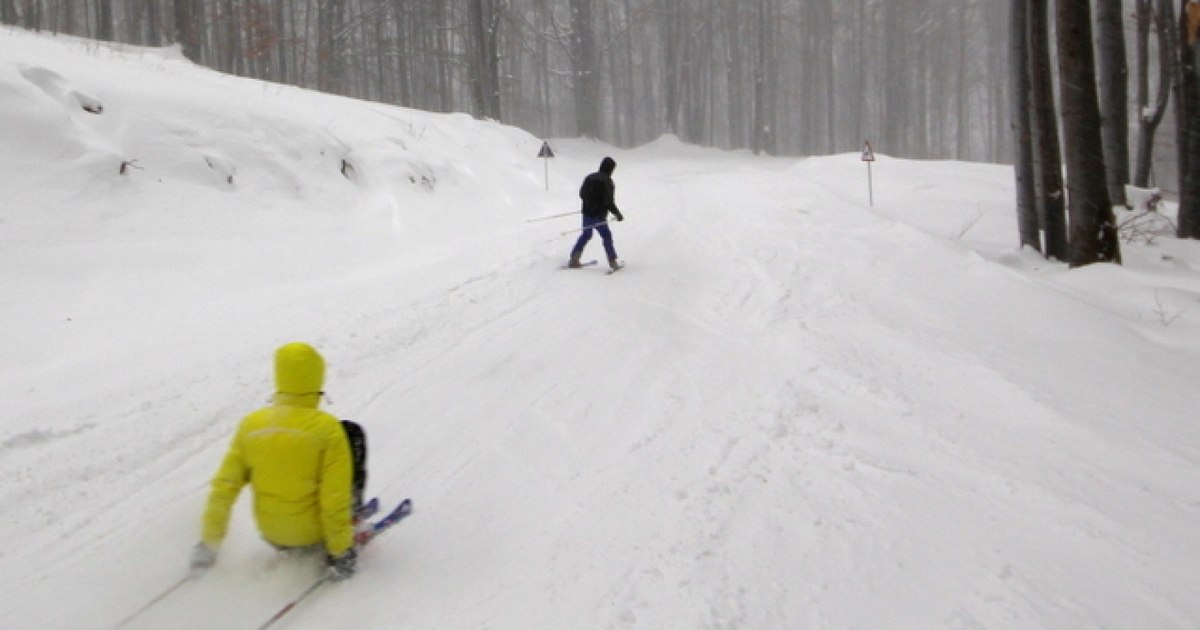
Many mountain roads in Romania are closed during the winter, due to the risks they present. In Pasul Vâlcan, the county road is turned into a slope, but in the absence of snow, the authorities are looking for other uses.
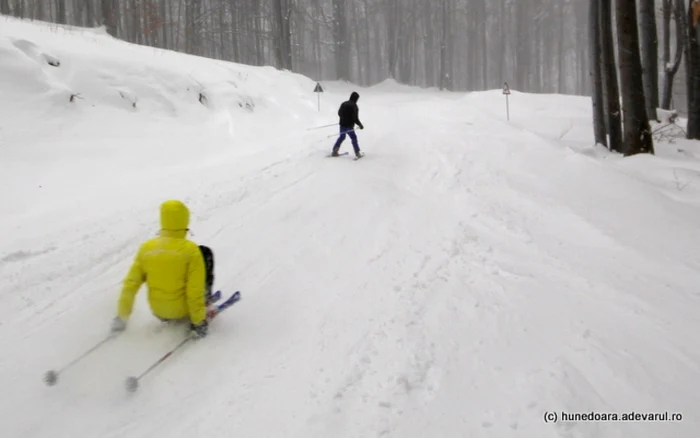
The locals are waiting to ski again on the county road in Pasul Vâlcan. Photo: Daniel Guță
In Romania, many mountain roads are closed during the winter because of the risks caused by relief, slope and climate, but also because of the inefficiency of snow removal, given that they are rarely traveled.
However, in the Pasul Vâlcan resort, a four-kilometer road gets a different use every winter. It is closed since November 15, and with the first snowfall it becomes a toboggan run. In this season, the snow continues to be expected, and as the snowfall decreases, the resort managers are refocusing on other tourism opportunities.
In winter, the slope instead of the road
The county road 664, which connects the municipality of Vulcan with the Vâlcan Pass, was asphalted in recent years from the foot of the mountain to the ridges, in the pass located at over 1,600 meters above sea level, on the border of Hunedoara and Gorj counties.
At the end of the eight kilometers, the mountain road is continued by an impassable forest road, which descends another 10 kilometers to the Schela locality, from Gorj. In the former border area between the historical regions of Transylvania and Oltenia, traces of trenches dug in the First World War and a set of monuments erected in honor of Romanian heroes remind of the battles fought here by the Romanian, Austro-Hungarian and German armies in the fall of 1916.
Almost a century after the abolition of the old border, the surroundings of the pass in the Vâlcan Mountains have become a tourist resort of local interest, guarded by the Straja Peak (1,868 meters), the emblem of the Vâlcan Mountains and the neighboring Straja resort. During the winter, the road in Pasul Vâlcan is officially closed, due to the steep slopes on some sections, which, in freezing conditions, can cause problems for drivers.
In Hunedoara county, 27 road sectors, totaling over 260 kilometers, are closed to road traffic between November 15 and March 15. Among these, the road from Pasul Vâlcan received a new utility.
After the first layer of snow is deposited, it is transformed into a four-kilometer toboggan run that winds down through the forest. In periods of heavy snow, you can ski here (video), however, in recent years, the days with snow have been less and less.
“It's more of a tourist area for locals, who go up on weekends just to be close to the mountain or for exercise. Gondola prices are affordable, and if it's snowing, sledding is attractive. And walking or skiing are appreciated. We're looking forward to the few snow days this season.”says a local, passionate about mountain hiking.
Longboard track in summer
Tourists can reach the small resort with the gondola built with funds from the Ministry of Tourism, in the period 2009-2012. The investment was then estimated at 33 million lei and promised the relaunch of tourism in the mining region affected by the industrial decline.
After the inauguration of the cable car, the forest road to the Vâlcan Pass was also modernized, but winter tourism encountered difficulties, due to the lack of groomed slopes, accommodation in the resort and utilities. Over time, some of these problems have been solved. Several guesthouses have been opened in Vulcan, and small ski slopes have been arranged in the resort, in addition to the slope-road that descends under the cable car installations. Some cottage owners have invested in utilities and rent rooms at prices between 200 and 350 lei.
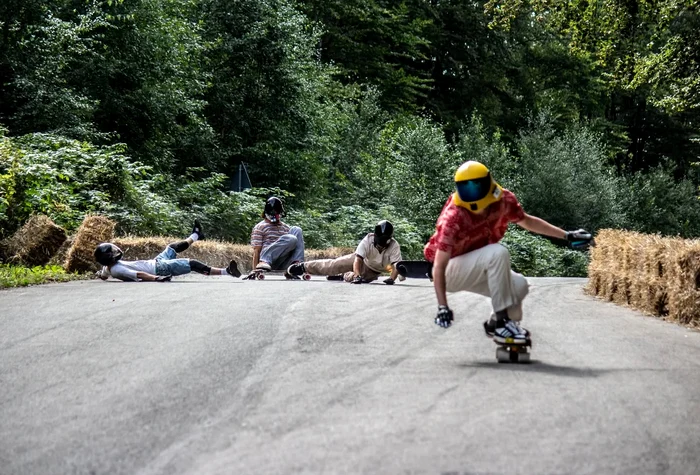
Longboard competition in Pasul Vâlcan. Photo: devastationlongboardcrew
However, after the last mild winters, the Vulcan authorities changed their plans regarding the development of the resort.
“The cable car operates daily until 4 p.m., and tourists can use it for a ticket of 10 lei one way or 15 lei round trip. If the weather permits and there is snow, they can go down with the sledges on the road closed to road traffic. However, in the last two years, the snow in Pasul Vâlcan appeared especially after the winter holidays, when many people were already thinking about spring. Therefore, we have not made investments for the cold season. Those who come in Valea Jiului can go skiing at Straja, which is nearby. We want Pasul Vâlcan to become more attractive in the summer. We have hosted a longboard competition and will organize more such events.”says mayor Cristian Merișanu.
Pasul Vâlcan has a turbulent history
The Vâlcan Pass in Hunedoara County is a pass in the Carpathians, located at an altitude of over 1,600 meters, which connects the Petroșani Depression and Oltenia. In the past, it had an important strategic role, being one of the links between Transylvania and the southern Carpathians. The pass preserves traces of a Roman road, and in the medieval period it was the scene of fierce battles to stop the Ottoman invaders.
In 1986, at the foot of the mountain, the Vulcan Mace was placed, an iron monument, almost three meters high, erected in memory of the medieval Kendeffy (Cândea) knights, considered by historians to be the closest allies of John of Hunedoara in the battles against the Ottomans, in the middle of the 15th century.
“Since ancient times, the Vulcan Pass has been the military and transport line of Hungary, defended by the kinsmen of John of Hunedoara against Turkish attackers around the year 1455, in battles in which Mihai Kendefy lost his life. The inhabitants of Hunedoara county erected this column as an eternal memory of this glorious battle to defend the border, in the thousandth year of the dismount”. the inscription on the monument in Vulcan showed.
In the 1980s, the monument was removed and most likely melted down as scrap metal due to the fact that the inscription was in Hungarian.
Michael the Brave also passed through the Valcan Pass in 1600, on his way to Vienna. According to legend, in the place called Poiana lui Mihai, the voivode's horse would have died because of the effort. The statue of Mihai Viteazul, erected in the resort, reminds of this legend. Also here, in the fall of 1916, battles took place between the Romanian, Austro-Hungarian and German armies, resulting in hundreds of deaths on the peaks of the Vulcan Mountains.
Pasul Vâlcan, also called Pasul Vulcan, was for a long time the place of customs and fair, where the inhabitants of the two historical regions met. However, its importance began to decline at the end of the 19th century, with the construction of the road through the Jiului Gorge, at the foot of the Vâlcan and Parâng Mountains, and, later, of the railway through the gorge.