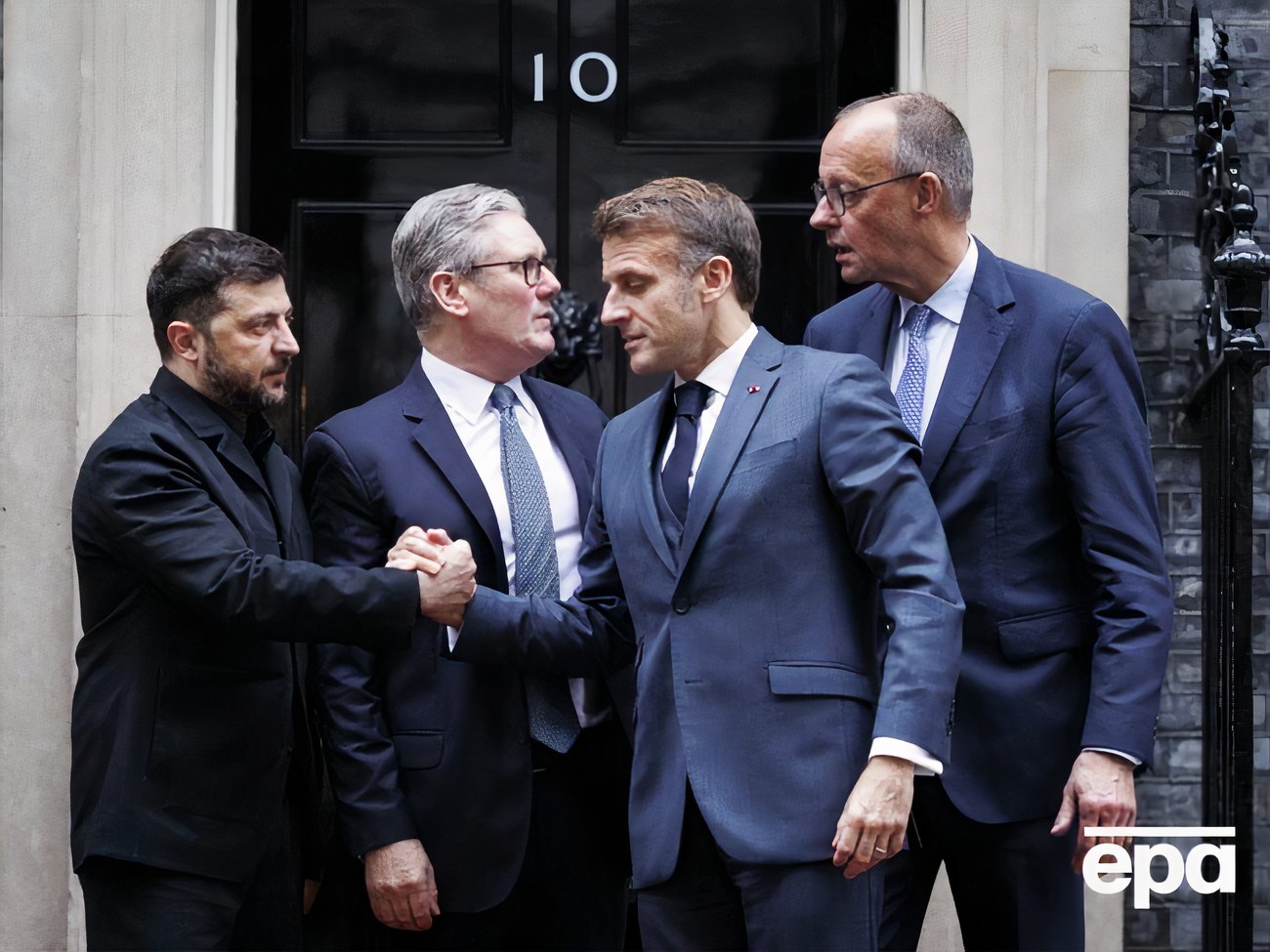
According to them, this issue was discussed at a meeting between British Prime Minister Keir Starmer, French President Emmanuel Macron, German Chancellor Friedrich Merz and Ukrainian President Vladimir Zelensky in London on December 8.
The publication’s interlocutors believe that “the deal is very close.”
As The Times indicated, the agreement will provide for the allocation of £100 billion (about €115 billion) to Ukraine from the frozen assets of the aggressor country of the Russian Federation.
In particular, the UK will transfer Russian assets equivalent to £8 billion (approximately €9.16 billion).
These funds will be used to provide military assistance to Ukraine or to restore it if a peace agreement is reached, the media emphasized.
Zelensky, after negotiations in London, expressed confidence that the issue of financing Ukraine would be resolved. “I don't know if it will be 'reparations' [кредит]“Or will it be an alternative,” the president noted. “The leaders promised me, they understand that Ukraine cannot live without this money. And the source of this money is a question for Europe.”
Context
Some €185 billion of frozen Russian assets are managed by Brussels-based financial depository Euroclear. Another €25 billion is scattered across the EU in private bank accounts, Politico wrote.
On September 10, EC head Ursula von der Leyen announced a new strategy to support Ukraine using frozen Russian assets. As Reuters columnist Hugo Dixon explained, the proposal for a so-called reparations loan suggests that the country could be provided with financing from frozen Russian assets without outright confiscation.
On October 23, the head of the European Council, Antonio Costa, assured Zelensky that the leaders of the EU member states would confirm their support for Kyiv and would be able to decide on a “reparation loan” from frozen Russian assets for the period 2026–2027. Belgian Prime Minister Bart de Wever immediately named three conditions under which he would agree to support the idea of a “reparation loan.”
On November 7, the European Commission warned EU countries of the risk of annual costs of up to €5.6 billion if they do not agree on the creation of a “reparation loan” for Ukraine worth €140 billion at the expense of frozen Russian assets.
On November 13, Zelensky called on European allies to overcome differences over the use of frozen Russian assets, since new funding is critical for the country's war-drained economy to continue the fight against the Russian Federation.
On November 15, Valérie Urbain, director of the Belgian depositary Euroclear, which manages frozen Russian assets, said she “does not rule out” legal action against the European Union if a decision is made to confiscate them.
On December 2, the media reported that the EU had found an opportunity to use Russian billions for the needs of Ukraine without risk to Belgium.