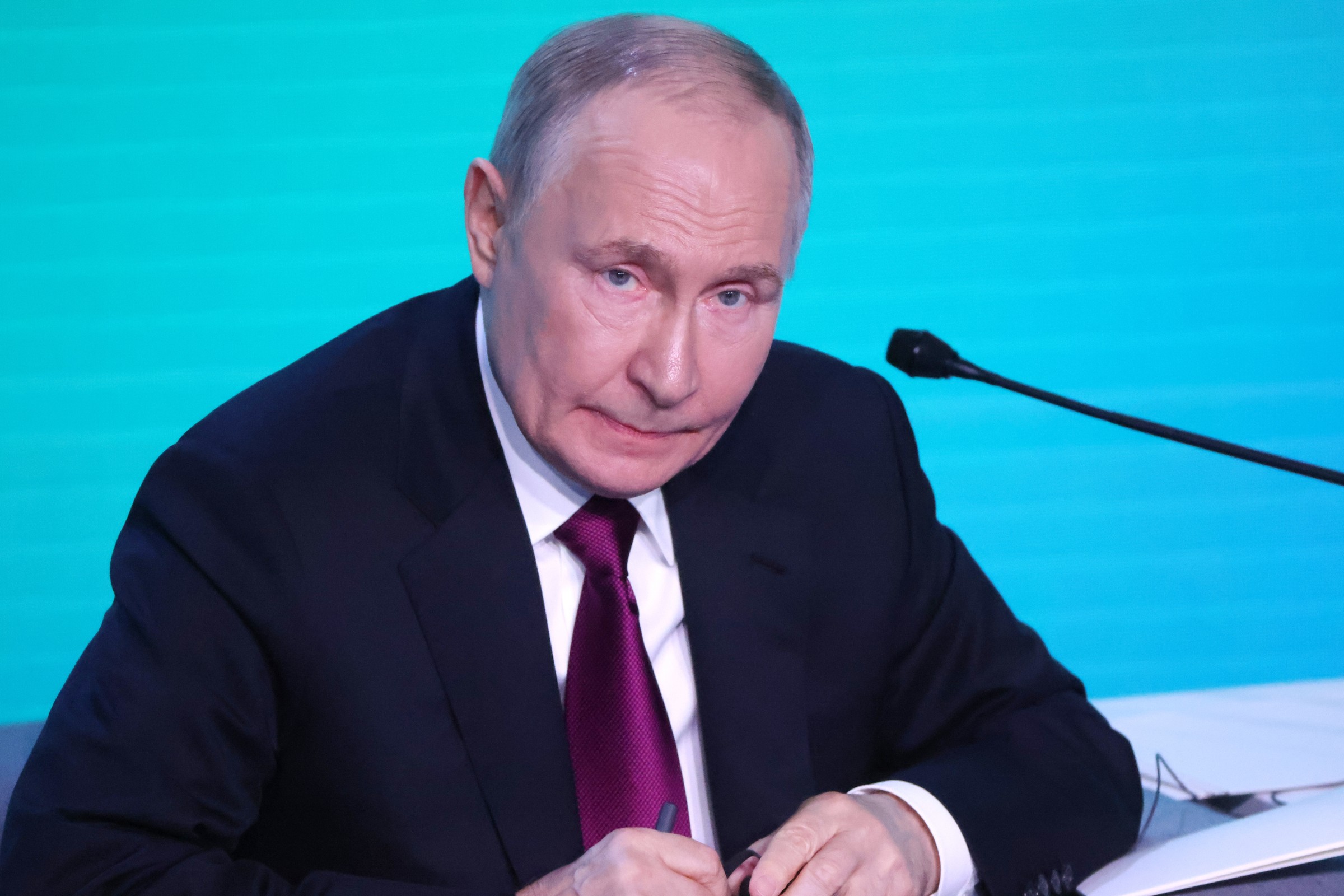
Actions taken to solve Russia's demographic problems have proven to be insufficient, said Russian President Vladimir Putin at a meeting of the Council for Strategic Development and National Projects.
— Unfortunately, the negative trend continues, the birth rate continues to decline, Putin said. He said there are “objective reasons” for this, including “global demographic trends”, external challenges, and the overlapping demographic waves of the mid- and late 20th century that are “making themselves felt again.”
“Our long-term historical task is to preserve and multiply our nation,” Putin said, addressing officials and ministers. He called for “reinforcing current measures at all levels” to reverse the declining birth rate.
Already in 2018, Putin set the goal of stopping within six years the natural population decline that Russia has been struggling with since the annexation of Crimea. Despite the implementation of the national project “Demography” worth 4 trillion rubles (PLN 190 billion), in 2016-24 the country lost four million inhabitants as a result of the excess of mortality over births.
Between 2014 and 2024, the number of births in Russia fell by a third, and last year it reached its lowest level since 1999, with 1.222 million newborns born in the country. This year, the number of births dropped by another 4%. — up to 288.8 thousand children from January to March, breaking anti-records of the last 200 years. In response, Rosstat classified demographic statistics.
Last year, Putin again set the goal of slowing natural population decline to zero by 2030. National project goals also included a sharp increase in the fertility rate (average number of children per woman): by 2030 it should increase to 1.6 and in 2036 to 1.8 – the highest since the late USSR.
Multi-year downward trend
To this end, as part of the “family centrism” strategy, officials intend to strengthen the institution of family and marriage, as well as promote “traditional family values.” The authorities want to smuggle images of large families into advertisements and media content, and to award special state decorations to men and women who boast a large number of grandchildren.
This year, the fertility rate in Russia fell to 1.376 – the lowest level since 2006. At the end of 2024 it was 1.4, in 2023 – 1.41, in 2022 – 1.416, and in pre-war 2021 – 1.47. Official statistics record a decline in the total fertility rate for the 10th year in a row — during this time it decreased by 0.386 points, or 22%.
According to Putin, in order to get out of the demographic hole, we can try to think about “measures supporting engaged fatherhood.” — For men to participate more actively in family responsibilities, in making decisions regarding the birth of children and devote more time to raising them, lead a healthy lifestyle and maintain reproductive health for as long as possible, he said.