Who benefits from the low voter turnout and how will the evening mobilization affect the outcome


The last hours of voting are expected to be critical for determining the future general mayor of the Capital. Although the general attendance remains within moderate limits, political analyst Cristian Hrițuc, former presidential adviser, warns that the wave of evening voters, made up mainly of young people, has the ability to change the hierarchies and decide the final result.
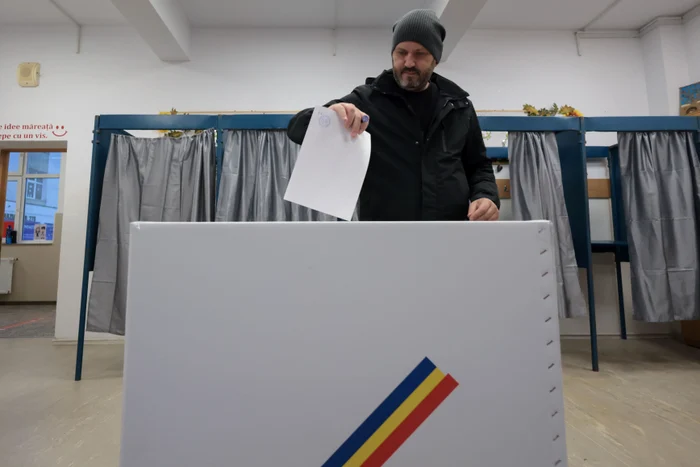
The turnout, estimated by the analyst at a total of 36-37%, seems low compared to the expectations created by the polls, but falls within the normality specific to such polls. In his opinion, the low turnout in the first part of the day should not be interpreted as total disinterest, but rather as a peculiarity of partial elections.
“36-37% seems somewhat normal to me. I also wrote in the past days that I think we will have a presence somewhere below 35%. I see that it disproves me a bit. There are still a few hours, so I think it can go up to 36%”,
explains the analyst.
The evening vote may overturn the calculations
The analyst believes that absenteeism does not affect the candidates equally, and the emergence of young people in the last hours of the electoral process becomes the key element. This late rally has the potential to tip the scales in a close contest where the differences between competitors may be minimal.
“Low attendance, you can't necessarily say it doesn't affect anyone until you know the results. It's clear that it can put everyone at a disadvantage, there's no case where it's only absent from one and the others benefit. (…) I believe that the electorate in the second part of the day will appoint a right-wing mayor, let's call it that. And I think that the one who will be advantaged by the exit of the evening electorate, especially the young, is Ciceăla.”, says Cristian Hrițuc.
The phenomenon of “shaming” of survey operators
The discrepancy between the figures circulated before the vote and the reality in the precincts has a psychological explanation, identified by the former presidential adviser in the social pressure felt by the respondents. People avoid admitting that they will not vote because they perceive this right as a moral obligation.
“There is a shame of the respondent, who says he goes to vote. But many can lie in polls, this is the truth. That's why the turnout is overestimated”, details Hrițuc.
The analyst recalls the historical pressure felt by post-Revolution Romanians, when slogans such as “He died for you to vote”
they created a social reflex to declare participation, even in the absence of real intention.
Poll manipulation alarm signal
In addition to the analysis of the flow of voters, Cristian Hrițuc issues a harsh warning related to the practices of public opinion polling houses in this campaign. He blames the lack of regulation and the blatant manipulation of data to influence public perception.
“I think that at some point we will have to have a serious discussion about the polling houses, because in this campaign it was seen again how they manipulate and give false data, and it's not normal. (…) Now, how can I say… it's stupid on the face. Which is not right”, the analyst stated.
He pleads for a self-regulation of the sociologists' guild, similar to that of lawyers or the press, in order to stop slippages that lead to disinformation of voters.