In 2025, Tesla recorded a year-over-year decline in turnover for the first time in its stock exchange history. It was the end of an era and the beginning of probably the riskiest bet on the American stock market.
Meanwhile competition – especially from the Chinese manufacturer BYD – is taking market share. By classic valuation standards, Tesla stock should decline in value. However, markets remain benevolent and optimists associated with Musk's company are celebrating.
Why? Because the founder of Tesla, Elon Musk is successfully selling a new story to the market. A story in which cars are only a means to an end. A new horizon has emerged for investors, but critics remain skeptical.
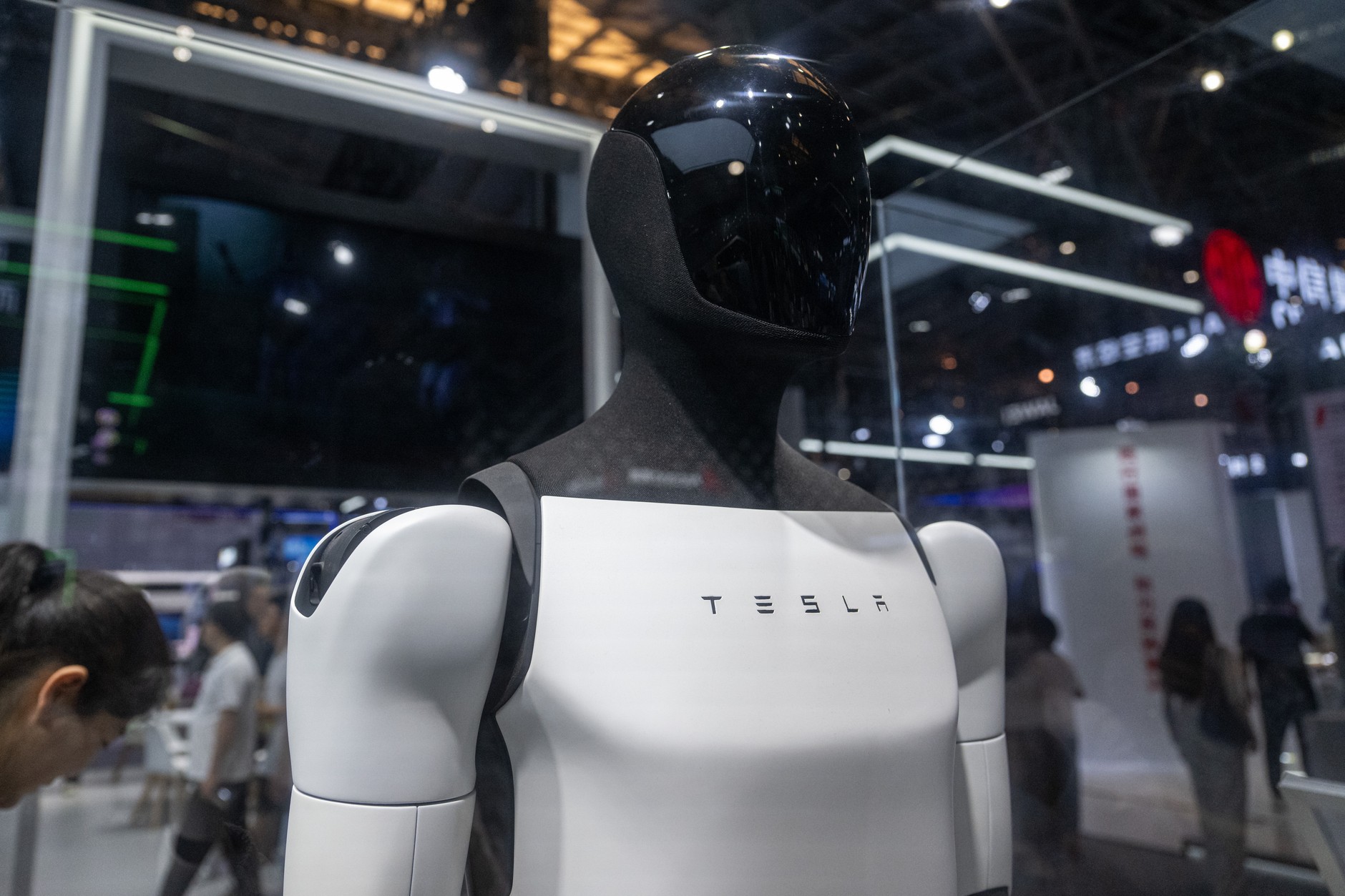
Tesla's master plan is becoming clear – Musk is betting everything on physical AI. The optimistic scenario of companies such as Cantor Fitzgerald and Wedbush predicts a future in which Tesla floods the world with autonomous taxis and humanoid helpers.
The future, according to Musk, depends entirely on physical artificial intelligence. Whoever buys Tesla stock now is investing in a vision. It's the biggest bet on Wall Street — no less than $1.6 trillion. (PLN 5 trillion 650 billion).
A symbolic example of this is the planned suspension of production of Models S and X. This is the end of the former icons of luxury, thanks to which Tesla built its brand. Their production lines in the California factory have not been modernized for the production of new car models. Humanoid robots “Optimus” will be created there.
This is not a modernization of the existing model, but a revolution. Analysts openly say that Tesla's valuation has long ceased to depend on car sales and depends on fantasies related to autonomous systems and robotics.
A look at its fourth-quarter 2025 earnings highlights the strains Tesla faces. Revenues amounted to almost $25 billion. (over PLN 88 billion), slightly above expectations, but below the value from the previous year.
At the same time, Musk surprised with a gross margin in the automotive industry of almost 18%. — much more than the 14% expected by the market. This shows how consistently current operations are focused on efficiency. But these profits do not go to shareholders. They are immediately reinvested.
For 2026, Tesla plans capital expenditure of over $20 billion. (approx. PLN 70,570 million) – twice as much as the market had expected so far. The money will be used to build huge data centers, as well as a direct investment of over $2 billion. (over PLN 7 billion) in Musk's separate artificial intelligence startup, xAI.
For critics, this business model is an inefficient nightmare. However, according to Musk's supporters, he is a genius who will provide access to the most efficient artificial intelligence models.
However, DZ Bank warns that this sharp increase in spending could result in a large negative free cash flow balance in 2026. Tesla is spending money to grow – unlike Meta or Microsoft, which continue to generate high cash flow despite huge investments in artificial intelligence.
But competition is increasing and Musk's company's cash flow is decreasing. Tesla's valuation therefore appears unsustainable.
The article continues below the video
“Tesla's 3% revenue decline in Q4 2025 represents a stark contrast to the rest of the 'Magnificent 7' group [siedem największych firm, najbardziej wpływowych i dynamicznie rozwijających się na świecie]” writes Ryan Brinkman, an analyst at JPMorgan.
“Whoever invests in Tesla today is no longer buying shares of the car manufacturer”
While Tesla is struggling, other tech giants are shining with average revenue growth of 26%, led by Nvidia (+78%) and Meta (+24%). Even more striking is the discrepancy in valuation.
“Even though the remaining Magnificent 7 shares are growing in real terms, they are valued on average with a moderate price/earnings ratio of approximately 31. Tesla, on the other hand, despite declining sales, is valued at an astronomical level of 204.4,” Brinkman calculates.
Musk's supporters see Tesla as the only serious player in the field of physical artificial intelligence. They hope to start serial production of autonomous taxis and scale the software to fully autonomous driving.
The energy storage business is already generating record sales and serves as a stabilizer. Dan Ives of Wedbush, a financial services company, says Tesla's stable margins are proof that the company's core business is profitable enough to sustain the transformation into an artificial intelligence and robotics company.
In this interpretation, the current rebound in margins is the “bed” from which the trend of artificial intelligence, autonomous taxis and humanoid “Optimus” assistants can take off. Investors, as argued by optimists, see a “golden era” of autonomous technology.
Anyone who invests in Tesla today is no longer buying shares of a car manufacturer, but is participating in a risky venture capital fund dealing with robotics and artificial intelligence, which also happens to produce cars.
The valuation is not based on current sales results, but on faith in whether Elon Musk can actually turn his vision of an automated world into reality.
I’m Ashley Davis as an editor, I’m committed to upholding the highest standards of integrity and accuracy in every piece we publish. My work is driven by curiosity, a passion for truth, and a belief that journalism plays a crucial role in shaping public discourse. I strive to tell stories that not only inform but also inspire action and conversation.