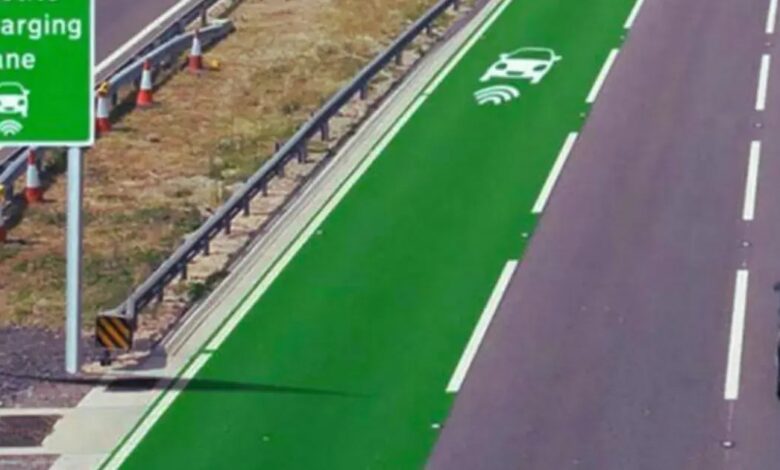
France has successfully built and tested the world's first highway with wireless charging for electric vehicles while moving, and the results of the first tests look very promising, with encouraging numbers, say the authors of this project. It is a segment of the A10 highway in France, located about 40 km southwest of Paris.
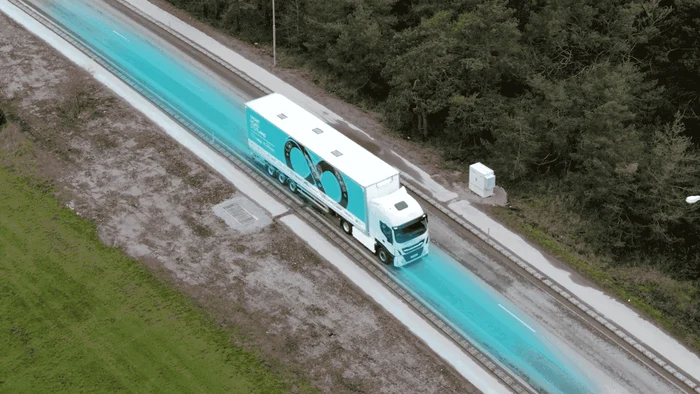
France has successfully tested the e-Road, which charges electric cars on the go. Eletreon photo
A consortium led by VINCI Autoroutes is testing, on a section of the A10 motorway near Paris, an inductive charging system for electric cars, capable of transmitting 200 kW continuously and up to 300 kW at the peak.
According to electriva, the project marks a significant step towards the development of “electric roads”, where charging is done dynamically, without stopping the vehicle.
How the inductive charging system works
The experimental portion is approximately 1.5 km long and is located in the area of Angervilliers, southwest of Paris. Under the asphalt layer, induction coils were installed that transmit energy to the receivers mounted on the vehicles.
The tests include a truck, a van, a bus and a car equipped with receiver coils for “Charge as you drive” technology. The system uses the principle of magnetic induction: the coils under the road generate a magnetic field that feeds the coils on board, without physical contact and without stopping.
VINCI Autoroutes representatives confirmed that the initial tests show a high transmission efficiency and an energy stability of 200 kW in continuous mode, which allows the simultaneous charging of several vehicles.
The advantages for the transition of electric mobility
Dynamic inductive charging has the potential to fundamentally transform the transport infrastructure:
- Battery size reduction – vehicles can use smaller batteries, reducing cost, weight and use of scarce resources.
- Increasing logistics efficiency – for trucks and buses, the system reduces the time lost in stops dedicated to loading.
- Improving sustainability – a more balanced energy consumption and an optimized use of electricity resources can contribute to reducing emissions from road transport.
If this technology is extended nationally, France could become the first European state to integrate charging infrastructure directly into the highway network.
Challenges and perspectives
Specialists warn that expanding the system involves considerable costs and technical challenges. The infrastructure must withstand heavy traffic, temperature and humidity variations, and energy efficiency must be carefully monitored to minimize induction losses.
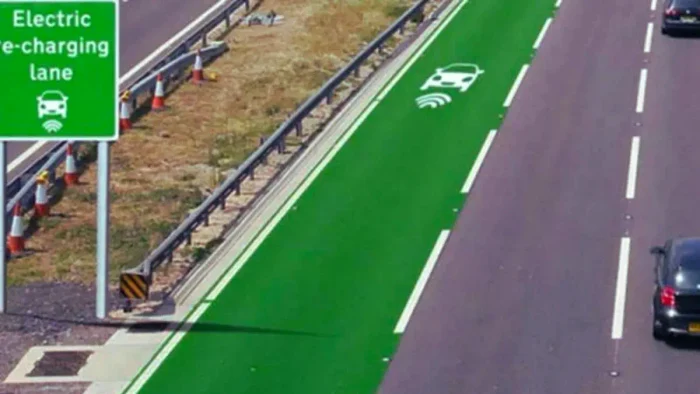
Another hurdle is vehicle compatibility: automakers need to standardize the placement and gauge of pickup coils so the systems can be widely used.
At the same time, public investments and private partnerships are essential for expanding the project at the European level.
A key milestone for sustainable transport
The e-road project on the A10 is a concrete demonstration of how technology can support the transition to efficient and sustainable electric mobility. If the tests confirm the reliability of the system, charging on the move could become a key component of the transport infrastructure of the future.
“Electric roads can reduce the pressure on the networks of fixed stations and accelerates the decarbonisation of road transport“, stated the representatives of the company.