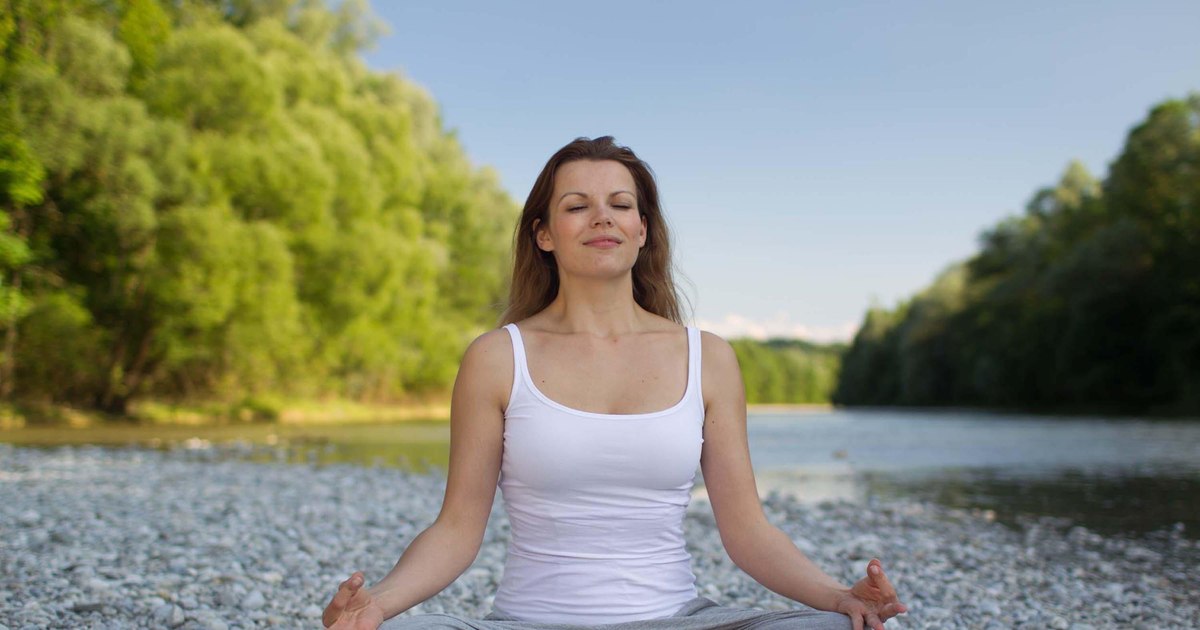
Just seven days of meditation can significantly increase your chances of remembering to do one thing at the right time without any reminders, a recent study shows.
Photo source: Pixabay
Moreover, the idea that attention shapes your memory is a basic principle in ancient traditions, now also confirmed by neuroscience. For example, in Eastern traditions there is a simple rule: “where there is attention, there is also energy.” Practitioners are trained to observe their breathing and reduce “mental noise”, precisely because constant distraction was seen as a weakness of the mind.
Instructions for mindfulness appear in some of the earliest Buddhist texts. In the Ānāpānassati Sutta (one of the oldest Buddhist texts, attributed to the early Buddhist tradition) and the Satipaṭṭhāna Sutta, the technique is described quite simply. The practitioner sits, holds the body upright and focuses attention on the breath, consciously noticing each inhalation and exhalation, according to materials provided by the independent project SuttaCentral, a non-profit initiative coordinated by Australian monk Bhante Sujato, which translates ancient manuscripts from Pali, Chinese or Tibetan.
The texts describe this practice as an exercise in cultivating mindfulness, observing the body, sensations, mind, and mental processes. In the Satipaṭṭhāna Sutta even a remarkable wording appears: one who develops this practice “in this way” for seven days can achieve profound transformations of the mind. Of course, the language is spiritual, not psychological, but the basic idea remains recognizable: sustained attention changes the way the mind works.
What science shows about your internal clock
The fact that this technique works has also recently been demonstrated in the laboratory. In a study published in the journal Consciousness and Cognition, a team of researchers wanted to see if meditation could save us from the burden of endless phone alarms, reveals a material recently published in Psy Post.
In psychology, the ability to remember to do something at an exact time is called prospective time-based memory. It is an exhausting mental effort. Unlike when your alarm goes off (an external stimulus), here you have to rely solely on your internal clock while juggling other daily activities.
To test this, researchers divided 95 students into two groups. The first group practiced meditation daily for a week, focusing exclusively on breathing. If their mind wandered, they were instructed to gently bring it back to the present. The other group spent their time reading.
Visible results when you're disconnected from screens
At the end of the week, they were all subjected to a computer test that demanded their maximum attention. While solving a rapid visual task, they had to remember to press a key exactly every one minute.
When participants were allowed to look at the clock as many times as they wanted, both groups did equally well (with a 75% success rate). But things changed dramatically when they were allowed to see how much time had passed just once a minute.
Here the effect of meditation was seen. Without constant access to the screen, the meditating group managed to press the key at the right time in 52% of trials, while the control group barely achieved 28%.
Millions of people ask AI for medical advice. How ChatGPT can be useful
Study authors Mingyuan Wang and Yunfei Guo, cited by Psy Post, claim that without a watch handy, focusing on the present moment helped them gauge how many seconds had passed.
Furthermore, the researchers observed that the mindfulness exercises did not drain their energy for the main task, but instead expanded their available mental resources.
So the next time you feel like things are getting out of control and you're forgetting essential details, the solution might not be a new productivity app. Maybe all you need to do is stop, listen to your breath and bring your mind back to the present.
Not only do you not forget, but you free your mind
If you're wondering how a simple breathing exercise can have such a big impact, the answer comes from dozens of other clinical studies. According to an extensive review of psychology studies, mindfulness has already been shown to train working memory, sustained attention, and decrease the rate of cognitive errors.
When you get your mind used to not running after a thousand thoughts at once (that exhausting mental noise), you basically free up “space.” This way, your brain gets the resources to not only remember when you need to do a certain thing, but also how to do it stress-free.
So the next time you feel like things are getting out of hand and you're forgetting important details, the solution might not be a new productivity app or another agenda. Maybe all you need to do is stop, listen to your breath and bring your mind back to the present.
How to Meditate: The Original Instructions, Thousands of Years Old
If we're still talking about meditation as a form of memory and attention training, how exactly is it done correctly?
Beyond the dozens of apps and methods promoted today, the original instructions in the Satipaṭṭhānasutta (one of the oldest Buddhist texts on meditation, translated by the independent archive SuttaCentral) are extremely simple. Here, attention to the breath is presented as the basis of the entire practice.
Here is what the basic technique looks like, clearly reproduced from the old texts:
1. Sit in a quiet place
Find a place where you won't be interrupted. Sit with your back straight and bring your attention exclusively to the present moment.
2. Don't control, just observe
The golden rule is not to view the breath as an object of forced concentration, but simply to be aware of it. Don't try to breathe a certain way. If he breathes in deeply, be aware that you are breathing in that way. If your breathing is short and shallow, be aware of it.
The Holiday Breakup Paradox: Why We Idealize the Relationship Just When We Feel Loneliest and How to Protect Yourself
3. Anchor your body
As your mind quiets down, your breathing will become more and more subtle. The next step is to be aware of your body as a whole during each breath, letting the physical tension fall away.
4. Give up analysis and labeling
In meditation, you have nothing to deal with. You must not judge physical sensations or thoughts. Just as you observe the air, learn to notice whether there is agitation, desire, or boredom in your mind, and then let them pass. “Quieting the mental processes” occurs precisely when you stop clinging to every thought.
According to the same ancient text, you don't need decades spent on a mountain to see results. Clear mind-liberating (and thus, regaining mental clarity) effects occur even after 7 days of rigorous daily practice. Which is exactly the amount of time after which Chinese researchers today saw improvements on lab tests.
It costs nothing, requires no special equipment, and is most likely the best thing you can do to improve your memory today.