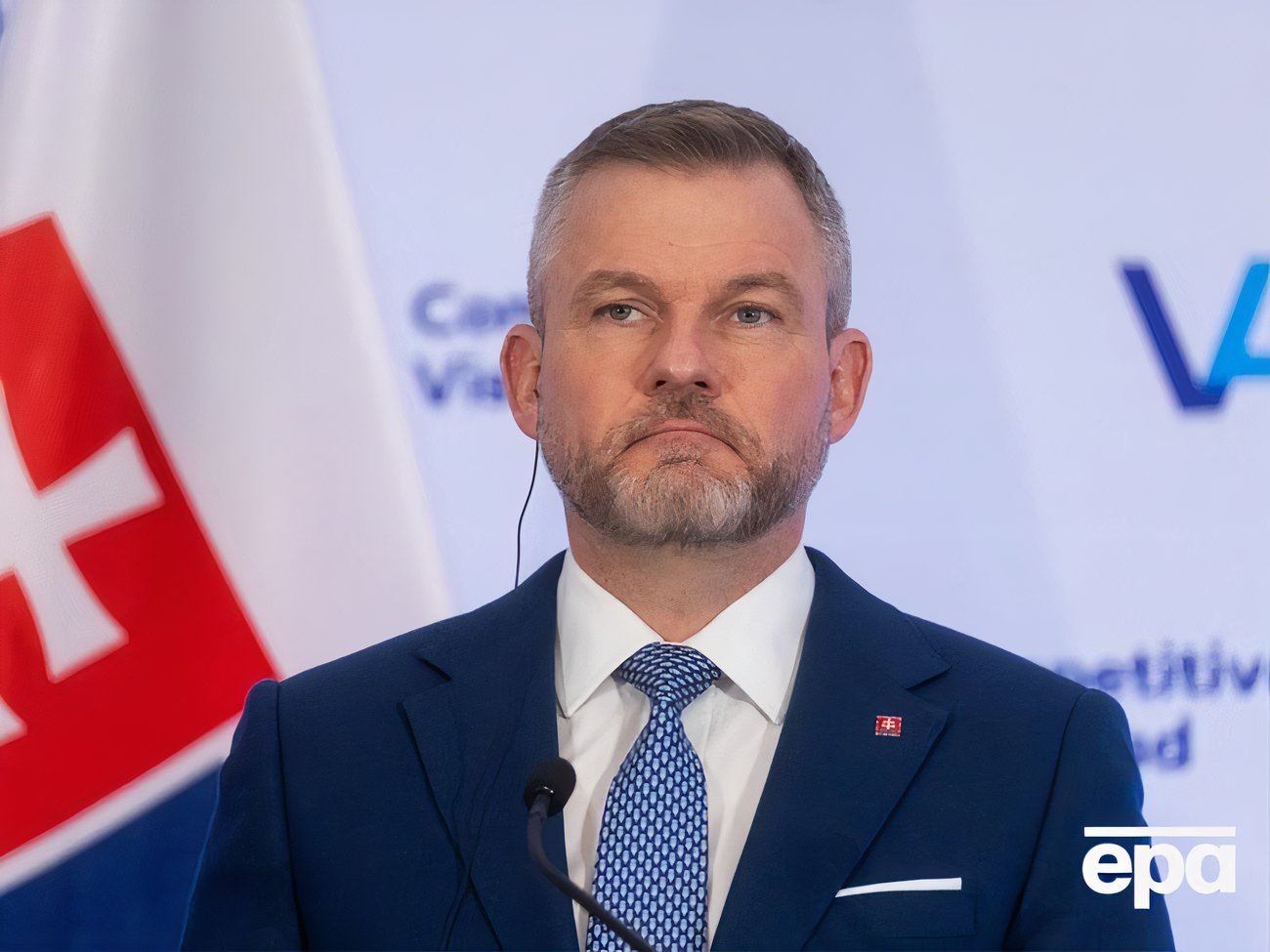
At the same time, he called for “accelerating and supporting US actions so that they sit down at the negotiating table as soon as possible with [нелегитимным президентом РФ] Vladimir Putin and put an end to this war.”
“Because I believe that if we transfer tens or hundreds of billions more to Ukraine just to buy them weapons and military equipment, we will only continue a conflict that has devastating consequences for Ukraine,” he said.
According to Pellegrini, such large amounts of money should only be spent on the post-war reconstruction of Ukraine, including energy. He stressed that this would be better and more effective for Ukrainians “than continuing military operations with the help of such huge injections.”
“After all, today it is obvious to everyone that Ukraine, given the huge army and the tenacity of the Russian army, is simply not capable of winning this war and ousting it from its territory,” said the Slovak president.
On November 21, the Secretary of State of the Slovak Ministry of Defense Igor Meliher said that it would be better for Slovakia if Ukraine were within the borders that it had before 2014, but completely under Russian influence.
Context
On September 10, European Commission President Ursula von der Leyen announced a new strategy to support Ukraine using frozen Russian assets. The media explained that the proposal of the so-called reparation loan suggests that the country could be provided with financing from frozen Russian assets without their direct confiscation.
In October, Belgian Prime Minister Bart de Wever immediately named three conditions under which he would agree to support the idea of a “reparation loan.”
On November 7, the European Commission warned EU countries of the risk of annual costs of up to €5.6 billion if they do not agree on the creation of a reparation loan for Ukraine worth €140 billion using frozen Russian assets.
On November 8, Slovak Prime Minister Robert Fico said that his country would not support the use of frozen assets for the defense of Ukraine.
On November 15, Valerie Urbain, director of the Belgian depositary Euroclear, which manages the frozen Russian assets, said that she “does not rule out” legal action against the European Union if a decision is made to confiscate them.
On December 3 in Brussels, the European Commission again discussed the proposed “reparation loan” for Ukraine for €165 billion, formed using funds from frozen Russian state assets. This initiative has already provoked resistance from Belgium, which believes that its position has again been ignored.