Meeting of the train with displaced persons who arrived in the Jewish Autonomous Region for permanent residence
Photo: State Archive of the Jewish Autonomous Region
December 26, 1893
Literary critic, poet, writer – Oyslender Nakhum Evseevich was born.

In 1919, Nakhum Evseevich published his first literary critical work, “The Main Features of Jewish Realism” (12+). He was one of the editors of the magazine “Strom” (16+), in 1927-1932. headed the literary section of the Institute of Jewish Proletarian Culture. Oyslander participated in the preparation of literary anthologies for Jewish schools and the academic publication of the works of Sholom Aleichem.
In 1938, Oyslender Nakhum Evseevich was in Birobidzhan. He is the author of the books “The Jewish Theater” (6+), “Noon” (12+), “Front” (12+), “A. Goldfaden. Materials for a Biography” (6+), the play “Young Sholom Aleichem” (6+), etc. He has been published in various newspapers “Einikait” (12+), the almanac “Geimland” (12+). The magazine “Outpost” (16+) published the article “Goldfaden's poem “March of the Mission” (12+). Oyslender Nakhum Evseevich in 1941-1945 was a member of the commission of the Anti-Fascist Jewish Committee.

Day in the history of the Jewish Autonomous Region. Photo: Photo: Regional Library
December 26, 1936
The newspaper “Birobidzhan Star” (12+) on December 26, 1936, in the section “Around the city and region” wrote that six million rubles were allocated for the construction of three new resettlement collective farms in the Birsky district, now the Obluchensky district.
A Korean drama club has been organized at brick factory No. 1.
The newspaper informs its readers that A repair train arrived in Obluchyesent by the People's Commissar of Railways. L. M. Kaganovich set a specific task for the train – to help the first department withdraw the Obluchye depot and become the forefront not only on the Far Eastern Railway, but in the Union.
The newspaper posted an announcement that on December 26 at 7 pm in the party office there would be a lecture for party and Komsomol activists about the work of A.S. Pushkin.
December 26, 1937
The newspaper “Birobidzhan Star” on December 26, 1937 informed its readers that in the last days of December the Birobidzhan State Jewish Theater named after. L. M. Kaganovich will show a new play by the brothers Tur and Sheinin “Confrontation” (16+).

Jewish State Theater named after. Kaganovich. Photo: Photo: State Archive of the Jewish Autonomous Region
“The play shows a number of saboteurs and spies sent to us by fascist states and the fight against spies, saboteurs and saboteurs waged by our punitive agencies, with the active help of Soviet citizens. The play is directed by T. M. A. Norwid, the scenery and costumes are prepared by the artist S. Goldberg.”
December 26, 1939
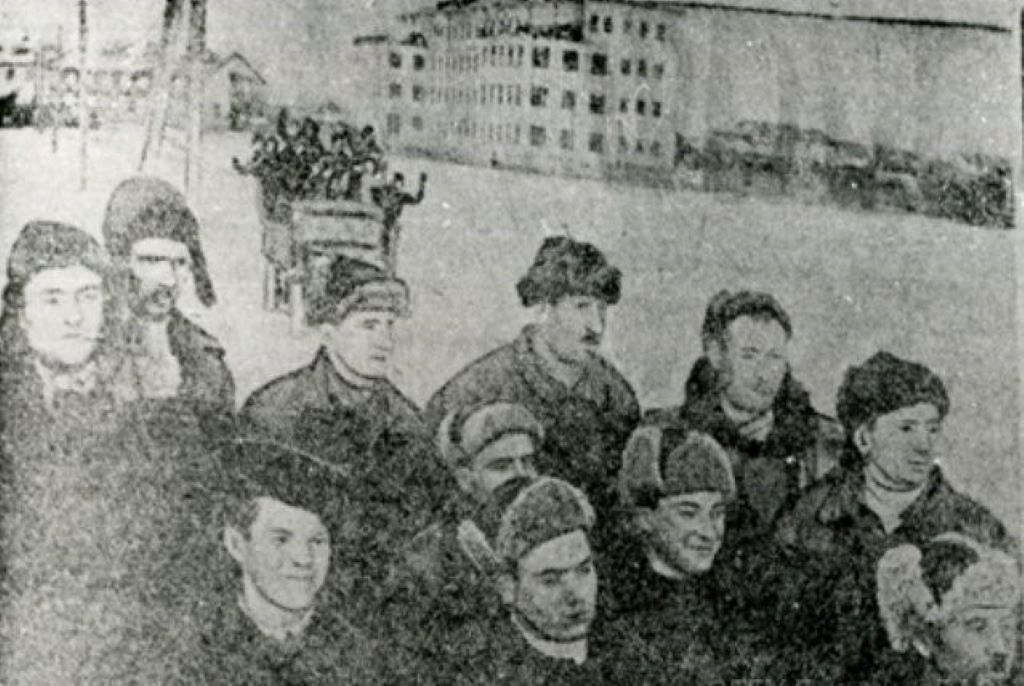
A group of migrants sent to collective farms in the region. Photo: Photo: State Archive of the Jewish Autonomous Region
The Bureau of the Regional Committee of the All-Union Communist Party of Bolsheviks and the Presidium of the Regional Executive Committee approved an action plan for resettlement to collective farms in the Jewish Autonomous Region for 1940. It was planned to allocate more than 19 million rubles for the planned activities and resettle 800 families.
December 26, 1946
In the reference and information publication “Streets of the City of Birobidzhan” (0+) it is written that on December 26, 1946, by decision of the Birobidzhan City Executive Committee No. 1232 in the village of Zarechye, the streets were named after the Hero of the Soviet Union Bumagin, Birofeldskaya, Vilinsky, Kooperativnaya, Sergei Lazo, Seryshev, Tikhonkaya, Shevchenko, School.
December 26, 2002
The newspaper “Birobidzhan Star” wrote on December 26, 2002 that in the mayor's office of Birobidzhan, after a live broadcast with Vladimir Putin, it was decided to install a live New Year's tree in the city.
A schoolgirl from Birobidzhan called the President and, confusing the tree made up of several parts with an artificial one, asked why a fake Christmas tree was placed in the central square of the city. The main costs of delivering the forest beauty from the Far Eastern taiga were covered by the Khabarovsk organization.
On the second page of the newspaper there is information that the first exchange exhibition of graphic works from the funds of the Chita Regional Art Museum has opened at the regional museum of modern art.