NewsVibe's analysis shows that USR and AUR have the largest increase in mentions online over the past week, signaling an increase in political activity and a repositioning in the public eye.
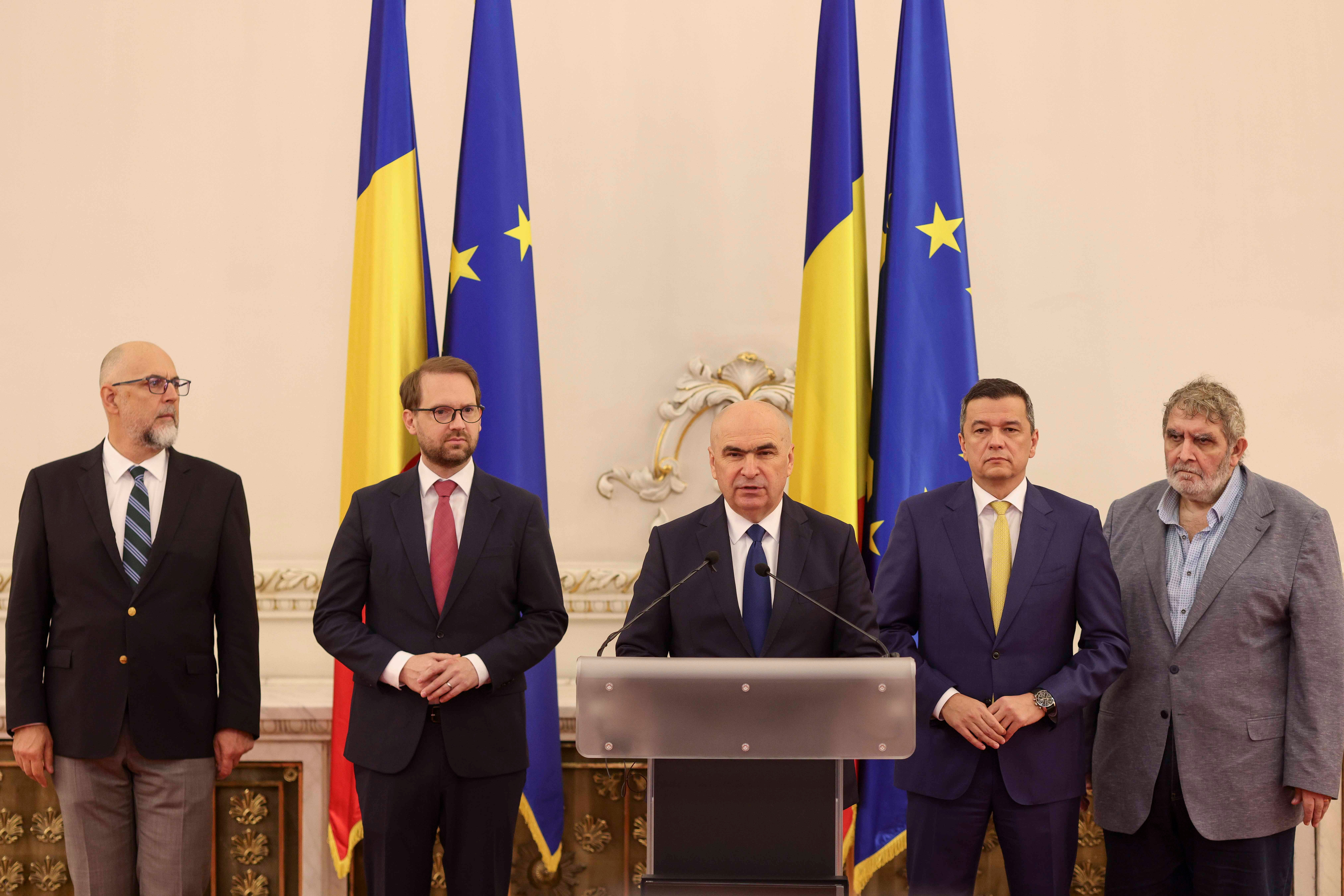
Which party won the attention of the public in the last week PHOTO: Archive
According to the data extracted by the NewsVibe platform, we are witnessing a moment of increase in party mentions, as well as their estimated impact, after two periods of continuous decline. The dynamism of the political agenda is also reflected in the media coverage of the parties in the most relevant online sources, reports Informat.
The campaign for the elections in Bucharest is coming to an end, and the most important candidates are intensifying their public appearances. The electoral debate has taken on increasingly contentious tones, and recent opinion polls have fueled discussions about the final outcome. In parallel, the Government faced the resignation of the Minister of Defense, Ionuț Moșteanu (USR), as a result of the accusations that appeared in the press regarding elements in the CV. At the same time, the Government pledged its responsibility in Parliament on a project proposal regarding the retirement of magistrates.
Among the opposition, George Simion was reconfirmed as president of AUR by the party's Congress, and he organized a march in Alba Iulia on the occasion of Romania's National Day, attracting visibility both for him and for his formation.
NewsVibe's analysis reveals that USR and AUR saw the largest increases in mentions, nearly 49% for USR and over 35% for AUR. PSD recorded moderate increases, while PNL and UDMR decreased. The significant increase in the number of mentions about USR raises this party to the top of the list, after many months, the analysis notes.
Compared to the previous week, the number of party mentions increased by almost 1,000, and the estimated impact by more than 15 million. For the first time in a long time, mentions of USR are not only the most numerous, but also have the highest estimated impact, signaling a visible repositioning in the online audience's attention. Although coalition parties continue to hold more than 90% of total mentions, their estimated impact has fallen below this threshold, indicating a diversification of the attention of high-influence sources.
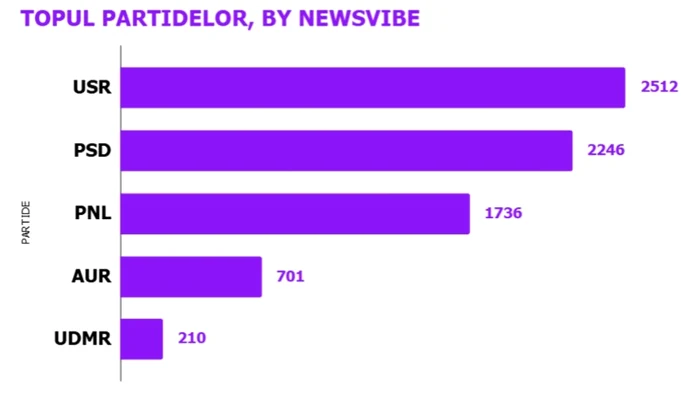
Top 5 parties according to the volume of mentions in the relevant online and social media sources PHOTO: Infonnat.ro
Semantic network analysis of online conversations highlights several topic areas. USR dominates discussions related to Ionuț Moșteanu and topics such as the problem of drinking water in Prahova and Dâmbovița, involving figures such as Nicușor Dan, Dominic Fritz and Ilie Bolojan. The PNL appears around the candidates for the Capital City Hall, with names such as Ciprian Ciucu, Daniel Băluță and Cătălin Drula, and the PSD remains associated with discussions about the relationship with the government. At the same time, AUR is visible in the context of the reconfirmation of George Simion and the events organized by the party on the occasion of the National Day.
The analysis of the tone of online conversations shows that USR and PSD generate the most negative content, influenced for USR by the case of Moșteanu and the problems related to the supply of drinking water, and for PSD by the contradictory debates with the governing partners. The candidates for the Capital City Hall appear in mixed contexts, both positive and negative, reflecting the polarization of public opinion.
This dynamic confirms the fact that the online visibility and impact of Romanian political parties remain strongly polarized, and the ability to generate relevant topics is essential for maintaining the public's attention in the pre-election period.
Although coalition parties continue to hold more than 90% of total mentions, their estimated impact has decreased, indicating greater attention to the opposition in high-influence sources. At the same time, the differences between the first and last ranked party remain large, reflecting the polarization of public attention and the unequal ability of the parties to generate topics of interest.