After the Russian invasion of Ukraine, the EU and G7 countries froze a significant part of the assets of the Russian central bank. In Europe alone, the amount is approximately EUR 140 billion, which has become the axis of a political and legal dispute. Kiev and its allies would like the money to support Ukraine's defense and budget, while Moscow treats the potential takeover of funds as a hostile action that goes beyond sanctions.
During the October summit, EU leaders tried to agree on a plan to formally use these assets as security for a loan to Ukraine. The project assumes that the frozen funds of the Russian central bank would not be consumed directly, but would be used to finance support for Kiev.
However, no agreement was reached. The objection was raised by Belgium, a key country in this dispute, because that is where some of the assets are located, including: in the Euroclear settlement system.
“It's money used for war, not for peace.”
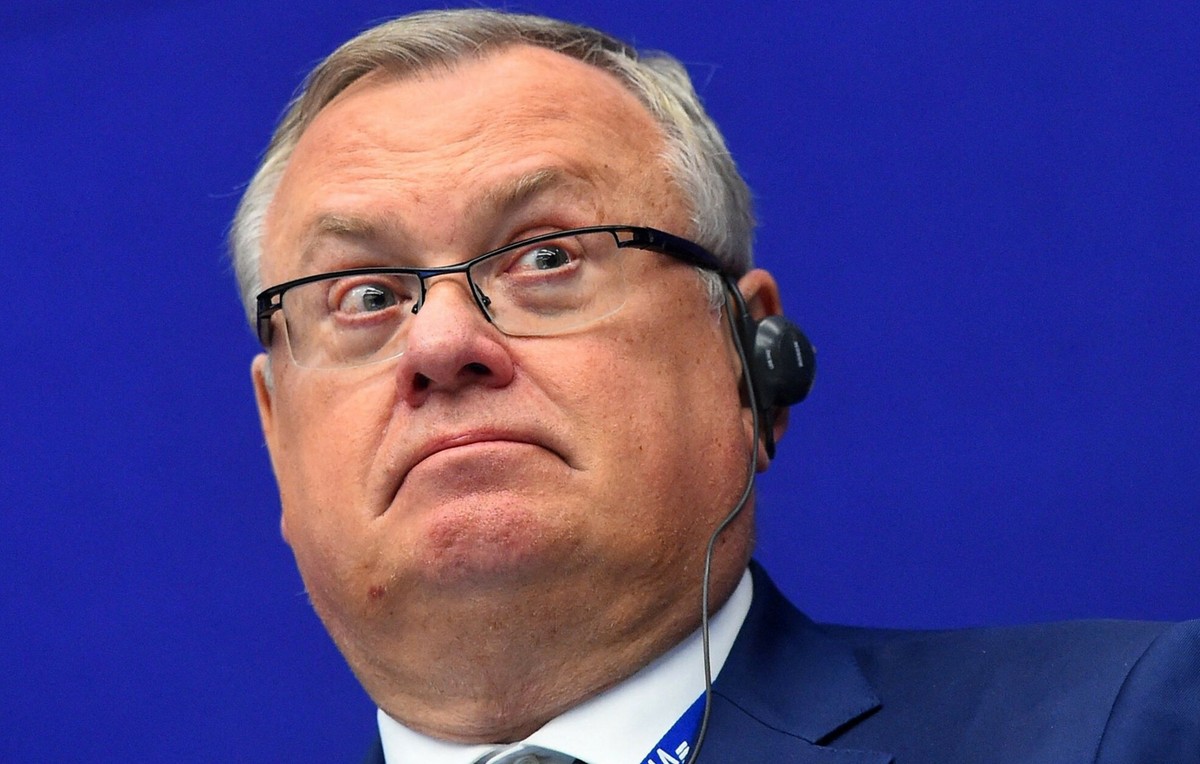
Andrei Kostin in comments preceding the visit of US special envoy Steve Witkoff to Moscow sharply criticized the European plan. He emphasized that Russia “can cope without this money,” but the problem is that these funds are to be used, in his opinion, “for war, not for peace.”
The next part below the video:
Kostin accuses the EU of wanting to wage the conflict not only with other people's hands, but also with other people's money. In his narrative, Europe uses resources belonging to Russiato finance Ukrainian defense, which he presents as a manifestation of political hypocrisy. In his opinion, “there is no justification” for such a step.
Threat of retaliation and a wave of lawsuits
The banker warned that Moscow would respond to possible confiscation or use of sovereign assets by taking over the assets of European investors present in Russia. This is a signal to both governments and business. If the EU decides to use the frozen funds, the Russian authorities will look for a symmetrical response on their territory.
The strongest signal, however, concerns what may happen in courtrooms. Kostin stated that the use of frozen assets could trigger “50 years of lawsuits” — and not only in Russiabut also before international courts. In his opinion, Russia should be more active in suing the European Union, Belgium and Euroclear both in its own courts and in international tribunals. He also indicated a lawsuit in judicial bodies operating within the UN system as one of the potential directions.
Such a strategy would have two goals. On the one hand, deter the EU from radical decisions regarding assets, and on the other hand, build long-term legal pressure and financial on European institutions and Member States. The threat of half a century of disputes is a message that no political compromise will immediately end the fight for money.
Possible compromise: division of assets within the peace
Kostin, although very sharp in his criticism of the EU's plans, does not rule out a scenario in which Russian assets will be included in a larger peace agreement. He refers to the early version of the peace plan, supported by the United States, according to which USD 100 billion the frozen funds would be allocated to the reconstruction of Ukraine. The rest of the money could go to, among others: to the US-Russia joint fund.
In such a formula, the use of assets would not be a unilateral move by the EU, but an element of a broader arrangement in which Russia also consents to their partial use.