China signals its readiness to talk about Ukraine. They are testing the US position on Taiwan


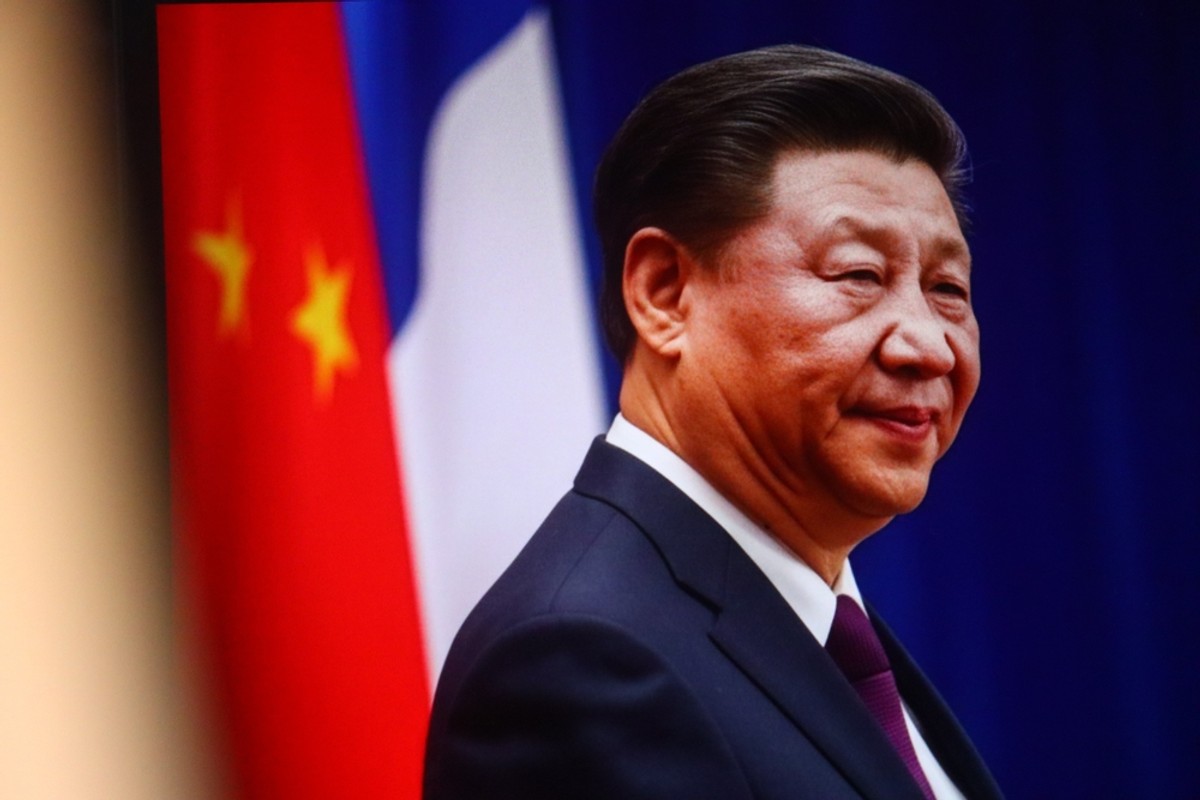
Following the telephone conversation between US President Donald Trump and Chinese leader Xi Jinping on November 24, the Chinese Ministry of Foreign Affairs issued a note saying in which it declared its willingness to reach a “fair, lasting and binding agreement” aimed at solving the Ukrainian “crisis” “at its sources”.
The Xi-Trump conversation took place in the context of the announcement by Russia and the US of an outline 28-point peace plan for Ukraine. This document, based largely on Russian proposals, assumes, among other things, Kiev's commitment not to join NATO and territorial concessions. One of the points also mentions the need to “remove the root causes of the conflict”, which is consistent with China's rhetoric.
An expert on China at the Royal United Services Institute (RUSI) think tank emphasizes in an interview with PAP that the phrase regarding the “sources” or “root causes” of the conflict is not new, but its use at such an important moment is, in her opinion, of great importance.
— Xi Jinping, using this phrase in an official statement after the high-level conversation, cements China's position in this war, suggesting that the revealed list of Russian demands is certainly not unacceptable to Beijing, Havren says.
According to her, Beijing has long defined the “sources” of the crisis in line with the Russian narrative.
— China consistently supports the principle of indivisible security (…) and shares the view that peace cannot be built on the lack of security of others, the expert noted.
In practice, this means criticism of NATO expansion, which Beijing and Moscow consider to be the direct cause of the war. Havren adds that for China it is also part of a broader vision of global order in which superpowers respect each other's spheres of influence.
— All of this, of course, reflects the situation in the Indo-Pacific region and in Taiwan. (The authorities in Beijing believe that – PAP) other powers should stay away from China's affairs in the region, the analyst notes.
He draws attention to the evolution of China's position, which Beijing tries to present as neutral.
— The definition of “root causes” is not a rigid doctrine, but a flexible rhetorical tool that has evolved since 2022 to allow China to criticize Western policy while trying to present itself as a neutral party, with questionable success, Havren notes. He adds that this narrative was formalized in 2023 in China's 12-point plan to end the war in Ukraine and was promoted in Europe by China's special envoy Li Hui, although without specific demands for the withdrawal of Russian troops.
The Ukraine issue, according to Havren, is inextricably linked to the Taiwan issue, which is crucial for Beijing. The communist authorities in Beijing consider the island an inalienable part of their territory, which they intend to “unify” with mainland China, without excluding the use of force.
In his conversation with Trump, Xi linked defending the “international order established after World War II” to Taiwan while offering help in resolving the “Ukrainian crisis.” According to the analyst, this is a clear transaction signal.
“This is classic Xi diplomacy: multi-layered signals that promote Beijing's vision of a 'community of shared future' while also testing Trump's isolationist leanings and tapping into his business instincts,” Havren says.
In her opinion, China is offering Trump a diplomatic victory in Ukraine, using its influence on Moscow to implement a solution based on “root causes.”
— In return, Beijing demands that Washington tame its allies, especially Japan, and accept the definition of the “post-war order” in the Taiwan Strait – concludes the RUSI expert.