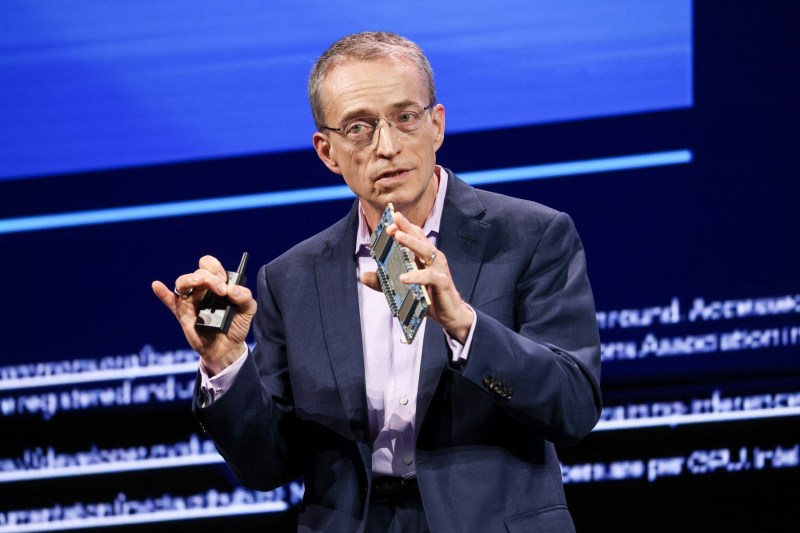
Pat Gelsinger, former executive director (CEO) of Intel, PHOTO: I-Hwa Cheng / AFP / Profimedia
In March, three months after he was forced out as Intel CEO and sued by shareholders, Patrick Gelsinger took over the helm of Gloo — a technology company built for what he calls the “faith ecosystem,” The Guardian reports.
Gloo's objective is to develop technologies for churches that use chatbots and AI assistants to automate pastoral work and support religious activities.
Gelsinger says his main mission now is to promote the Christian principles of his new company in Silicon Valley, in the US Congress and beyond, armed with a “war fund” raised through financing worth $110 million.
“My life's mission has been to work on technology that will improve the lives of every human on the planet and hasten the return of Christ,” he states. Gelsinger, a computer science engineer now 64, led Intel from February 2021 to December 2024, when he announced he was stepping down and planning to retire.
His relatively short tenure as a Silicon Valley boss ended after Intel, traditionally one of the biggest players in the chip market, fell behind rivals in the race to produce hardware for AI systems. Last December, some of Intel's shareholders sued the company, Gelsinger and other executives, accusing them of failing to disclose the true extent of the chipmaker's problems.
The former head of Intel compares the development of AI to the advent of printing
Speaking on October 7 at a seminar organized by Gloo, Colorado Christian University and the Christian Post, Gelsinger described the development of AI as “another Gutenberg moment”: an epochal change as important as the Protestant Reformation.
In the same way that “a Rotofei monk,” Martin Luther, used printing to catalyze “the greatest period of invention in human history,” he said he sees a similar, faith-inspired opportunity today to change the course of history through artificial intelligence.
“The church embraced that great invention of the age to change humanity,” Gelsinger said, referring to the print. “And my question today is: Will we embrace and shape artificial intelligence as a technology that will truly become a powerful expression of the Church and a manifestation of it?” he asked rhetorically.
Gloo, Gelsinger's new company, says it serves “more than 140,000 faith, ministry and nonprofit leaders.” Although its target audience is different, Gloo's user base is minuscule compared to the giants of the AI industry: around 800 million active users use ChatGPT weekly, not including Claude, Grok and others.