2025-11-26 19:00
publication
2025-11-26 19:00
Some member states, including Poland, may have problems achieving the European Union's goal of re-recovering and recycling municipal waste, according to the report of the European Court of Auditors (ECA) published on Wednesday.
Across the EU, progress in reusing and recycling municipal waste, or household waste, is too slow, EU auditors said. Meanwhile, this waste constitutes 27%. all waste generated in the EU.
An ambitious target of 55%. and a request for adjournment
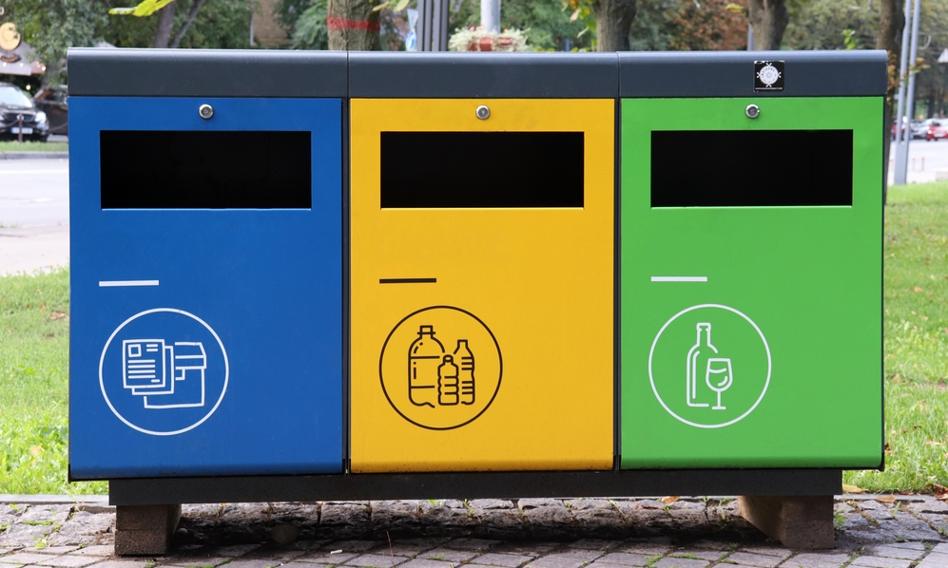
In line with the EU's goal of moving to a circular economy by the end of 2025, member states should be able to recycle 55%. this type of waste. However, their effective management requires well-organized separate collection of various materials (e.g. glass and paper or cardboard must be placed in separate containers), appropriate infrastructure for sorting, processing, incineration or storage of waste, and a profitable market for selling recycled products, which is still missing in the EU. As a result, too much municipal waste still ends up in landfills.
Eight Member States, including Poland, have already informed that they will not be able to meet the target by the end of this year and have requested its postponement.
Poland segregates well, but processes poorly
An audit carried out by the ECA in four member countries: Poland, Romania, Greece and Portugal showed that Poland still lags behind both in terms of recycling municipal waste and packaging waste.
Poland is doing better and better when it comes to separate waste collection – today it is already 41%. waste is segregated. Compared to the other three audited countries, it also performs well in terms of bio-waste collection. It is the only one of the four audited countries that has carried out an information campaign on waste segregation at all.
Lack of profitability closes plants
However, the situation is worse when it comes to waste recovery. The problem is, among others, low profitability of the recycling sector. For example, operators of waste processing plants operating in Poland drew auditors' attention to the shortage of recycling plants purchasing recovered materials.
Furthermore, they noted that a number of recycling plants were either reducing their processing capacity or ceasing operations altogether. This low demand contributes to falling prices and means that recyclable goods must be transported longer distances, generating transport-related emissions.
The Commission is to adopt a new act on the circular economy in 2026. It is intended to help, among other things, solve recycling problems.
From Brussels Jowita Kiwnik-Pargana (PAP)
jowi/mal/mhr/