Three days of national strike in Belgium. Schools and hospitals closed, flights cancelled, trains suspended

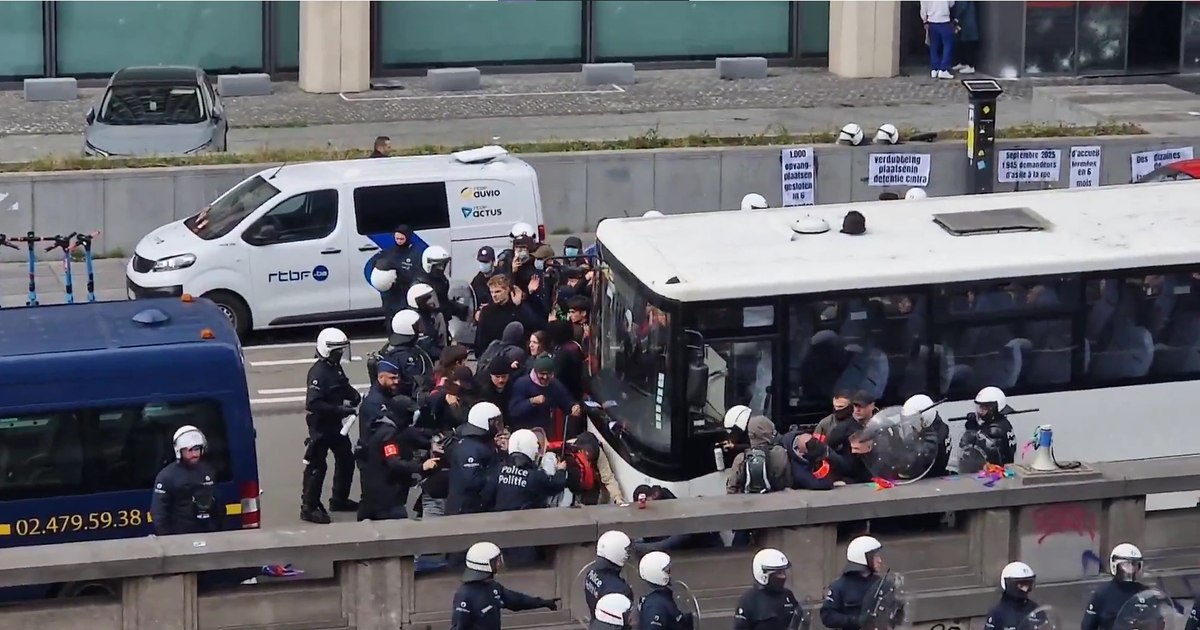
Suspended trains, canceled flights, closed nurseries: Belgium is preparing for three days of strike on Monday in the context of the reforms proposed by the De Wever government for the recovery of public finances, compared by the unions to a “social disaster”.
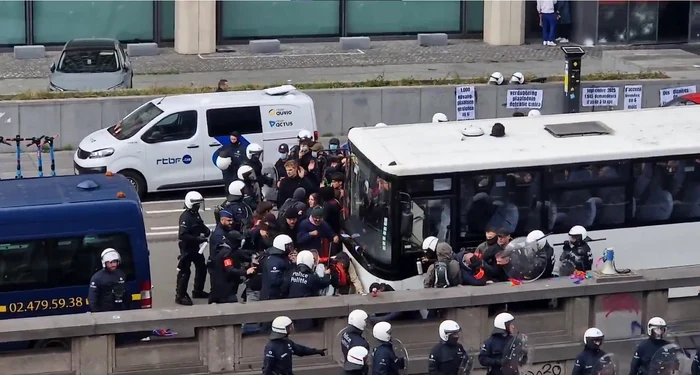
General strike in Belgium PHOTO: EPA EFE
The movement is organized in three stages. Public transport and railways will start the action on Monday. The Belgian railway operator, SNCB, foresees the circulation of one train out of two, or even one train out of three, depending on the line. Several Eurostar trains connecting Brussels to Paris have also been cancelled, the News writes.
On Tuesday, they will be joined by public services: schools, nurseries, administrations, hospitals. Ahead of an inter-professional strike scheduled for Wednesday. The exact extent of the disruptions is still uncertain.
In any case, the strike will have a very concrete effect on air traffic: no commercial flights will take off from the two main Belgian airports, Brussels-Zaventem and Charleroi, on Wednesday, with the companies that operate them anticipating a high percentage of strikers among the personnel responsible for security controls.
This social movement was launched at the initiative of the main Belgian unions, engaged in a struggle with Prime Minister Bart De Wever. Belgium has one of the highest debt levels in the Eurozone, along with Greece, Italy and France.
In power since February, the Flemish conservative is asking the country for a major austerity effort. He put on the agenda a series of unprecedented structural reforms regarding the liberalization of the labor market, unemployment rights or pensions. But only a small number of the major reforms desired by De Wever have been achieved so far. And that's because the five parties in his coalition are divided on the extent of the reforms, as well as on how to achieve the new budget savings in parallel with a strong increase in military spending.
The head of government has given his coalition until Christmas to reach an agreement. The strike movement thus represents an opportunity to exert pressure on the parties, while the negotiations between them continue. It is “an appeal to Prime Minister De Wever and the entire government to end social division”, the unions say in a statement.
The socialist union FGTB accused the prime minister of “contempt” and “disrespect” to this social movement. The main Belgian trade union organizations have launched numerous calls for mobilization since Bart De Wever came to power. Participation has varied depending on the actions. One of the most important demonstrations took place in mid-October, when tens of thousands of people marched in the streets of Brussels against budget cuts considered “brutal”.