On November 21, we will see how far America will go

Last Friday, the Treasury Department announced a package of updated licenses allowing companies to enter into talks with the sanctioned Russian oil giant about purchasing its overseas assets, which account for about half of its global assets. world oil production.
The deals are subject to two conditions: Any deal must completely strip Lukoil of control and transfer the proceeds to a frozen trust account that the company cannot access for as long as sanctions remain in place.
The most important license is General License 131 [ang. ogólna licencja]which gives companies the green light to negotiate — but not finalize — a purchase of Lukoil's foreign assets.
The Treasury Department also issued general license No. 128A, allowing the continuation of operations using Lukoil's gas stations outside Russia, and general license No. 130, which allows limited cooperation with Lukoil's branches in Bulgaria, including the Burgas refinery, which Sofia is trying to take over.
The package is complemented by general license No. 124B, which protects activities related to the Caspian Pipeline Consortium, [kazachskiej firmy wydobywczej, której Łukoil jest udziałowcem] Tengizchevroil and the Karachaganak gas project – a sign that Washington is trying to put pressure on Russia without disrupting the main energy corridors outside Russia.
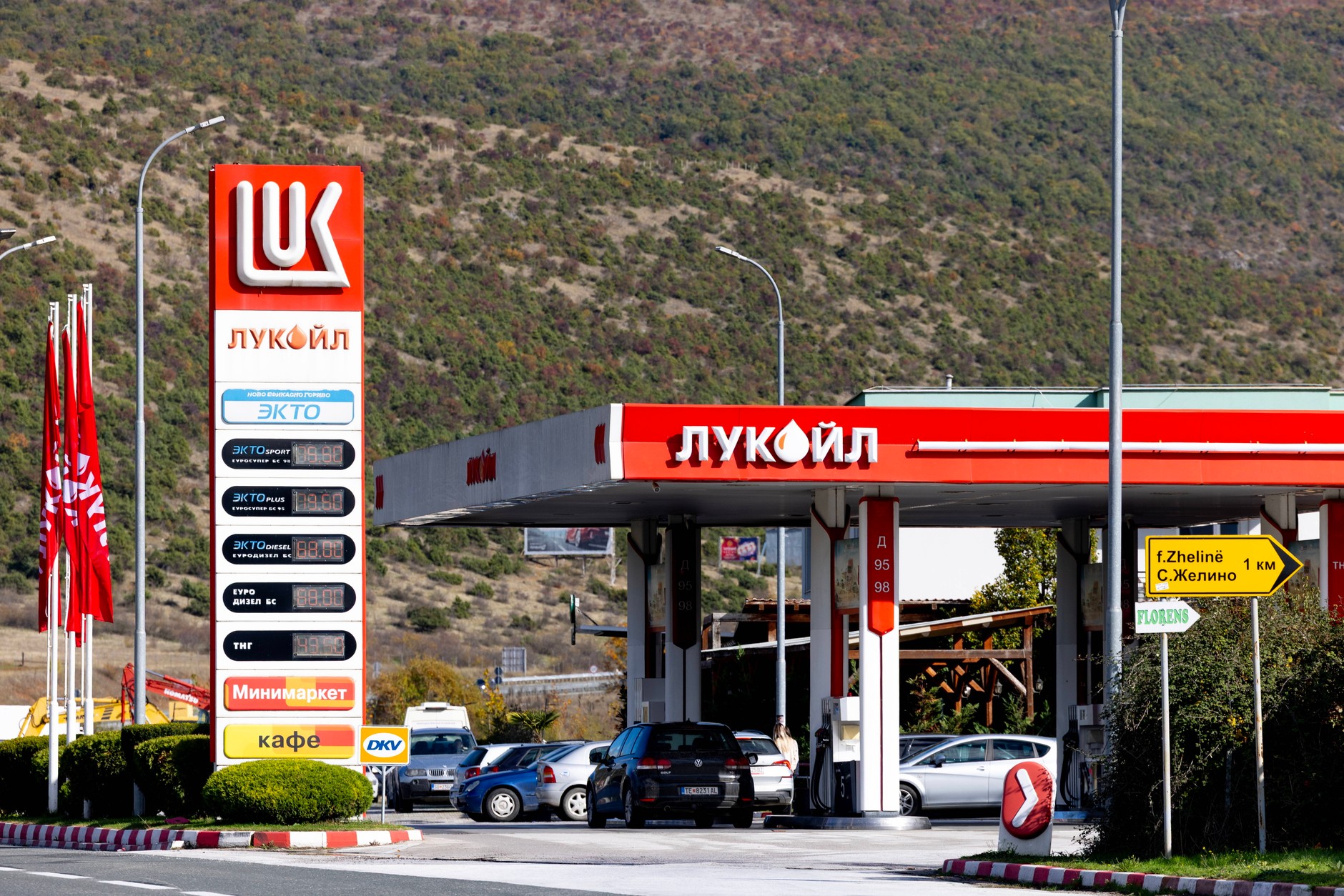
Lukoil gas station on the highway between the cities of Tetovo and Skopje, Republic of North Macedonia, October 28, 2025.Georgi Licovski / PAP
The approval came less than a month after the United States imposed sweeping sanctions on Russia's two largest oil companies, Lukoil and Rosneft, for financing the Kremlin's war in Ukraine.
But the administration's approach to the two companies is beginning to diverge: Lukoil, a private company with extensive foreign assets, is treated more as an investment puzzle to be solved, while Rosneft — closely controlled by the Russian state — remains a more politically sensitive target.
Who cares about Lukoil's assets?
According to Western officials who spoke to the Kyiv Post, US private equity giant Carlyle, Kazakh state-owned KazMunayGas and European giant Shell have shown interest – a lineup that suggests global companies are weighing whether the narrow path to negotiations opened by Washington is worth the geopolitical risk.
The Trump administration also moved this week to shield Bulgaria from energy market turmoil, approving certain business deals with Lukoil's Burgas refinery after Sofia moved to take over the plant.
The Bulgarian Ministry of Energy hailed the US decision as a diplomatic victory, saying it was the result of “intense actions, negotiations and diplomatic talks” aimed at ensuring stability for Bulgarian consumers and businesses.
The article continues below the video
Sanction strategy: bark, bite or both?
Exclusions and extensions [z konieczności dostosowania się do sankcji USA przez poszczególne kraje] are sparking the now-familiar debate in Washington and European capitals about whether whether the United States is tightening sanctions against the Russian oil sector or just reorganizing them.
The Treasury Department's decision to extend the deadline for the sale of Lukoil to Dec. 13 adds to what some analysts describe as a growing list of carefully selected exceptions — steps that critics say could weaken the impact of the sanctions.
For now, there are no clear signs that Washington intends to aggressively enforce restrictions on current Russian oil volumes, which remain relatively resilient despite price and transport constraints.
The real test is scheduled to take place on November 21, when secondary sanctions related to oil trade with Russia will formally enter into force. These measures, if implemented rigorously, could reshape global shipping and insurance markets — and if not, they would send a signal that the administration is wary of triggering a new surge in global oil prices.
— Some will see this avalanche of layoffs [z sankcji] as a sign that [Biały Dom] he barks more than he bites, one Western diplomat tells the Kyiv Post. — But secondary sanctions are crucial. They will show how far the United States is really willing to go, adds the anonymous source.
For now, companies interested in Lukoil's assets have one clear piece of information: Washington wants to remove the Russian oil giant from the world stage, but not at the expense of destabilizing energy markets.