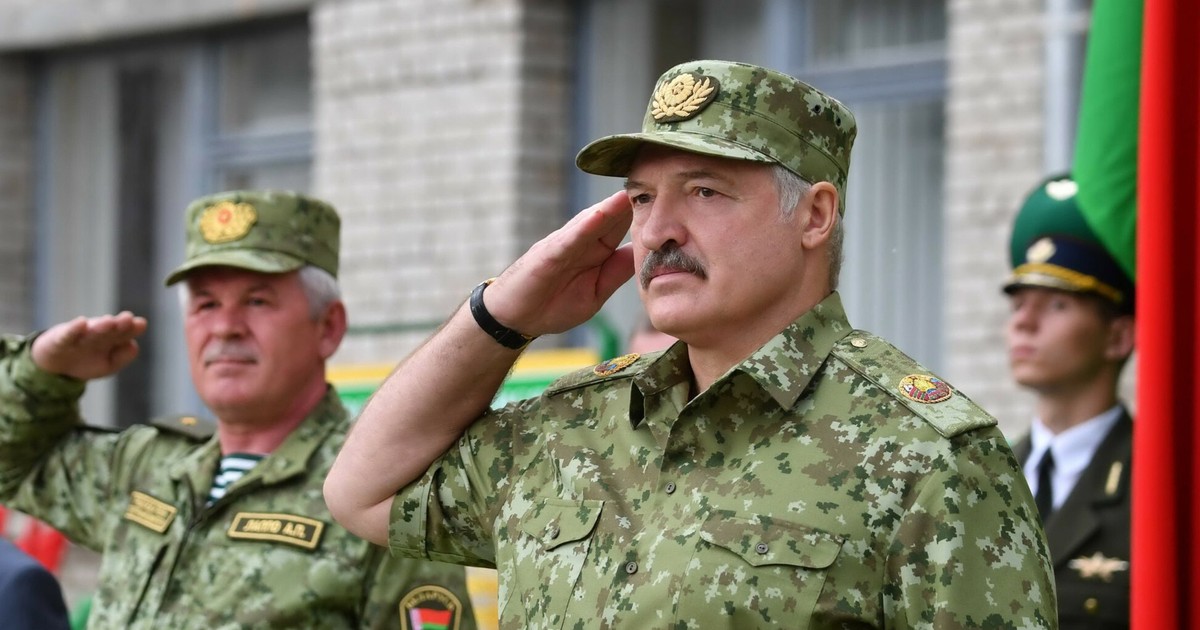
The topic of nuclear weapons has been framed from the very beginning with the caveat that control over it remains in the hands of Russia. Moscow retained the decision-making power over the possible use of the cargo, and Belarus plays the role of the host country. This framework has been repeatedly confirmed by Western sources and independent arms monitoring organizations, pointing out that the 2023 transfer was the first time since the collapse of the USSR that Russian warheads were outside the territory of the Russian Federation.
Lukashenko also announced that the Russian “Oreshnik” intermediate-range missile system deployed in Belarus is to reach combat readiness in December. He describes it as mobile, patrolling designated areas and capable of carrying both conventional and nuclear warheads. However, information about “Oreshnik” comes mainly from Belarusian and Russian state media. Independent verification of system parameters is limited.
Lukashenko's nuclear deterrence
In his speech, Lukashenko emphasized that nuclear deterrence cannot replace ordinary defense. He highlighted lessons from Ukraine, talking about the role of small, mobile troops and the need to saturate the army with small arms.
The next part below the video:
At the same time, he noted that the specificity of the Belarusian forested area limits the effectiveness of drones compared to the steppe, which is expected to influence Minsk's purchasing priorities.
The broader context shows how much Belarus's security policy has shifted since Russia's invasion of Ukraine. In February 2022, just days before a full-scale attack by Russia, the constitution was changed in the referendum, deleting, among others, provisions on the country's non-nuclear status and neutrality. This decision paved the way for the formal placement of Russian nuclear weapons on the territory of Belarus.
In June 2023, Russian and Belarusian authorities announced the beginning of the transfer of tactical nuclear weapons to Belarus. NATO then indicated that it did not see any changes in Russia's nuclear posture, but condemned the decision to deploy the warheads itself, considering it an element of escalatory rhetoric. For the countries of the region, including Poland, it was a signal of deepening Russian-Belarusian military integration and increasing risks in the immediate vicinity of the Alliance's eastern flank.
The institutional background of these processes is the dismantling of the arms control architecture of the Cold War. The collapse of the INF Treaty, which for over 30 years banned the US and Russia from land-based missiles with a range of 500–5,500 kmremoved one of the main barriers limiting the missile race in Europe. The United States formally withdrew from the INF on August 2, 2019, arguing that Russia had been violating its provisions for years. Moscow suspended its participation in response.
It is in the gaps left by the INF that today there are projects of intermediate-range systems, which include, among others: “Oreshnik”.