Adrian nZandberg's anti-speculation tax. The expert points out the gaps of the Razem project


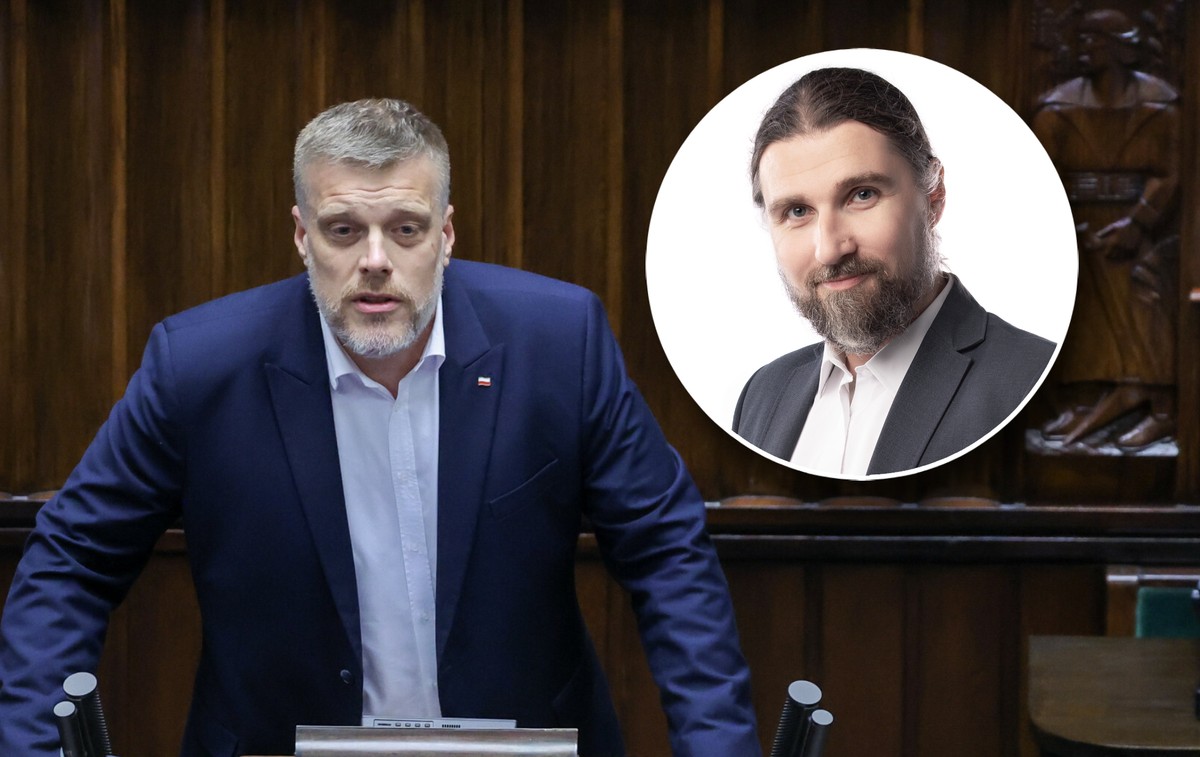
At the beginning of November, MP Adrian Zandberg, co-chairman of the Razem Party, announced the submission of a draft anti-speculation tax bill, which is intended to limit the purchase of apartments by investors and reduce real estate prices. “The act does not apply to normal families, it hits speculators who buy real estate from the market. Look carefully who will support it and who will refuse to sign it,” Zandberg wrote on the X website. Unfortunately, no one who thinks rationally should support the project.
According to the project of the Razem Party, the tax will apply to owners of the third premises and will be progressive:
— from three to five apartments — 1 percent rate. real estate values,
— from six to eight apartments — 2 percent rate. values,
– from the ninth and subsequent years – the rate is 3%. values.
The taxpayers of the tax on surplus residential real estate are natural persons and organizational units without legal personality. The project provides for exceptions for real estate owned by local governments, social housing associations and social housing initiatives.
The project assumes that the value of a residential property is determined as the median of the transaction prices of the fifty geographically closest transactions real estate with similar parameters, collected in the Real Estate Price Register. If there are not enough transactions, as long as there are more than ten. When there are fewer of them, the value will be determined by an individual valuation.
These are the most important assumptions. If the project was not intended to be only a political happening, it should be treated as a framework for possible regulations that should be analyzed more closely. Check whether they will achieve their goals.
Goal: to put an end to speculation and lower prices
The originators, i.e. the Razem MPs' Club, point out that The aim of the regulations is not only to put an end to speculation on the housing market, but also to reduce housing prices. Unfortunately, there is no detailed explanation of how the proposed regulation is to achieve this goal. One can only guess that the intention of the project creators is that institutional investors and other “fat bears” who are frightened by the new regulations will start selling residential premises in panic, and as we know, a larger supply means a lower price. You can shout: bingo! We have a pro-social effect in the form of cheap housing.
It's a pity that no one else thought of it earlier… How is this regulation likely to work in practice? Unfortunately, I wouldn't predict that she will achieve the results announced to all.
A simple trick to circumvent the law
The main assumption is simple – we pay tax on the third apartment. You might even say, too simple. It is enough for a given entity to own at most two premises. Establishing a special purpose vehicle for such a purpose is not particularly complicated. Via the S24 portal, available 7/24, a company can be established in 24 hours. What if 50 such companies are created? Well, another 100 apartments tax-free. Effect? The act will not work, and only the National Court Register will have much more work.
It is a cadastre, although this name is not mentioned in the project
Although the draft does not mention the terrible word “cadastre”, the structure of the proposed tax is a simple property tax. A tax that is basically no different from the cadastre, or maybe almost nothing – cadastral tax is preceded by a reliable and realistic valuation of the propertywhich valuation is to constitute the tax base. The proposed regulation is based on the Real Estate Price Register (RCN). And what is it? This is a functionality of the National Geoportal, which is actually only statistical in nature and based on historical data. In fact, it is made up of information from 380 registers kept separately by each poviat and city with poviat rights. Data is sent to RCN after the transfer of ownership, from notarial deeds.
The project's assumption is to base the value determination on the property similarity algorithm, based on 36 months of transactions regarding properties in the neighborhood. Analyzes, as I mentioned, would also be carried out on large samples, at least 50 transactions, and would require valuations only in extreme cases.
See also: Transparency of apartment and house prices. The DOM portal will launch faster
Valuations will be illusory or will lead to the creation of a cadastre
Idealistic assumption – for most properties in Poland, this method of calculating the value will give very approximate values, it does not reflect the condition and standard of the property at all, because it only refers to characteristic parameters such as surface and partly location. For urban communes, the neighborhood determined according to the algorithm may give even random results, especially for long-settled districts with a negligible number of transactions.. The drafter does not explain how this regulation relates to the existing system of valuations by property appraisers.
The project provides for the possibility of questioning automated valuations, which will result in a valuation by a property appraiser. And here's an interesting fact – The cadastre is the basis for such individual valuations. In other words, the Razem Party wants to introduce a defective system, which it does not call a cadastre, and citizens who question its defectiveness will themselves lead to the creation of a cadastre.
See also: Cadastral tax in Poland. What do politicians say and is it real?
Rents will go up
The assumptions of the act are, first of all, naive. In practice, real estate purchased in large quantities is not speculation on purchase prices but purchases for rent. In this situation, this next public levy will become a component or calculation basis of the rent. Therefore, instead of expanding access to residential premises for Kowalski, the project developer will lead to a significant increase in rents in a short time.
Let's do the math – if the apartment costs PLN 1 million and is the ninth apartment, the tax is PLN 30,000. PLN per year. Simple calculation – let's increase the monthly rent by PLN 2,500 and the problem will be solved. Unfortunately, these are the effects that this project will bring, not the expected ones.
However, there is light at the end of the tunnel – the bill has not yet obtained the required number of signatures and ultimately may not reach the Sejm at all. He shouldn't, because he's a wolf in sheep's clothing.