Emilia Șercan, about the criminal complaint made by CSM Oanei Gheorghiu: “A huge method of intimidation of the Government”. The journalist “dissects” the cited article


Journalist Emilia Șercan believes that the criminal complaint filed on Monday in her name by the Superior Council of Magistracy represents a form of government intimidation and “public blackmail”.
“The criminal complaint that the CSM made to Oana Gheorghiu is a great, huge method of intimidation of the Government of Romania, if it is not really blackmail to the face. And if it is not intimidation or blackmail, it is legal illiteracy, but, considering that we are still talking about the CSM, I stick to the original idea: intimidation and public blackmail. To the face, a la grande!”, wrote Șercan, in a message published on Monday evening on her Facebook page.
“The CSM announces in the press release that it filed a criminal complaint against Oana Gheorghiu for committing the crime of incitement to violence, hatred or discrimination provided for by the provisions of article 369 of the Criminal Code. However, this legal text cannot be applied to an alleged incitement to hatred against “magistrates” as a professional group”, added the PressOne journalist.
In her message, the journalist tries to explain why incitement to hatred on the grounds of profession is not included in the article of the Criminal Code invoked by the CSM.
How Emilia Șercan interprets the law:
- “Let's dissect together a little article 369 of the Criminal Code so that the honorable members of the SCM can understand what they are talking about. First of all, we take the text of the article, which says:
“Inciting the public, by any means, to violence, hatred or discrimination against a category of people or against a person on the grounds that he is part of a certain category of people defined on the basis of race, nationality, ethnicity, language, religion, gender, sexual orientation, opinion or political affiliation, wealth, social origin, age, disability, chronic non-contagious disease or HIV/AIDS infection is punishable by imprisonment from 6 months to 3 years or a fine”.
So, we have: “Inciting the public (…) to violence, hatred or discrimination against a category of people or against a person on the grounds that he is part of a certain category of people defined by criteria of: 1) race, 2) nationality, 3) ethnicity, 4) language, 5) religion, 6) gender, 7) sexual orientation, 8) opinion or political affiliation, 9) wealth, 10) social origin, 11) age, 12) disability, 13) non-contagious chronic disease or 14) HIV/AIDS infection». - Good, so the magistrates are not defined – central word – neither by race, nor by nationality, nor by ethnicity, nor by language, nor by religion, nor by gender, nor by sexual orientation, nor by opinion or political affiliation – although lately they behave like a political group -, nor by those fortunes gathered from the salaries that generate huge pensions in relation to what this ravaged society can lead, nor by social origin, age, nor by any disability, chronic non-communicable disease or HIV/AIDS infection.
- So, the key to the interpretation of this article, as I have shown, is the wording «»defined by criteria of», and the legislator listed 14 clear criteria that define the categories of persons protected by this art. 369.
- And magistrates do not fit into any of the above categories as a group of people. If the legislator wanted to protect any social group, the wording in the law would have been “against any social category”.
- Likewise, the criminal law does not allow extension by analogy to any other category protected by the law.
- In the press release, the CSM refers to the “professional body of magistrates” and to the “prestige of the position of magistrate”, which means that the only criterion that defines magistrates is their profession.
- But professional hate speech is not included in this article! To quote from the classics: “I'm sorry gentlemen magistrates”.“
The journalist concludes by stating that the CSM's approach represents “a pure act of intimidation and even blackmail against the Government of Romania, in order to be able to preserve its privileges even at the risk of being laughed at in public through this embarrassing criminal complaint”.
What does the CSM support?
The Superior Council of the Magistracy, headed by Elena Costache, announced on Monday that it has decided to notify the “competent bodies” to carry out investigations into the crime of incitement to violence, hatred or discrimination, in relation to the statements of Deputy Prime Minister Oana Gheorghiu about the special pensions of magistrates.
The CSM claims, in its press release justifying its action, that, through her statements, Oana Gheorghiu violated the independence of the judiciary and the status of magistrates “in an irresponsible and populist way”.
“The Superior Council of the Magistracy strongly condemns the statements made by Deputy Prime Minister Oana Gheorghiu in a televised interview, through which the independence of the judiciary and the status of magistrates were violated in an irresponsible and populist way. The statements deliberately formulated in a note characterized by an emotional vector, with reference to funds allocated for minors affected by serious pathologies, and the comparison between their situation and the financial guarantees of the independence of the judiciary cannot be simple personal opinions when they come from a representative of the executive power. Such statements are attacks on a constitutional power, which fuels a dangerous discourse that incites hatred and discrimination, intended to antagonize the society against the professional body of the magistrates. The artificial opposition between the magistrates and the “hungry child who is taken from the mouth” is a manipulation and an attempt to divert public grievances towards the judiciary, artificially placing the provision of financial resources in the relationship directly with the financial independence of the magistrates”, the CSM transmitted.
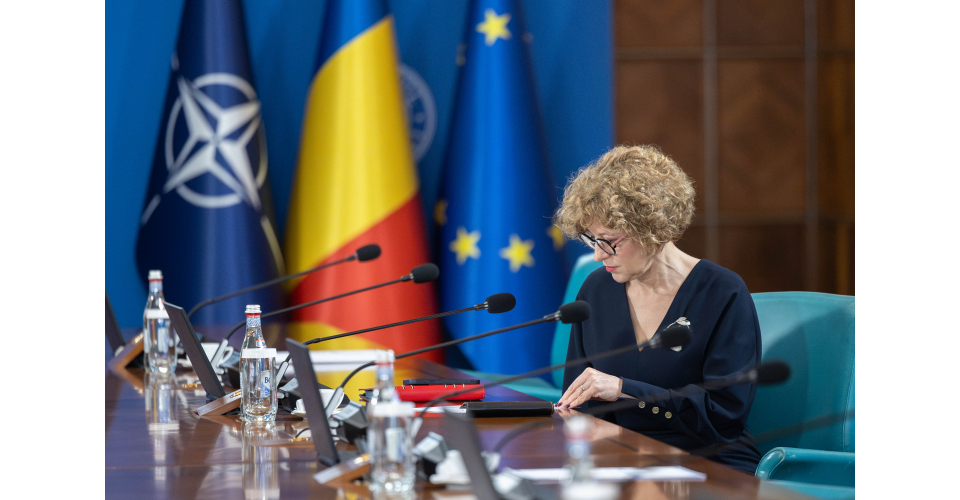 Deputy Prime Minister Oana Gheorghiu, complained by the CSM to the Prosecutor's Office for “incitement to hatred, violence or discrimination”, after the statements about magistrates' pensions
“The independence of justice, which also includes the financial guarantee, as established by the entire European jurisprudence, does not represent a privilege granted to magistrates at the expense of other people, but is the constitutional guarantee of the democratic society that the rights of every citizen will be defended by legal professionals free from any influence and respected in relation to any violation, including those committed by the state. The Superior Council of Magistracy emphasizes once again that the executive power, represented by the Government, has the obligation in a state of law to strengthen justice, not to discredit it, and to institutionally collaborate loyally with the judicial power for the smooth running of the democratic society”, the Council also stated.
Thus, in an unprecedented step, the CSM says that “it has decided to notify the bodies empowered to carry out investigations under the aspect of committing the crime of incitement to violence, hatred or discrimination”.
“In relation to the statements of the Deputy Prime Minister, regarding their concrete content and their social effects on the image and prestige of the position of magistrate, the Superior Council of the Magistracy decided to notify the bodies empowered to carry out investigations regarding the commission of the crime of incitement to violence, hatred or discrimination provided for by the provisions of Article 369 of the Criminal Code. The Council requests in this way the representatives of the executive power to maintain balance and decency in public discourse and not formulates irresponsible judgments on exclusively emotional grounds that undermine not only the independence of the judiciary, but also the respect due to it in a state of law, with the consequence of inciting the population to hatred against judges and prosecutors”, the CSM also announced.
It is the first step of this type made by the CSM against a member of the Government.
Deputy Prime Minister's statements about magistrates' pensions
Asked in a show broadcast on Saturday by Digi24 how she would solve the problem of special pensions for magistrates, Oana Gheorghiu said: “I would send a message to the magistrates – I would tell them that I understand them. It is very difficult to give up something that was given to you.”
“It is very difficult to benefit for years, decades from this and suddenly to be told that you no longer have it. It would be difficult for anyone to do this. But I think this was a kind of Caritas. They were trapped in a Caritas, which could not last forever and people who are pragmatic and rational should understand that. Romania cannot afford to pay this money anymore, it cannot afford to have pensioners anymore special. We have no way. And if that money has to go to them because they give sentences, they can take it from the mouth of a child who goes to bed hungry”, added Oana Gheorghiu.
Contacted by HotNews, Oana Gheorghiu said on Monday that she does not comment on the CSM's approach by which she was complained to the Prosecutor's Office.
Oana Gheorghiu has been challenged since her appointment by the PSD leader, Sorin Grindeanu, who, including on Monday, criticized the deputy prime minister's statements regarding special pensions.
 Who can demand the prosecution of Oana Gheorghiu. Criminal liability procedure for members of the Government