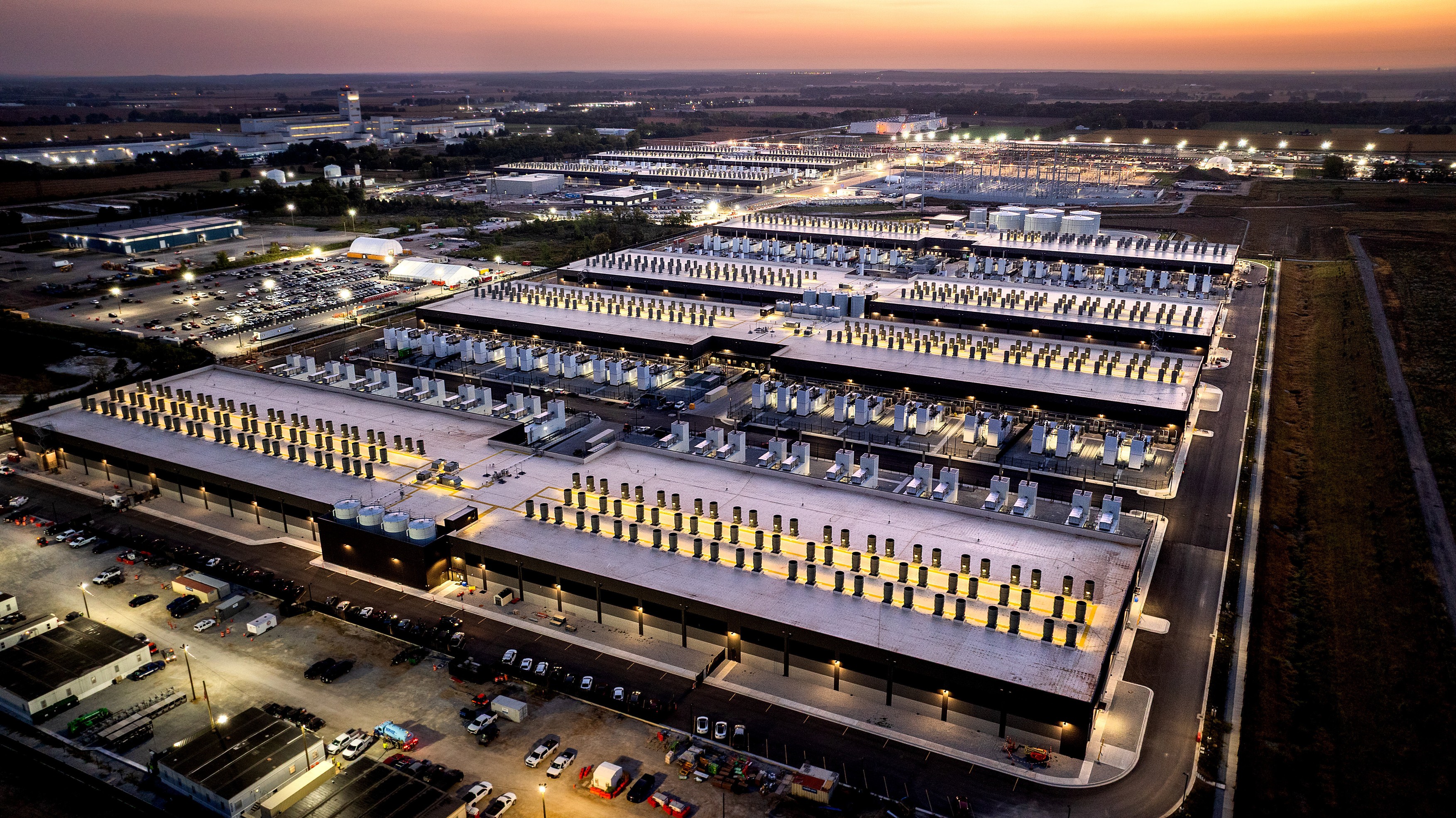
The damage to three Amazon data centers in the Middle East from Iranian drone strikes shows the rapid growth of data centers in the region, as well as the industry's vulnerability to conflict, the Associated Press reports.
Amazon's cloud subsidiary announced on Monday evening that two of its data centers in the Emirates had been “directly hit” by drones. Another facility in Bahrain was also damaged after a drone crashed nearby.
“These attacks caused structural damage and power outages at our centers, and in some cases, the activation of fire suppression systems resulted in additional water damage,” Amazon Web Services said.
Late on Tuesday, the company said efforts to recover data centers in the United Arab Emirates were making progress.
Unlike Amazon's previous disruptions, which involved software and resulted in widespread global outages, these attacks that caused physical damage appear to have resulted in only localized and limited disruptions.
Amazon Web Services (AWS) hosts many of the world's most used online services, providing the behind-the-scenes cloud computing infrastructure for numerous government departments, universities, and enterprises.
The company advised customers using servers in the Middle East to migrate to other regions and redirect online traffic away from the UAE and Bahrain.
“Amazon has generally configured its services so that the loss of a single data center is relatively insignificant to its operations,” said Mike Chapple, an IT professor at the University of Notre Dame's Mendoza College of Business.
Other data centers in the same area can take over the workload, and in most cases this happens transparently every day to balance the workload, he said.
However, the loss of multiple data centers in an Availability Zone could cause serious problems, as it could reach a point where there simply isn't enough capacity left to handle all the work.
How big is Amazon's network of data centers?
Amazon does not typically disclose the exact number of data centers it operates around the world. It is only known that its data centers are clustered in 39 geographical regions, three of which are in the Middle East, covering the United Arab Emirates, Bahrain and Israel.
Each AWS Region is divided into at least three data center availability zones, each zone isolated and physically separated by “significant distance”, although all are within a maximum of 100 kilometers of each other and are connected by “ultra-low latency networks” that reduce the time lag for data transmission.
Who defends them
AWS also says its data centers have redundant water, power, telecommunications and Internet connections “so we can maintain continuous operations in the event of an emergency.”
They also have security measures—guards, fences, video surveillance, and alarm systems—that are designed to prevent intruders from entering, rather than to defend against missile attacks.
Mike Chapple also explained that the attacks are a reminder that cloud computing is not “magical” and “still requires physical facilities on the ground, which are vulnerable to all kinds of disaster scenarios.”
Data centers managed by AWS and other operators are massive facilities that are difficult to hide, he added.