
Signal from the Government regarding magistrates' pensions: “The state of nervousness in society is quite high/ I don't think we should stretch the rope anymore”

Ionuţ Dumitru, honorary adviser to Prime Minister Ilie Bolojan, said on Antena 3 that it would be at least hilarious for CCR to say that the law on magistrates' pensions has a fundamental problem, claiming that the state of nervousness in society is quite high. He also said that the people of the country “don't even conceive the idea of having a pension of 5,000 euros at 48 years old”, reports News.ro.
“The Constitutional Court gave a decision on the previous form of this law reforming special pensions, in which I said that it had a problem with form. It would be somehow, at least hilarious, from my point of view, to come now and say: wait, sir, we also have a substantive problem. It seems to me that we are stretching things too much and I think that the state of nervousness in society is already quite high and I don't think that we should stretch the rope so much, because it is clear that there is a problem flagrant there and I don't think we can extend it any longer”, said Ionuţ Dumitru, on Antena 3, about the expected decision at the Constitutional Court on the magistrates' pension law.
He mentioned that the postponement of the Constitutional Court's ruling on the draft law regulating magistrates' pensions also seemed inappropriate.
“I mean, if you had a purely formal problem and you rejected the law on form, after you received it amended, with even some concessions, to postpone it again, it seems to me that it is a bit inappropriate”, mentioned Ionuţ Dumitru.
According to the prime minister's adviser, the people of the country “do not conceive the idea of having a pension of 5,000 euros at the age of 48”.
“I travel around the country and I go to the countryside. People don't even conceive this idea of having a pension of 5,000 euros at the age of 48. There is no such thing for them. I mean, they don't even manage to count this money. I mean, I say, sir, there is no such thing, it doesn't exist. Yes, it shouldn't exist, but it does. It's an aberration, simply,” thinks Dumitru.
Adjournment to December 28
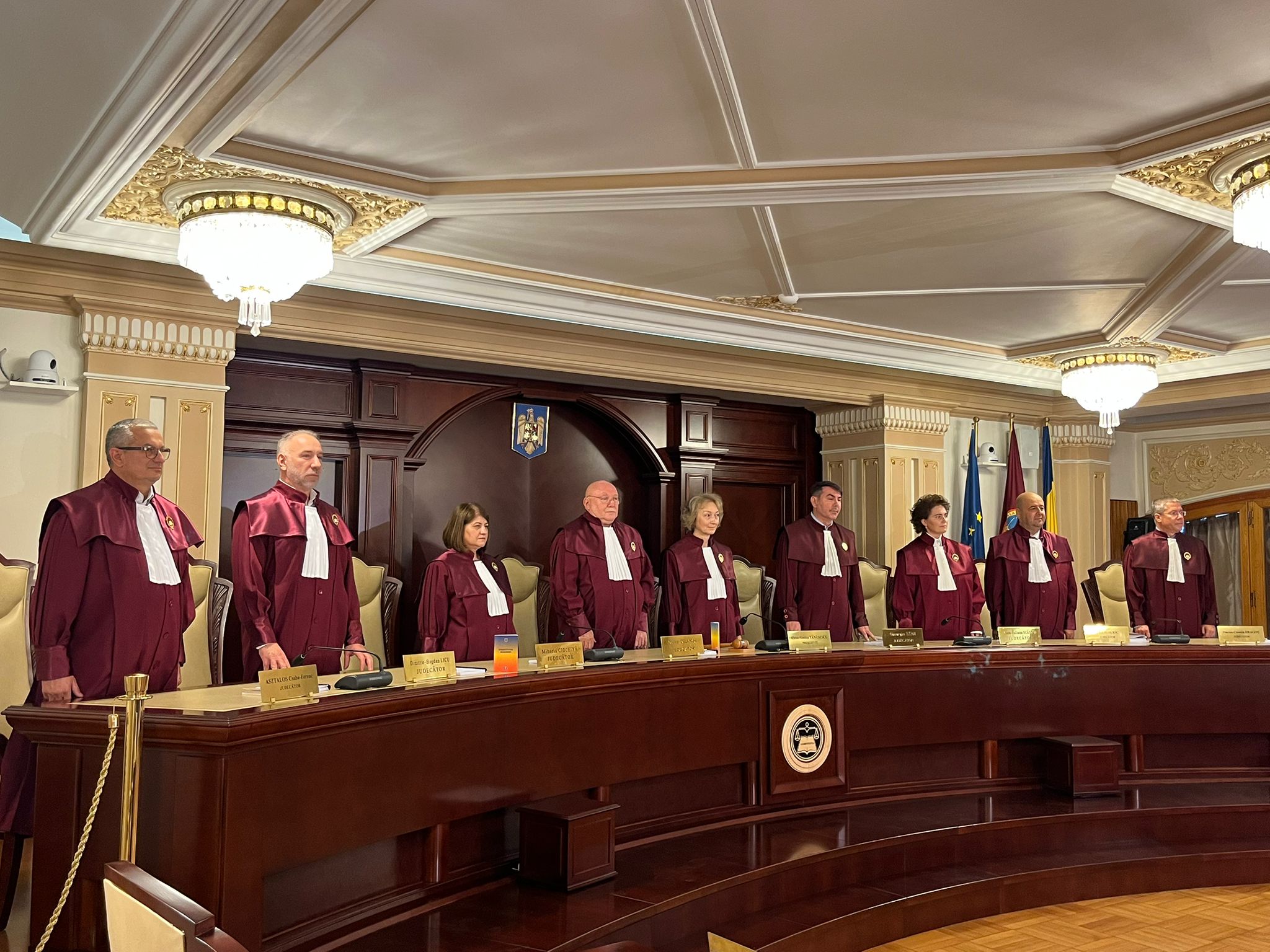
The Constitutional Court postponed, for December 10, a decision on the referral to the High Court of Cassation and Justice regarding the law that establishes the retirement conditions for magistrates and the new way of calculating the pension, the new settlement deadline being set for December 28, which falls on a Sunday, between Christmas and New Year.
Sources from the CCR confirmed, for HotNews, the differences in position within the Court. “The debates between the judges started, with the arrival of the report of judge Simina Tănăsescu, and they are strong”, described the situation a man from the CCR. Two more sources from the CCR confirmed, for HotNews, the state of the dispute within the Court.
The law that was discussed in the plenary session of the Constitutional Court is the one for which the Bolojan Government assumed responsibility for the second time in the Parliament, after the first time the law was rejected by the Constitutional Court. The CCR's reason for rejection was the lack of the opinion of the Superior Council of Magistracy.
The government requested the CSM's opinion, which was negative. The law reached the CCR again. Before the plenary session, a report was drawn up in the Court.
What does Simina Tănăsescu's report contain
The report on the project was elaborated by the president of CCR, Simina Tănăsescu. According to three sources in the Court, “the report does not have a clear direction, to admit or reject” the challenge made by the High Court of Cassation and Justice. The report “raises several questions,” according to HotNews sources.
Today, the official plenary discussions will take place. However, it is in the tradition of the Court, according to the Western model, that there should be “discussions between CCR members, mediated or not by their staffs”, held before the plenary session. Harmonization of perspectives is sought.
In this case, these discussions remained more in the area of divergence and were characterized by “strong” disputes, according to one insider's characterization.
At the end of today's debates, the nine constitutional judges will vote whether the referral to the ICCJ is admitted (ie Bolojan's law falls) or rejected (ie Bolojan's law goes on to be promulgated by the President of Romania).


