7 November 16:20
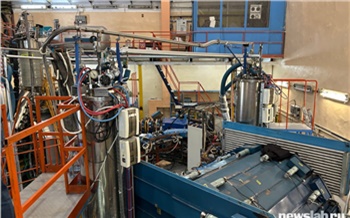
Employees of Tomsk State University are participating in the preparation of a large-scale experiment at the NICA supercollider in Dubna near Moscow. Scientists are developing the electronics and software needed to test the Big Bang theory.
As RIA Tomsk reports, citing the university’s press service, the main goal of the SPD experiment is to recreate the state of the Universe in which it was immediately after the Big Bang. We are talking about quark-gluon plasma – a special form of matter that existed in the first moments after the birth of the Universe.
“We presented an experimental sample of the L2 hub board. This is one of the elements of the information collection and transmission system, which will ensure the processing of large data in experiments,” said Vladislav Borshch, a researcher at the laboratory.
Preparations for the experiment, planned for 2028, are being carried out by an international collaboration of scientists. TSU specialists are responsible for creating key elements for collecting, transforming and transmitting data to servers for subsequent analysis. The development is carried out within the framework of a project supported by a megagrant from the Russian government.
Related links:
- A student from Tomsk received a million to create a walkie-talkie mask
- They want to open a National Satellite Manufacturing Center in the Krasnoyarsk Territory