The Secret Circle of Donors That Powered JD Vance Rewrites MAGA's Future and Proposes a Vision for America

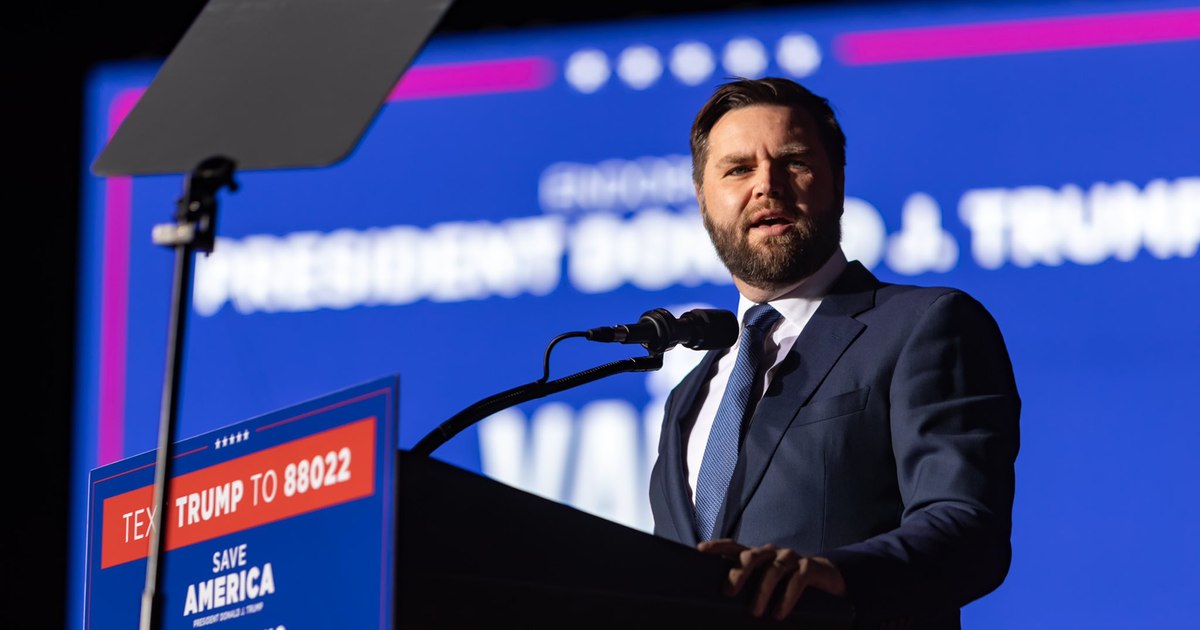
In 2019, a small group of far-right donors were meeting outside Rockbridge, Ohio to discuss a political coalition to secure the future of the MAGA movement. From this small meeting was born the Rockbridge Network, which aims to connect voters, donors and candidates to lay the groundwork for a fundamental transformation of the Republican Party, reports the Washington Post.
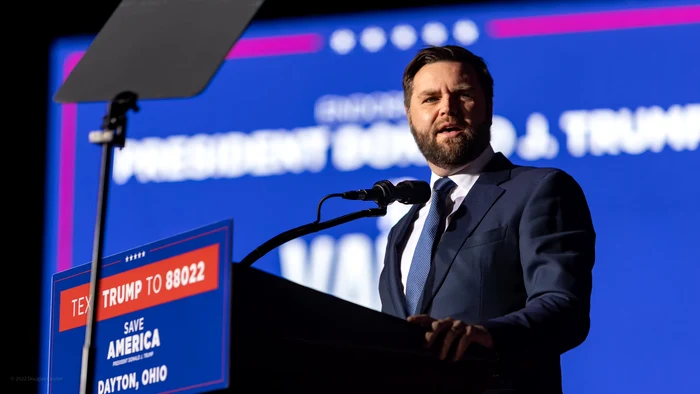
PHOTO PROFIMEDIA
The initiators were Silicon Valley billionaire Peter Thiel and JD Vance, then an investor who wrote a bestselling memoir. But the one who would take the reins was a more low-key figure: Arizona insurance entrepreneur and conservative media figure Chris Buskirk.
Meanwhile, the Rockbridge Network has established itself as one of the most influential forces in Republican politics.
According to political strategists, the network of businessmen and major donors played a role in Donald Trump's re-election and propelled Vance into politics, who became vice president.
But the network, funded by tech leaders, has an ambitious vision for the future: ensuring the continuity of the MAGA movement post-Trump.
Although it doesn't actually have a website or online presence, it has assembled pollsters, data experts, advertisers and even a documentary film division and is gearing up for the 2026 midterm elections and the 2028 presidential race. Many Rockbridge members are hoping for Vance's nomination.
But the initiative is not only about politics, but also about business.
Buskirk is the co-founder of 1789 Capital, which has a philosophy of “patriotic capitalism.” Such organizations have a collective ambition, according to Buskirk, which is to give the business people they see as vital to the country's future a role in shaping government and lasting political power.
They adhere to a controversial theory of social progress: that a select group of elites are the right people to ensure a competitive future for the US. In fact, in the Trump administration, a number of business leaders were appointed – from the Secretary of Commerce, Howard Lutnick, to the titan of technology, Elon Musk.
The projects are based on what some on the right call “aristopopulism,” a vision of a bridge between wealthy capitalists and the working class that would enable a reindustrialization of the U.S. profitably and linking the interests of their electoral base.
“Either you have an extractive elite — an oligarchy — or you have a productive elite — an aristocracy,” Buskirk said in an interview in his office in Scottsdale, Arizona.
It is an elite “that takes care of the country and governs it well so that everyone prospers.”
The right had what he calls a “coordination problem,” between voters who had unexpectedly elected Trump and an emerging group of wealthy people who had alienated the progressive left. But the camps lacked infrastructure.
It all comes down to “brains-plus-money-plus-base,” says Buskirk.
Relatively unknown outside his small circle of business leaders and strategists, Buskirk is an unusual figure, taking over a role once dominated by the Koch brothers, the Republican mega-donors who have opposed many of Trump's trade policies. It is not a MAGA propagandist; friends describe him as a stubborn, extremely shrewd strategist. He was “the first to realize” that there would be thousands of wealthy people who “no longer feel at home in the Democratic Party,” said Omeed Malik, Buskirk's partner and co-founder of 1789 Capital.
Vance told The Post in a statement that Buskirk is an “original thinker” who understood, “before almost anyone else,” how “the right combination of ideas, organization and funding can ensure the lasting political success of the Republican Party.”
Outside of electoral politics, Buskirk's projects aim to promote unfettered capitalism in the US. 1789 Capital, he says, serves as a testing ground for the idea that homegrown innovation can reinvigorate America's industrial base, which the firm's partners tout on their website as “the next chapter of American exceptionalism.”
The firm, which has invested in about 30 companies, has funded startups linked to the Trump administration's “anti-woke” policy and economic agenda, including companies that mine rare minerals, build artificial intelligence factories for war or produce rocket fuel through 3D printing.
Since taking office, the Trump White House has launched a number of new policies that benefit tech entrepreneurs, including lifting controls on the export of AI technology and signing executive orders and legislation promoting cryptocurrencies. “President Trump's first and only goal is to restore prosperity to the working-class Americans who resoundingly elected him to the White House,” White House spokesman Kush Desai said in a statement.
Since Trump Jr. joined 1789 as a partner last November, the firm has raised hundreds of millions of dollars and now has more than $1 billion in assets, according to two people familiar with the matter.
Buskirk says he is determined to bring to Washington the businessmen who put Trump back in the White House. He describes politics as “corrupt” and Washington think tanks as “all clichés”, arguing that the culture needs to be rebuilt from the ground up.
The story of an insurance entrepreneur
Visiting his close relatives in Michigan, he saw how “whole factories were just packed up, put in 12-foot containers and sent to China” after the country joined the World Trade Organization in 2001, he said. Americans, he said, were going to work in low-paying service jobs: $8 an hour at McDonald's versus $25 an hour at a Ford factory. Then the illegal immigrants came and took those jobs too.
He told friends that the American dream, “that you don't have to do anything extraordinary to live a decent life,” was becoming more and more difficult, but he felt helpless. “I was just a guy from Arizona,” he recalls.
When President Barack Obama came on the scene in the late 2000s, Buskirk saw him electrify the culture. Instead, he felt that the Republican Party and its institutions were languishing, on autopilot.
The Promise Trump
The Arizona entrepreneur was initially skeptical of the New York reality show host, fearing that she saw the presidency as nothing more than a publicity stunt. But when he watched older interviews with Trump, he heard the idea that American leaders were not putting Americans first.
“I was like, he's actually been saying the same thing for 40 years!” Buskirk recalled. “And then I realized that, well, he's serious. And people who say he's not serious are lying.”
In July 2016, Buskirk founded an online magazine, American Greatness, which highlighted an “undeniable” need for a new articulation of conservatism. It received funding from Thiel, who had shocked Silicon Valley liberals with his $1 million donation to Trump and who had recently been introduced to Buskirk by a friend. “The soil of the conservative movement is exhausted,” the editors wrote in the opening manifesto. “It needs fertilization, reseeding and diligent cultivation if it is to thrive again.”
Thiel put Buskirk in touch with his protégé, Hillbilly Elegy author Vance. Vance and Buskirk became instant friends.
The men spent a year and a half “just practicing,” with no particular goal in mind, Buskirk recalls, just the feeling that “we should create something.”
In 2019, Vance and Thiel convened about a dozen people at an Ohio inn located just outside the small town that would become the organization's namesake. Some attendees were pro-Trump, as was Buskirk. Others had their doubts. But all felt that any successes in the Trump years could evaporate if a Democrat took the White House again, said Blake Masters, an investor who met with Buskirk that weekend.
“I've spent a lot of time lamenting the effectiveness of the left,” adds Masters. “They had a pretty terrible agenda … but they're very effective at organizing … The right had just been stagnant for a long time, and its institutions had started to decay.”
It became clear to some of those present that MAGA had a network problem. While right-wing donors like the Kochs had spent years building their organizations, the wealthy people who supported Trump and the emerging constellation of right-wing views he represented “didn't really know each other,” Buskirk said. The people who had voted for Trump — including a working-class cohort — weren't organized either.
“There was no coordination. There was no management. There was no planning. Everything just happened,” he recalls. “What if we actually said, OK, look, these are two problems that, if solved, would make everything work better and be more efficient. Let's get down to solving them.”
It's the opposite of how political organizations work, getting people to come to your side through “brute force,” Buskirk said. Rockbridge, instead, took a gradual approach: “Build a relationship of trust and give people some kind of benefit. Only then can you ask them to do something.”
Rockbridge's internal data suggests some measure of effectiveness, which insiders attribute to its years of voter profiling and mobilization efforts. Rockbridge's affiliated super PAC, Turnout for America, identified several million citizens — low-propensity voters in seven swing states — who they believed would vote for Trump if prompted to go to the polls. The group calculated that Trump would win these states if he could motivate 40 percent of those voters to go to the polls. In the end, Rockbridge's 3,000 activists scored 50 percent, said two people with direct knowledge of the internal statistics.
Today, the mood of the group is euphoric. Interest has grown since the election, according to Buskirk, with about half of the new members coming from the tech industry. Several of the group's members are billionaires; prominent investors Marc Andreessen and David Sacks are already members.
In a text message sent while on foreign duty, he said America's greatness would only be achieved “by the deliberate cultivation of talented people with a high degree of free will working together in environments of high degrees of trust.”