“A complete failure.” Trump gave way to Xi Jinping [OPINIA]

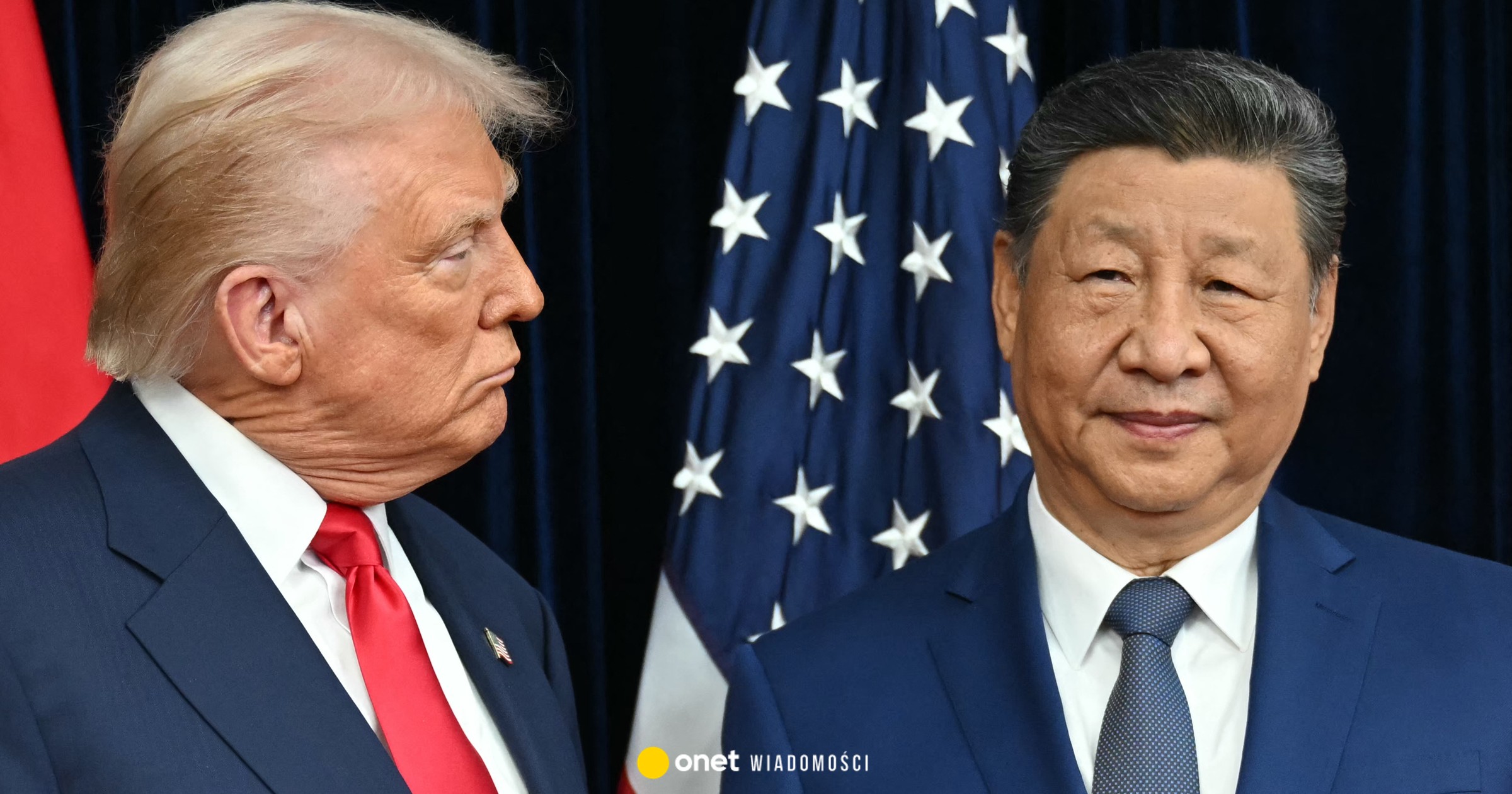
Donald Trump's Asian trip confirmed the United States' growing interest in cooperation with countries and organizations in the Asia-Pacific region. The trip was long and really intense – the president visited Malaysia, Japan and South Korea, where he met the chairman of the People's Republic of China. In addition to bilateral talks, he took part in the summits of two key regional organizations: ASEAN and APEC.
The Association of Southeast Asian Nations (ASEAN) summit was held in Malaysia. The American delegation focused mainly on economic cooperation issues. US Secretary of the Treasury Scott Bessent and US Trade Ambassador Jamieson Greer played a key role in the negotiations. The topics of discussion included trade tariffs, supplies of rare earth metals and investment cooperation.
No official agreements were signed and no high-profile statements were made during the summit. During the working dinner, Trump delivered a speech in which he emphasized the potential and mutual benefits of the partnership between the United States and countries in the region.
However, a declaration was signed between Washington and Kuala Lumpur. The document provides for the establishment of a permanent bilateral dialogue on issues of technological cooperation, in particular in the field of semiconductors. The parties also expressed their intention to strengthen trade ties and coordinate activities for the development of strategic supply chains.
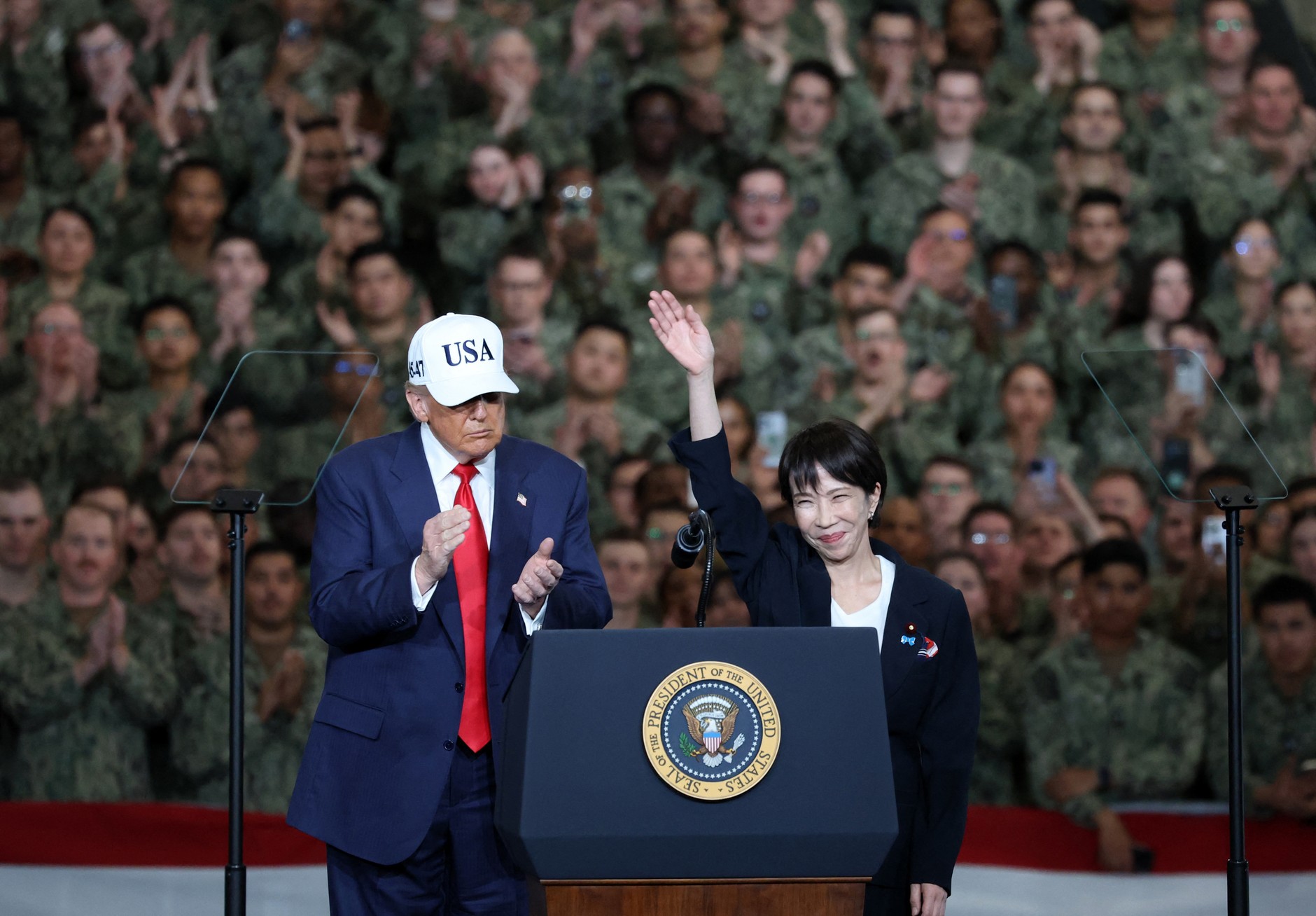
US President Donald Trump and Japanese Prime Minister Sanae Takaichi, Yokosuka, October 28, 2025.Kunihiko Miura / Yomiuri / The Yomiuri Shimbun via AFP / AFP
One of the key events of this part of the visit was the signing of a ceasefire agreement between Thailand and Cambodia. According to Trump, this truce became one of eight regional crises resolved thanks to his mediation. It was perceived as evidence of the active participation of the United States in ensuring stability in Southeast Asia.
The next stage of the US delegation's trip was to Japan – Donald Trump met there with the newly elected Prime Minister Sanae Takaichi. The talks took place in a positive atmosphere and ended with a mutual confirmation of readiness to strengthen cooperation within the framework of regional multilateral initiatives, such as QUAD [Quadrilateral Security Dialogue, Czterostronny Dialog Bezpieczeństwa] and AUKUS [partnerstwo w dziedzinie bezpieczeństwa pomiędzy Australią, Stanami Zjednoczonymi i Wielką Brytanią]. One of the results of the meeting was signing of the Framework Agreement on Critical Minerals. This document confirms the parties' obligations to ensure stable supplies of rare earth elements necessary for the high-tech industry.
The leaders of both countries also reached an agreement on cooperation in the field of next-generation nuclear technologies. This is particularly important for Japan, which aims to resume exports of nuclear reactors and related solutions. In addition, Tokyo has pledged to increase investment in the U.S. economy to over $550 billion. (PLN 2 trillion). Prime Minister Takaiiti called the upcoming stage in relations with Washington a “new golden era.”
A number of findings
The culmination of Donald Trump's Asian trip was a visit to South Korea. Just before it started, there were speculations in the media that he might meet the leader of North Korea, Kim Jong Un, but the rumors were not confirmed.
The main event was the summit of the Asia-Pacific Economic Community (APEC), one of the largest economic forums in the region. Unlike ASEAN, which focuses mainly on political and security issues, APEC functions as a platform for discussions on trade and economic cooperation. Its characteristic feature is a wide group of participants, including not only Southeast Asian countries, but also the United States, China, Japan, South Korea, Australia and Russia. APEC declarations are recommendatory and not legally binding.
The Seoul summit produced several significant results. Its participants signed a framework program for a sustainable supply chain – they confirmed their desire to diversify logistics routes and strengthen the regional production base. They signed a declaration establishing new goals for the development of renewable energy sources. They also agreed on the basic principles of digital trade, including the freedom of cross-border data flows, regulation of the use of artificial intelligence and measures to ensure cybersecurity. In addition, leaders participating in the forum announced the signing of business agreements and investment projects worth over USD 60 billion. (PLN 221 billion) in the field of semiconductors, green technologies and rare earth metals.
The article continues below the video
President Trump's bilateral meeting with South Korean President Lee Jae-myung also turned out to be very fruitful. They reached an agreement on mutual trade and economic concessions – South Korea pledged to invest up to $350 billion. (PLN 1.3 trillion) into the US economy, and Washington reduced trade tariffs for this country from 25%. up to 15 percent
In addition, the leaders signed a declaration on expanding cooperation in the field of security. One of its key points is the United States' consent to participate in a joint program to build nuclear submarines for South Korea. Such a step significantly strengthens the military and political position of the United States and its allies in the Indo-Pacific region.
Program key
However, the main event that attracted the most attention was the bilateral meeting between Donald Trump and the President of the People's Republic of China, Xi Jinping. The talks took place at a time of heightened trade tensions between the countries – at one point the meeting was thrown into doubt. The reason for this was Trump's entry on the Truth Social platform, in which he stated that China was introducing new restrictions on the export of rare earth metals.
Political tensions also intensified in the United States in the run-up to the meeting with Xi Jinping. A group of Democratic senators led by Chuck Schumer sent an open letter to Donald Trump in which they urged him not to jeopardize the national interests of the United States during the upcoming negotiations. His public statements about the possibility of easing sanctions against China were a cause for concern.
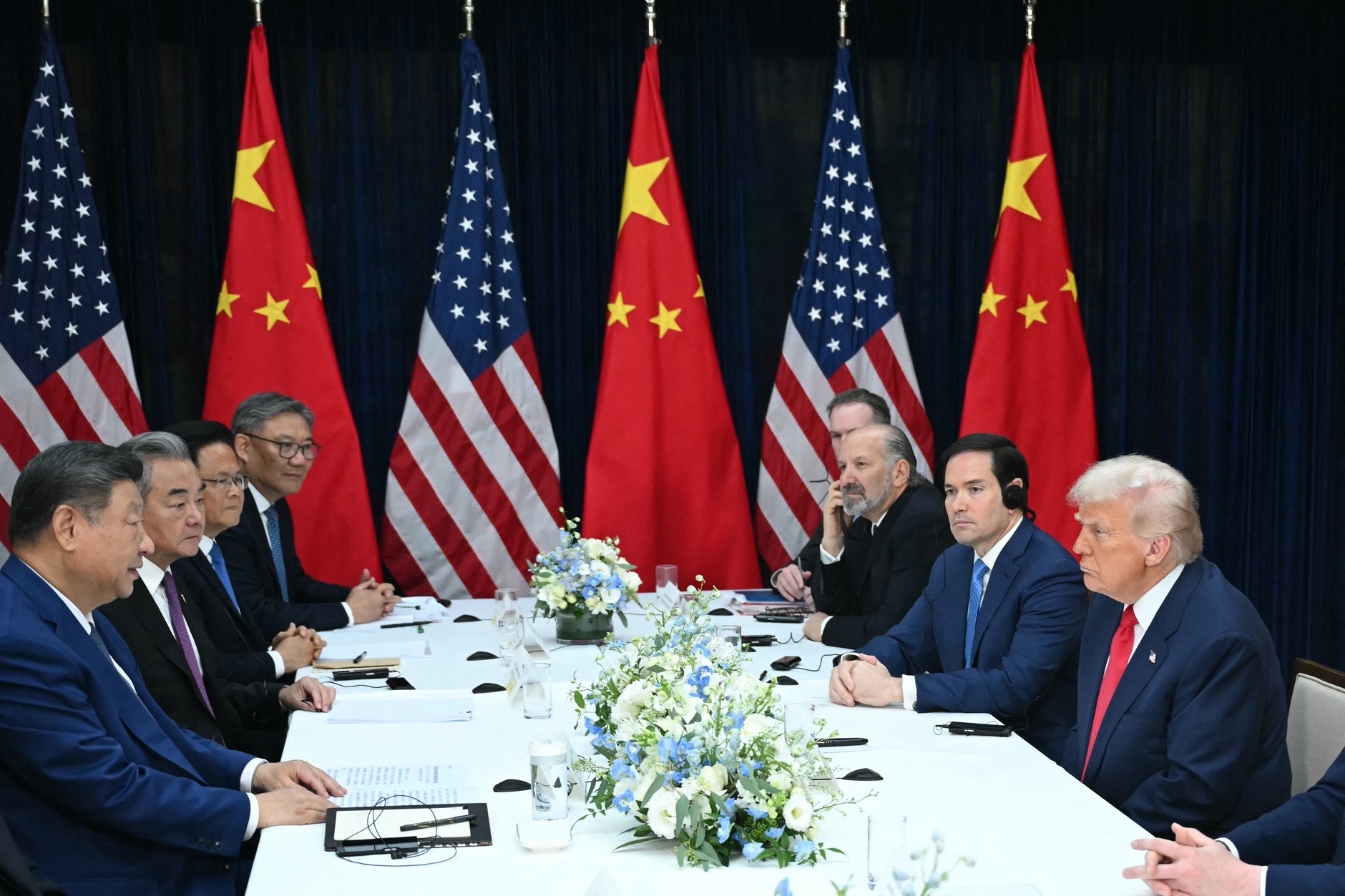
Chinese and American delegations at talks in South Korea, October 30, 2025.Andrew CABALLERO-REYNOLDS / AFP / AFP
Potential concessions have been floated – partially easing the pressure on TikTok, reducing support for Taiwan, or simplifying economic conditions to favor Chinese investment. Washington would take these steps in exchange for stabilizing the export of mineral resources, which are of key importance to the American economy.
At the same time, in the House of Representatives, the permanent commission on competition with the Chinese Communist Party, established under Biden, intensified its work. Its chairman, Republican Raja Krishnamoorthi, publicly appealed to President Trump to take into account the issues of military and technical cooperation between China and Russia.
“Complete failure”
The meeting between Donald Trump and Xi Jinping lasted almost two hours. According to media reports leaders deliberately avoided the topic of Taiwan, so as not to complicate the already delicate atmosphere. They focused on the economy. They have planned further meetings – in April 2026, Trump is to visit China, and Xi Jinping is to come to the United States later.
A key outcome of the talks was reaching an interim compromise on the trade war. Trump agreed to reduce existing tariffs from 57%. up to 47 percent In response, China pledged to simplify mineral exports and resume large purchases of U.S. soybeans to support U.S. agriculture. After the meeting, Trump stated that Beijing also expressed readiness to purchase American energy carriers. He added that they also discussed Ukraine, but did not reveal the details of the conversation. He only noted that he appreciated “China's involvement in the peace process.” In subsequent statements published on social media Trump emphasized that the meeting exceeded his expectations and was “wonderful.”
Trump's opponents, however, have found no evidence of this magnificence. The New York Times commented sharply on the talks. “When Xi Jinping left the venue for his meeting with President Trump, he exuded the confidence of a strong leader capable of frightening Washington. The outcome of the negotiations proves Beijing's success. It was Xi Jinping who obtained key concessions from Washington, not the other way around,” the editorial team wrote.
John Harwood, a journalist known for supporting Democrats, went a step further. “Xi Jinping wiped his shoes on Trump.” The meeting was assessed similarly by the leader of the Democratic Senate minority, Chuck Schumer – stated that Trump's trip to Asia was a complete failure.
In parallel with President Trump's Asia trip, several resolutions regarding his tariff policy were considered in the Senate. Despite general support from the Republican Party, some lawmakers opposed extending the state of emergency on the basis of which Trump introduced global tariffs. At least four Republicans supported the initiative to abolish it, citing the need for the legislative branch to restore control over trade policy. Earlier, the Senate had already voted to lift a number of restrictions, including tariffs on supplies from Canada and Brazil.