The disease that affects more and more people under 40. What to know in case of a stroke. Doctor: “Time means brain”

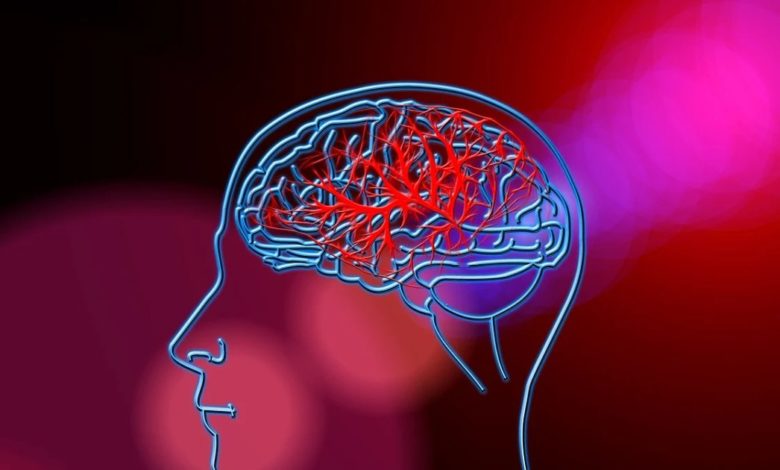
Stroke is a medical emergency, depending on the speed with which the patient arrives at the hospital, the evolution towards death or serious neurological damage, or, on the contrary, towards sometimes almost complete recovery.
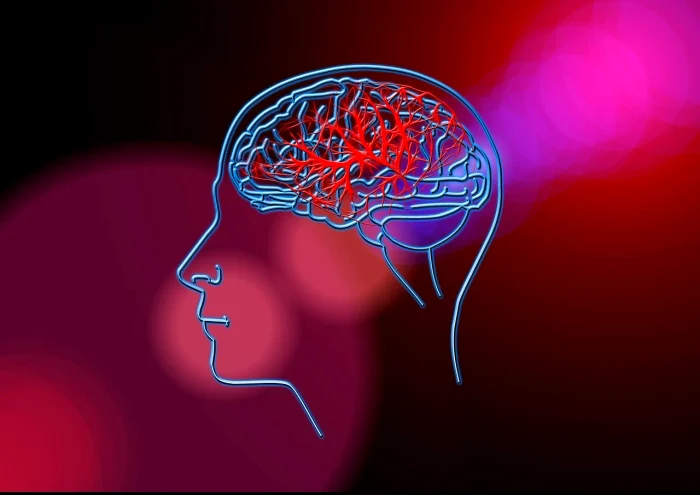
In treating stroke, time is the most important resource PHOTO: Pixabay
“Time means brain,” says neurologist Renića Diaconescu, head of the Neurology department at the Slatina County Emergency Hospital, a health facility where thrombolysis has been performed for patients who have suffered a stroke for seven years. The European Stroke Society recently awarded the hospital with the “Diamond” medal, the highest award in the field, after the neurologists from Slatin were awarded three other times with “Gold” awards. Faster thrombolysis times, more patients benefiting from this procedure, and patient recovery outcomes were the indicators measured.
“The sooner the patient arrives than the 4 1/2 hours, which is the optimal window, the more of the brain you save,” explained the neurologist, for “Adevărul”.
Patients who arrive at the hospital more than four hours after the onset of the stroke can no longer benefit from thrombolysis and will be left with a deficit that sometimes recovers within three months, other times it is irreversible.
The age at which patients suffer a cerebrovascular accident has dropped extremely much, explains doctor Renića Diaconescu, so that from 65-70 and over 70 years old, as was the case decades ago, today cerebrovascular accidents are also found in patients between 35 and 40 years old. The struggle of doctors is for people to recognize the signs of a stroke and not to waste precious time, so that the chance of almost full recovery exists.
“There are still patients who come too late, although we had discussions with the Ambulance station, with the family doctors, who understood that they had to send the patient quickly. The people who belong are also starting to become aware, they were much more present. I mean, they didn't leave the patient, they called 911 very quickly, they realized this. The best we can do is recognize the stroke. A campaign on this topic should be done more. Unfortunately, the Ministry of Health has to do it, because we don't have the money to do it. And if he recognizes that it is the beginning of a vascular accident, the relative or the patient can call 112, the ambulance comes and transports him to us, we don't waste time anymore at Caracal, at Corabia (ed. – smaller hospitals, where thrombolysis cannot be performed), we don't have any more dead times”Dr. Diaconescu showed.
According to the protocol, if the Ambulance crew finds that the patient has suffered a stroke, they will call the UPU so that the hospital can prepare for thrombolysis. The patient will be seen by a neurologist, a computed tomography (CT) scan will be performed, other necessary laboratory analyzes will be performed and, if the conditions are met, thrombolysis will be performed.
“The number of stroke patients has increased and the age is getting younger, 35-40 years. Ischemic accidents were after 60 years, 65 even. Now that limit is getting lower and lower,” said the doctor.
Stress, Dr. Diaconescu believes, is the main risk factor, to which is added unhealthy food, alcohol and tobacco consumption and diseases such as diabetes.
“Monthly, I think we have two or three cases in young people under 40. Even if they don't have very big or decisive accidents, accidents still happen. When I was a young neurology specialist, vascular accidents were somewhere after 70. 70, 75, 85 years old,” the doctor pointed out.
How do you recognize a stroke?
Facial asymmetry, decreased muscle strength in one hand or one leg, or both, speech disorders – these are the main signs that the person has suffered a stroke. Once identified, time to hospital is what matters most.
It should be noted that not in all cases patients can receive the treatment that makes the recovery almost complete, because there are also contraindications.
“They have a brain tumor or a tumor elsewhere; not to take anticoagulant drugs; not to have had a stroke or myocardial infarction in the past, a few months ago. There are some major and minor contraindications, and some relative ones, but you have to take them into account. That's why we do them before thrombolysis and a coagulation factor – INR, to know if there is a potential for bleeding or not the introduction of the thrombolytic”the doctor specified.
Many of the strokes occur during the night, and the signs are noticed in the morning, when the patient is observed by relatives. These are cases in which the exact time of onset cannot be established and thrombolysis cannot be initiated, such treatment instituted beyond the four and a half hour interval running the risk of producing major adverse effects such as cerebral hemorrhage. The basic principle, the doctor explains, is to do no harm to the patient. If he suffered the vascular accident more than 5 hours before, the lesions in the brain have set in, and the revascularization produced by thrombolysis can enter a dead zone, the doctor explains, causing cerebral hemorrhage.
Where the chain of treatment of the stroke patient breaks
The Slatina County Emergency Hospital was one step away from entering a program that benefits from European funding and would have allowed the establishment of a neurological emergency department. The evaluation went well, to the point where the hospital was put on standby.
“We made the steps to enter a program financed by the European Union and we worked a lot on this program. Unfortunately, the Ministry of Health gave us approval in the first phase and finally put us in reserve. That is, we will follow, but after others. I hope that this slap we gave them with this European award will make them stop looking at the province as something distant and understand that there are professionals there too, in the province. I would like the Ministry of Health to understand that the profession at a high level can also be done in a provincial hospital”said the doctor.
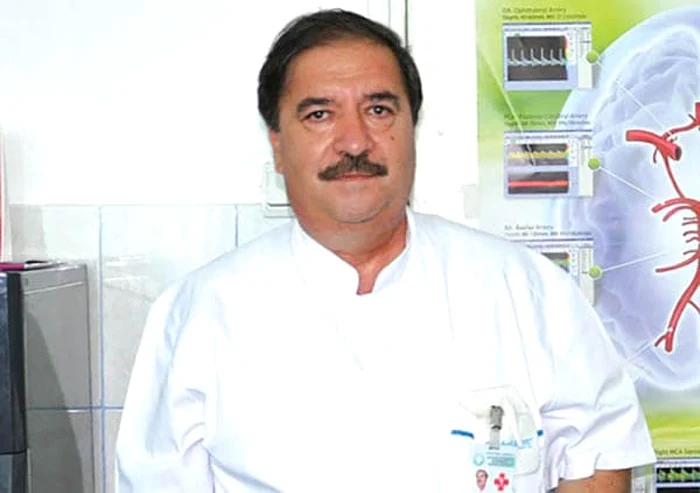
Neurologist Renića Diaconescu, Head of Department of Neurology SJU Slatina PHOTO: archive
The funding would have enabled the purchase of a 3 Tesla MRI machine which would have allowed neurologists to treat patients even better.
“They probably put forward those who also perform thrombectomy, that is, they operate on the carotids, they also intervene with brain stents… Our score dropped because we don't have these departments and apart from thrombolysis, we don't do anything else. But it's also not a well-designed program so that you know – if your thrombolysis failed and you can't dissolve that thrombus on the carotid with that substance – where the thrombectomy is done. You have to send the patient to a second center, in stage two, where thrombectomy is done, but if everything is well set up in cardiology and I know if I have a heart attack where to send it, where it is expected, we don't know where to send it. We don't have a connection and then you resort to telephones”, Dr. Renića Diaconescu explained.
This search cannot last however long, because even in the case of thrombectomy there is an optimal window of six hours. There was a case, the doctor also specified, in which this transfer did not succeed in the optimal time, despite many attempts, and the patient, a little over 50 years old, died.
“There is no organization that cardiologists – and I envy them – have. Such a system is not set up for vascular accidents. We call on the phone and requests”, the doctor also said.