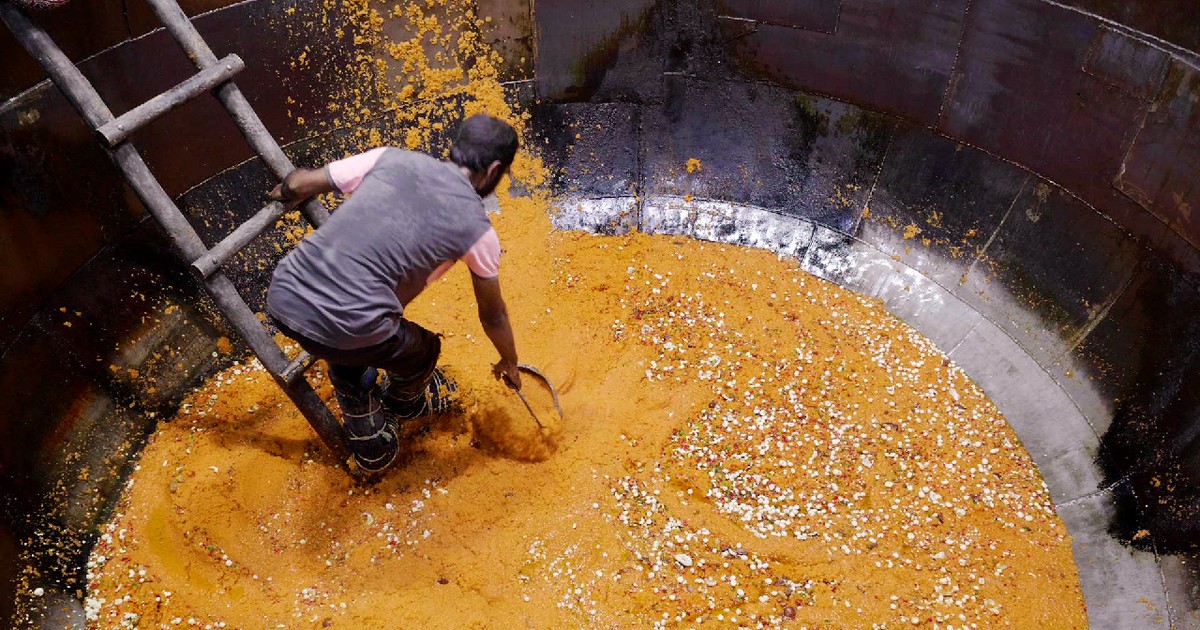
This degor cauldron, located in Ajmer Sharif Dargah in Rajasthan, India, is one of the largest in the world. It was gifted by Emperor Akbar of the Mughal dynasty in 1567. It is over 11 m wide and is made in such a way that its edge never becomes hot, even when the fire is lit and food is cooked.
Here, volunteers prepare 4,800 kg of a sweet rice dish called zardato feed 20-25 thousand devotees who visit the temple every day. The cooking process is supervised by Syed Mujahid Ahmed Chishti, who is also responsible for taking care of the worshipers.
In the temple, everyone is treated equally – regardless of faith, caste or views. Nobody leaves here with an empty stomach
– explains Syed Mujahid Ahmed Chishti, chef.
We visited the temple to see how such large quantities of sweet are prepared prasadam (food offered to the gods).
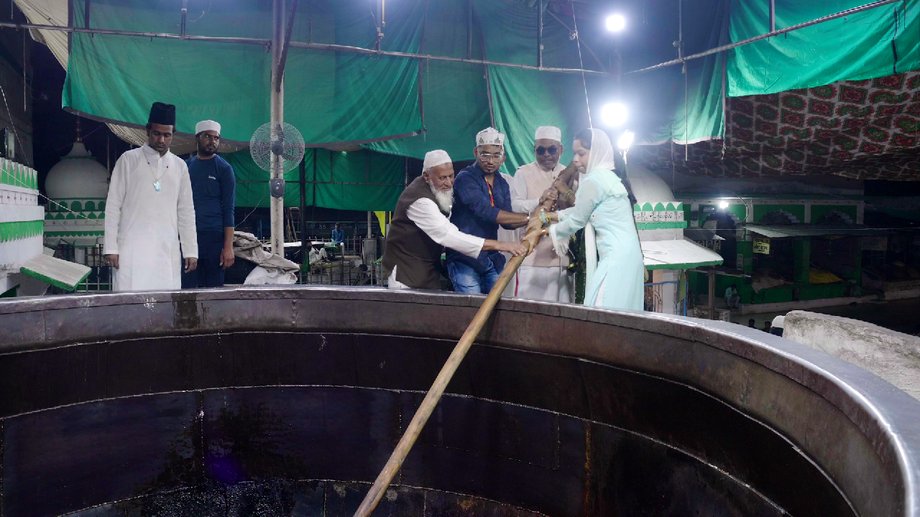
The cauldron is over 11m wide and 4.5m deep, so it takes at least four volunteers to maneuver the large oar
|
Business Insider
How sweet prasadam is prepared
Before any food is prepared, volunteers must empty the cauldron of donations left by pilgrimswhich may include money, rice, lentils or other food items that the temple may use to prepare prasadam. Then it's cooking time. Preparing this dish is time-consuming and starts with lighting a fire under the roof.
There are four holes around the degu, and in each of them there are 50 kg of wood to keep the fire strong. Followers who sponsor the meal that day then gather around the cauldron to help prepare the dish. First, they fill the cauldron with 4,000 liters of water. They also add saffron and rose water, which add flavor to the finished dish.
“Turmeric and wheat flour are then added to the mixture to create a layer that prevents heat loss,” says Syed.
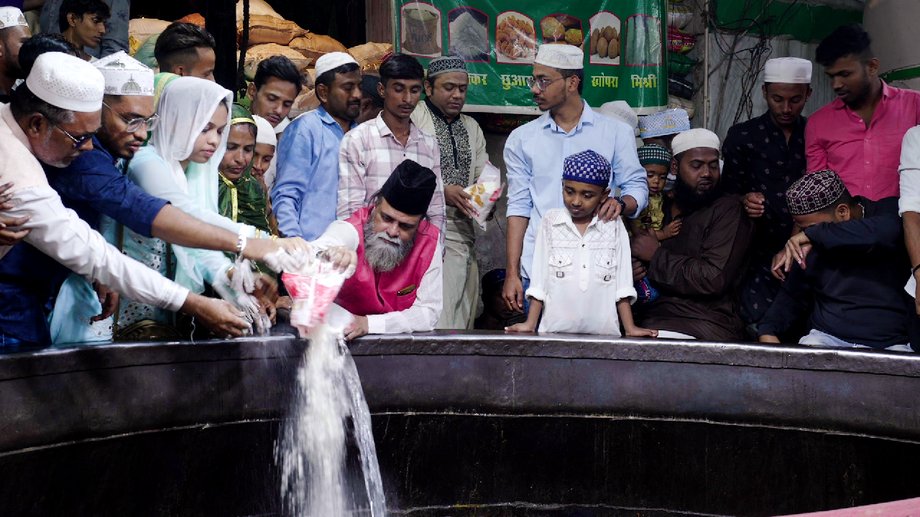
Followers who sponsor the meal gather around the cauldron to help prepare the dish
|
Business Insider
As the mixture begins to boil, volunteers carry the bags of sugar and pour them into the cauldron. Then it's time to mix, which only sounds easy. The cauldron is over 11m wide and 4.5m deep, so it takes at least four volunteers to maneuver the large wooden paddle.
Two people push and pull the wooden handle, while on the other side of the cauldron two people use ropes attached to the bottom. They move in tandem with each other to establish a rhythm. Volunteers then add over 1,100 kg of rice and many cans of ghee. They continue mixing until it thickens and reaches a smooth consistency.
It takes six hours to cook. Stir frequently to make sure all the rice cooks evenly
Syed explains.
Dried fruits and nuts such as cashews, almonds and pistachios are added at the end, before the dish is ready to be served.
After cooking the rice, we put a wooden ladder into the pot. One of the volunteers comes down to start serving the rice
– says the cook.
This volunteer wears special shoe covers that are cleaned before each meal. He collects the rice using a bucket, which is passed to other volunteers to fill large steel barrels. When these are full, volunteers scoop sweet prasadam into small bowls and distribute them to hungry pilgrims.
—The rice tasted sweet and spicy. It was delicious. It tasted completely different from what we make at home, admits one of the pilgrims.
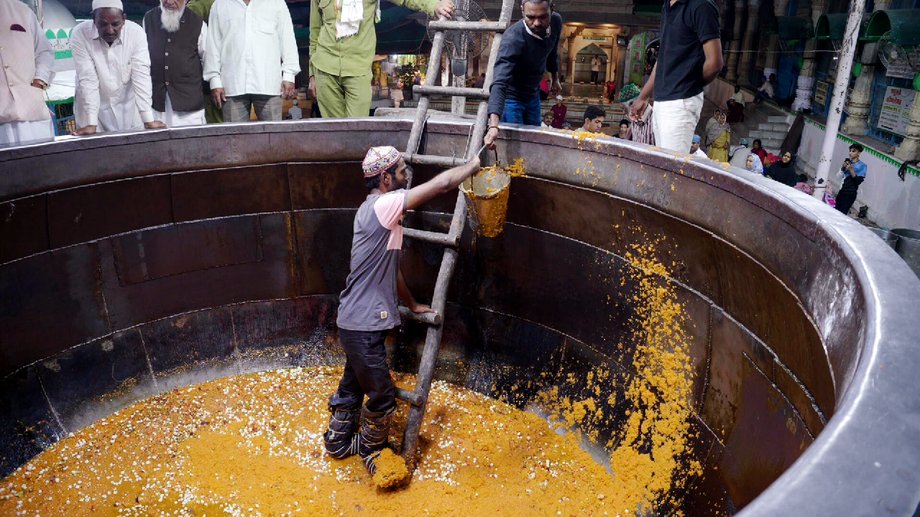
After the rice is cooked, a wooden ladder is inserted into the cauldron
|
Business Insider
Cooking rice for pilgrims. The cauldron has a long tradition
The deg and the tomb have an amazing history.
— The temple of Hazrat Mu'in ad-Din Chishti is over 900 years old. The cauldron was gifted by Emperor Akbar of the Mughal dynasty 500 years ago. The tradition of serving sweet rice continues from this point on. The recipe and cooking method have not changed says Syed.
The cauldron is filled to capacity only on special occasions or when the number of devotees in the dargah is very high. On most days, the temple uses a second, smaller cauldron known as the choti deg, which was donated by Akbar's son Jahangir in 1613. However, regardless of which cauldron is used, thousands of pilgrims visit this holy place every day to eat prasadam and seek the saint's blessings.
“The unique aspect of this prasadam is that it fulfills the wish of the eater,” explains Syed.
— This prasadam is delicate and sweet. It is like a saint's blessing. The Ajmer temple is quite famous. Everyone wants to visit it at least once in their life. I hope my wishes will come true, says one of the pilgrims.
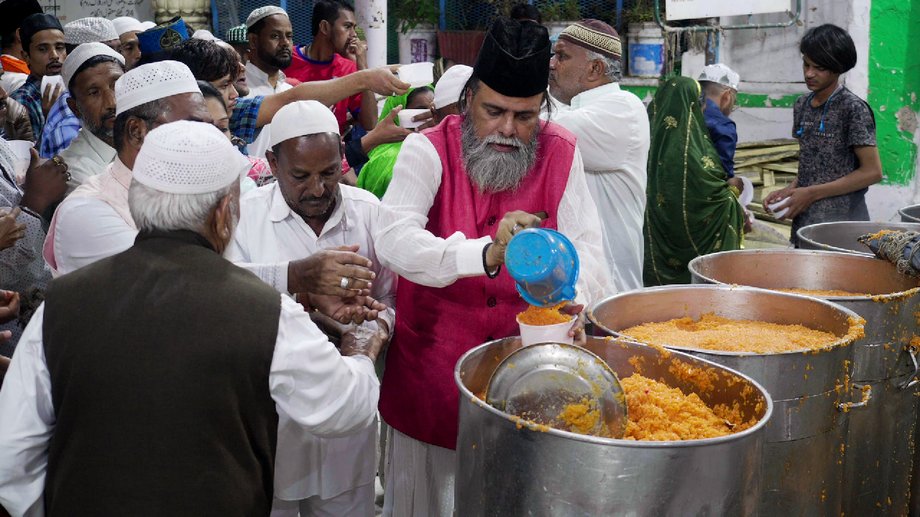
The recipe and cooking method have not changed for centuries
|
Business Insider
This prasadam has been made and consumed for 500 years. It promotes social harmony as everyone loves sweet rice cooked here. I have been consuming it since I was a child. Whoever tastes it once will want to eat it again
Syed laughs.