The photo that convinced the Romanians that they are the descendants of the Dacians. A century ago, a Scot surprised her in a forgotten village in the mountains


A photo taken a century ago in the Forest Land continues to spark debate about the Dacian heritage. The peasants of Lunca Cernii were surprised by Denis Galloway, in a strange pose, taken as if from Trajan's Column.
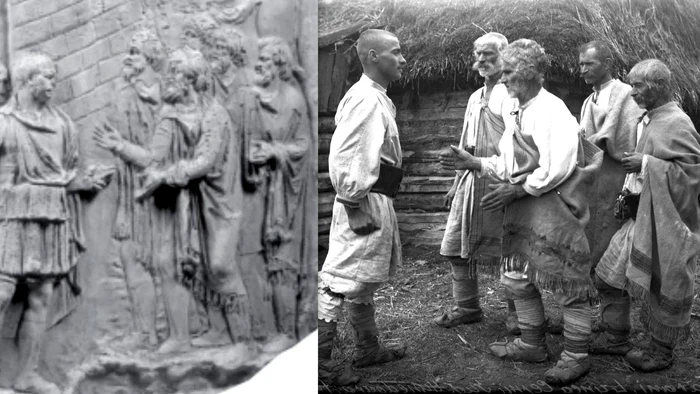
Denis Galloway's column and photo, Source: Radu Vulpe / Ethnographic Museum of Transylvania
In 1928, some peasants from Lunca Cernii, an isolated village in the Forest Land, Hunedoara, were photographed imitating a controversial scene from Trajan's Column, in which a group of comates (Dacian peasants, Pletosi) posed as a messenger of peace before Emperor Trajan.
“Dacians” from Poiana Ruscă Mountains
The photo was taken in 1928 by the British Denis Galloway, a passionate explorer of the Transylvanian villages, who captured the life of the locals in images that became legendary and was kept in the collections of the Ethnographic Museum of Transylvania. Some Romanians interpreted it as proof that Romanians are like “Dacians descended from the Column”, due to the similarity between the image of peasants and the XXVIII scene illustrated on Trajan's Column.
The scientist Romulus Vuia (1887–1963), founder of the Ethnographic Museum of Transylvania in 1922, which in the following years became the first open-air ethnographic museum in Romania, explained in his works the similarity between the port of the peasants of Șara Hațegului and the Forest Land (two ethnographic regions separated by the Hunedorean Cerna valley) and that of the simple people of Dacia (comates) depicted on the triumphal monument in Rome.
The element that resembled it was the “hood”, a traditional Romanian cape, used especially in the mountain areas, such as Șara Hațegului, Șinutul Pădurenilor, Șara Zarandului and Maramureș. It was sewn from thick postav (wool), being worn over the kojoc or suman, as protection against the cold, wind and rain.
“Like all pieces that are related to a certain utility, the hood (as well as the cojocol, the stuffy skirt, the belt woven with sticks, the opinci) can be of considerable antiquity. With all the caution and reserve towards bold comparisons, especially in such a great time, we still cannot fail to note the great similarity between the clothing of the Dacians on Trajan's Column and the current wearing of the hood in the Country Hațegului”wrote Romulus Vuia, in 1962.
Historical reconstruction in Lunca Cernii
The group of peasants from Lunca Cernii was photographed by Denis Galloway (1878 – 1957), an artist born in Great Britain and settled in Cluj county, around 1926. He collaborated with the Ethnographic Museum of Transylvania and accompanied Romulus Vuia on his travels through the villages of Romania.
He helped the ethnographer to gather an impressive collection of traditional pieces, and made with him an equally precious series of photographs of the village world.
“I came here to photograph the peasants, but over time I understood that they were not subjects, they were teachers”Galloway wrote.
The artist's photographs are recognized for their scientific value, due to their details and compositions, but some of them also have an emotional value. Such an image reproduces one of the controversial scenes on Trajan's Column, that of the messengers sent by the Dacian king Decebalus to the emperor Trajan.
According to some historians, the event took place around the year 101, near the capital of Dacia, Sarmizegetusa Regia, in Șara Hațegului or at the foot of the Orăștiei Mountains.
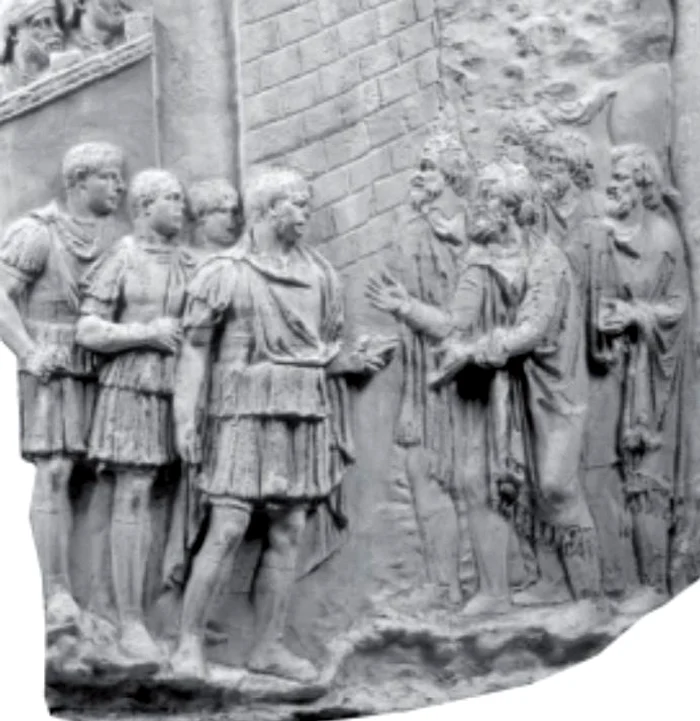
The scene on Trajan's Column. Source: Trajan's Column. Radu Vulpe, 2002
Emperor Trajan's army had crossed the Danube, most likely through the area of Drobeta, and advanced through the valleys of Cerna, Timiș and Bistra, to the Iron Gates of Transylvania, the site of the legendary Tapae pass.
Here, after a short battle, the Dacian troops retreated from the Romans, and Emperor Trajan continued his way towards the fortresses in the mountains. The Romans were initially met by a deputation of Sarmatian and Burian horsemen, allies of Decebalus, who failed to turn him off the road.
Explanations of the controversial scene
Then follows the scene (XXVIII) of the comates message sent by King Decebalus, the common people appearing humbled before the emperor. Their leader was pictured pleading with Trajan, but he rejects this message as well. The two messages were interpreted by the historian Radu Vulpe as attempts to thwart the emperor's advance towards Sarmizegetusa Regia.
“The episode corresponds to a news from Cassius Dio (LXVIII, 9), according to which, in truth, in the course of the first war, Decebalus sent to Trajan, at a certain time, before the defeat, a request for peace through a message composed only of the comates. This is also the reason why it was rejected, because the Roman emperor could not deal with the representatives of a lower class, devoid of political responsibility. The lack of sincerity of the approach for peace was ostentatious on Decebal's part. He was not aiming for a real political result, but only a psychological effect for the perfect concealment of his strategic intentions.” explain the history in the volume Columna lui Traian (CIMEC, 2002).
Decebalus had tried, by his messages, to mislead the conqueror. He knew that, by sending a request for peace through the common people, Trajan would not accept, but he hoped to gain time by starting negotiations, and he was sure that the Romans would be convinced that his situation would be desperate and that they would no longer think of a way out of the impasse by means of arms, the historian added.
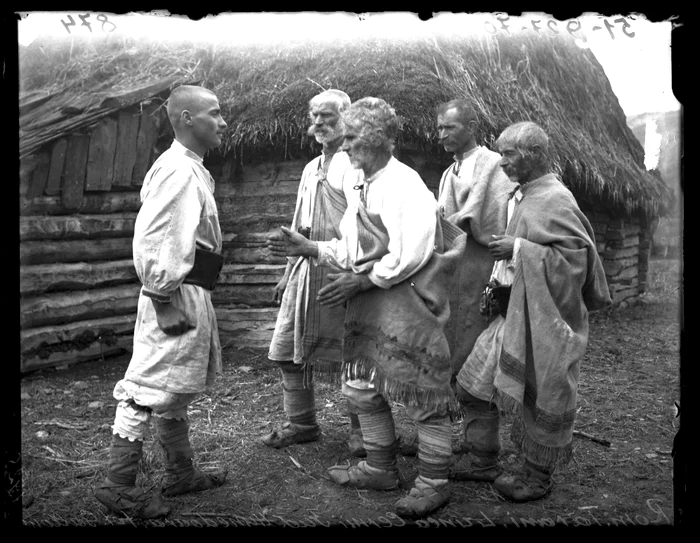
Peasants from Lunca Cernii. 1928 Photo: Denis Galloway SOURCE: Ethnographic Museum of Transylvania.
The emperor, however, continued on his way to Sarmizegetusa Regia, reaching close to its gates. A new message sent by Decebalus, this time through the Pylates, had no effect on the outcome of Trajan's first military campaign in Dacia, in the fall of 101.
“Trajan conquered the fortified mountains, and found within their walls the arms, the war-machines, and the standard, which had before been taken from Fuscus. Wherefore, and especially because Maximus had at the same time captured Decebalus' sister, and a strong city, the Dacian king showed himself ready to consent to all that was commanded him, not with the intention of keeping his word, but of respite for the time being.” wrote the Latin historian Dio Cassius, author of the History of the Romans, at the beginning of the 3rd century.
The origin of the Romanians, debated for centuries
The story of the resemblance between the Romanians and the Dacians depicted on Trajan's Column has medieval historical roots. The Italian chronicler Antonio Bonfini (1434 – 1503), from the court of King Matia Corvin, writing in the 15th century, described the Romanians as an ancient people, originating from a mixture of Dacians and Romans, which the barbarian invasions could not destroy.
“The Romanians are descended from the Romans, which their language testifies to the present time, which, although it was in the middle of such diverse barbarian nations, could not be broken. They lived on the other side of the Danube, which was once populated by the Dacians and the Getae, because the part beyond was then occupied by the Bulgarians who came from Sarmatia. Because from the legions and colonies taken to Dacia by Trajan and the others romanian emperors, the romanians pulled themselves…“, pointed out the Italian humanist.
In the following centuries, some historians noticed the similarities between the Romanians they met on their travels through the mountainous lands and the Dacians depicted on the Roman monuments.
“Whoever saw Trajan's Column in Rome will have little doubt that these Wallachians, just like those from Moldo-Wallachia, are the descendants of Decebalus' people. As a characteristic, the appearance and clothing of the Dacian prisoners on the column are preserved even today”reported “The Times”, in 1867.
The British publication informed then that the Romanians were proud to be descendants of the Romanians.
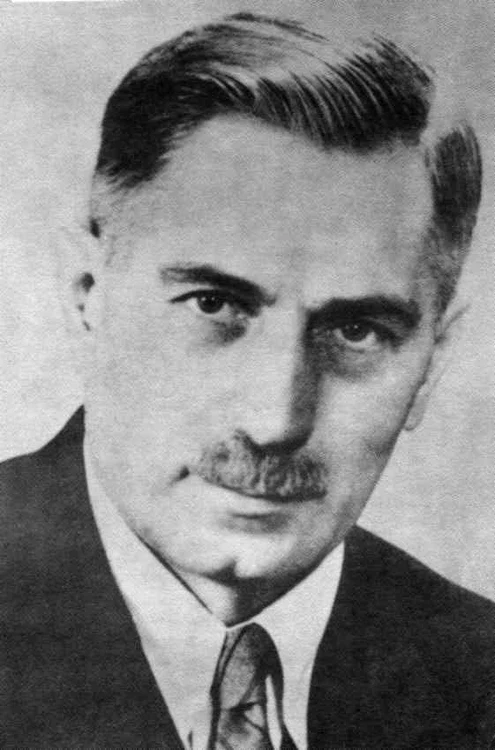
Romulus Vuia. Wikipedia
“The Wallachians are fully convinced that they are the pure descendants of the ancient masters of the world. They have given up the name of Wallachians and adopted that of Romanians. They have also exchanged their old alphabet for the Latin one, and have tried to eliminate, as far as possible, all foreign elements from their language, which they replace with Latin expressions. Although they have not yet claimed the Roman Empire by the force of their ancestors to them, this idea or illusion is not harmful, but produces a good thing, bringing them closer to the West,” stated The Times.
From the end of the 19th century, the ancient origin of the Romanians became a subject treated more and more intensively by scientists, and ethnographic research began to be increasingly taken into account. One of the pioneers of ethnography was Romulus Vuia, in his youth a teacher in Șara Hațegului, the site of the ancient Roman capital Ulpia Traiana Sarmizegetusa.
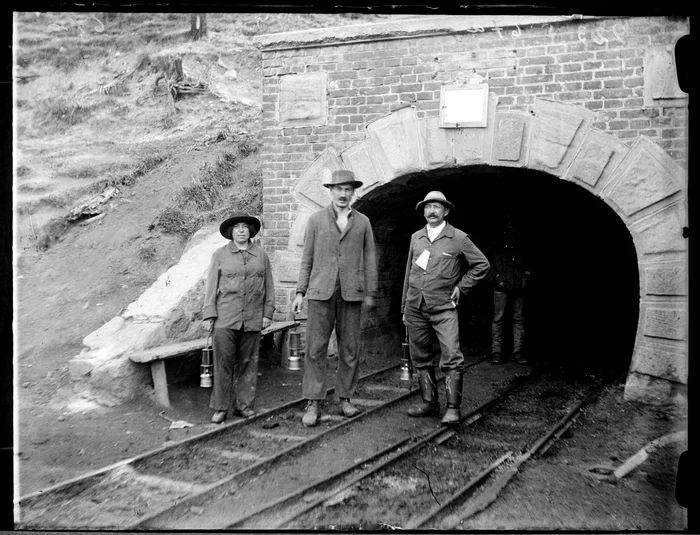
Romulus Vuia, in the center. Photo: Denis Galloway SOURCE: Ethnographic Museum of Transylvania.
In 1924, the University of Cluj awarded him the title of doctor in geography, with the mention Summa cum laude, for the work “The country of Hațeg and the region of the Forests. Anthropogeographic and ethnographic study“.
In the meantime, he had become director of the Ethnographic Museum of Transylvania, a position he kept until 1948, when he was removed by the communist regime. He was the man who developed the museum and the museum park in Cluj-Napoca in the first decades after its establishment.
Denis Galloway, the artist in love with Transylvania
Close to Professor Romulus Vuia, Denis Galloway left the museum some of the most valuable collections of photographs from Romanian villages. The son of a British mining industrialist, the artist devoted himself to photography and painting since his youth. He lived in Great Britain, Holland, Poland and New Zealand, and from 1926 he moved, for almost a quarter of a century, to Transylvania.
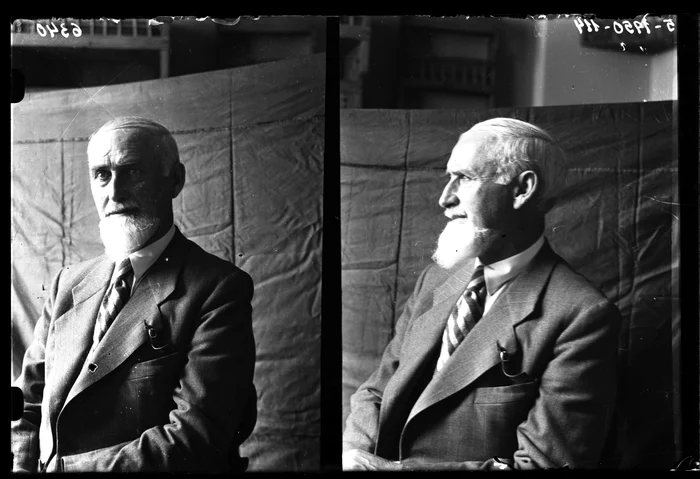
Denis Galloway SOURCE: Ethnographic Museum of Transylvania.
“Galloway, who had been in Transylvania for two years, did not settle in Cluj, Oradea or Timișoara, in some elegant hotel, but went to the villages, among the people; he lived and lived among them, just like them. He observed their every gesture, habit and skill, and only after fully understanding their nature, feelings and colors, he sat down in front of the canvas. He captured soulful moments in the lives of the peasants and different regions which the townspeople had never known,” informed, in 1929, the Hungarian periodical Erdélyi Szemle (Transilvaniei Magazine).
In Transylvania, the newspaper mentioned, the artist spent a lot of time especially in Călata and Hunedoara county, establishing his permanent residence in Stana, near Cluj.
“There he was charmed by the rich and luxuriant colors of the Hungarians from Trascău, and here, in Hunedoara, the richness of the national traditions of the Romanians of Dacian origin deeply impressed him. His paintings, located in the Ethnographic Museum, will forever herald the great artist's love for Transylvania, a love that intoxicated the soul and heart of these peoples and whose priceless memories he left us as a legacy”. the magazine notes.
Denis Galloway left Romania in 1950, returning to his homeland, Great Britain, where he spent the last seven years of his life.