Four numbers explain the political survival of France's new prime minister

To overthrow the government in France requires 289 votes – an absolute majority of the 577 elected MPs. However, on Thursday, only 271 MPs voted in favor.
A motion of no confidence is submitted by a faction and submitted to all MPs for voting. Those who abstain from voting or do not vote are not counted.
In France, both left-wing parties and right-wing nationalists have submitted such a request. They could count on 264 votes. Thanks to switches to their side from both the left and the right, they ultimately obtained 271 votes. However, this was not enough to push through the motion of no confidence. Budget negotiations, which the Prime Minister has identified as his only priority, can therefore begin.
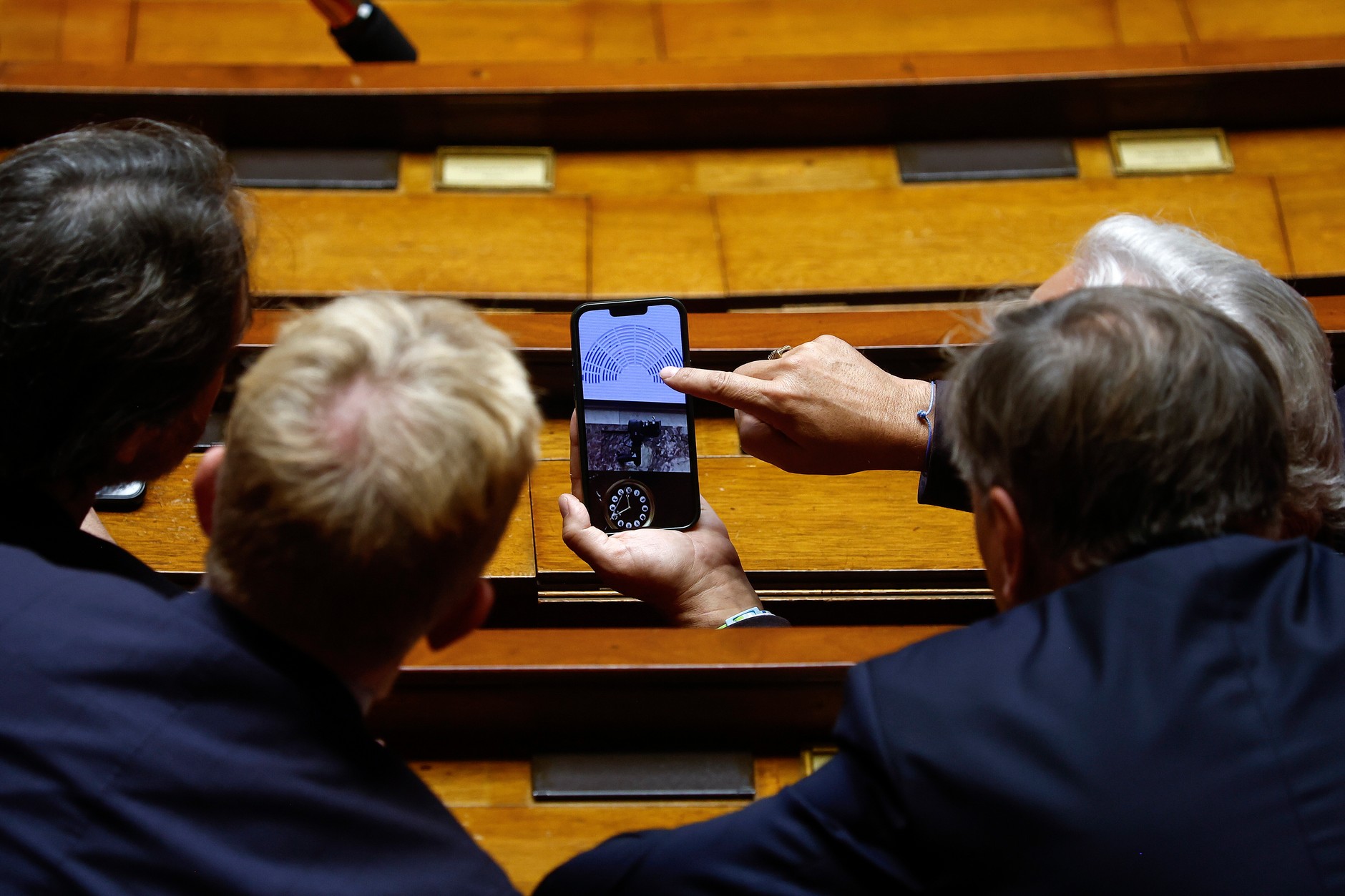
French MPs checking the result of the vote of no confidence in French Prime Minister Sebastien Lecornu and his government at the National Assembly of France in Paris, October 16, 2025.PAP/EPA/YOAN VALAT / PAP
69
The French Socialist Party (PS) currently has 69 deputies in the National Assembly. It is headed by Boris Vallaud, who on Monday, October 13, delivered a speech in response to the new prime minister's speech.
Seven MPs decided to oppose the party's strategy [która zdecydowała o głosowaniu przeciwko Lecornu]. They did not vote against the government, which committed to suspending the pension reform until 2028. [spełniając tym samym postulat socjalistów]taking action to increase purchasing power and considering introducing new taxation of the richest.
However, the new prime minister must be careful: the PS guillotine may fall on him at any time. Only 18 more votes would be enough for the no-confidence motion to be accepted.
30 billion
Thirty billion euros (PLN 127,483,500,000) – this is how much the French government wants to save in the budget, according to the draft budget law, which the government submitted to parliament on Monday.
This is not a surprise: EUR 30 billion is between the amount of EUR 44 billion (PLN 186 billion, 939 million, 720 thousand) proposed by former Prime Minister Francois Bayrou, who resigned on September 8 after a no-confidence vote, and EUR 22 billion (PLN 93 billion, 485 million, 810 thousand), which is to be saved according to the Socialist Party's bill.
The problem is that this amount is difficult to maintain because the budget will certainly change further. Let us recall that the interest on debt in France alone amounts to almost EUR 60 billion (PLN 254,989,200) annually. Therefore, this amount is much different from the expected amount.
The article continues below the video
62.9
Currently, the statutory retirement age in France is 62 years and 9 months. Thanks to Lecorn, the pension reform of President Emmanuel Macron, who decided to gradually increase the retirement age to 64 in spring 2023, will be suspended. The reform will remain suspended at least until the presidential elections in May 2027.
The costs of freezing it are estimated at EUR 3 to 4 billion (PLN 12 billion, 749 million, 175 thousand to PLN 16 billion, 998 million, 900 thousand). However, the suspension will only come into force after the adoption of the social security budget, as it was submitted in the form of a government amendment.
It is unclear whether there will be a complete renegotiation to change the current pay-as-you-go system [polegającego na tym, że składki wpłacane przez osoby obecnie pracujące są wykorzystywane do wypłacania bieżących świadczeń emerytalnych] — for example, by introducing a partially funded system. It is also unknown whether France will return to the 2023 reform if the budget proposed by Lecornu is not adopted.