Europe is slowly forgetting about Ukraine. “Why don't they care like before?”

Oleksandr Avramienko lowers the car window not to get some fresh air, but to listen. Stuck in the morning traffic jam in the center of Kiev, on the right bank of the Dnieper, he leans out towards the howling motorcycles gliding along the lanes.
“Every time I hear that noise, I flinch,” he says. — They sound just like drones.
More than three years have passed since Russia launched a full-scale invasion and more than a decade since the outbreak of the war in Donbas. Kyiv has adapted to the new normal: continuous sirens, drone intercepts and explosions on one side; cafes and bars bustling on the other. Theaters are selling out their performances, and children in shelters have started the new school year. At night, many families keep spare mattresses in hallways or bathrooms, following official recommendations to sleep between at least two walls, away from windows, in case a shell hits.
But beneath these routine activities lies a deeper anxiety – that the rest of Europe is tired, distracted from the war and sees it as something that should just endregardless of the costs for Ukraine. And with this feeling comes anxiety: that the European dream that once seemed within reach is suddenly slipping away.
The article continues below the video
Avramienko, a 33-year-old political adviser, feels this change every time she returns to Kiev, passing through Poland, a major transit hub for Ukrainians going to and from the European Union. She currently lives in Northern Europe, where she moved five years ago for her husband's job, but has no plans to apply for EU citizenship. “Ukrainian already means European,” he says.
On the 12-hour train journey from Kiev to the EU border, women and children crowd, haunted by the risk of drone attacks from the east. The men on board are viewed with suspicion.
Border controls are tougher than in the first days of the Russian invasion. Polish customs officers ask why travelers are leaving Ukraine, how long they plan to stay, and what their purpose is. Luggage is unpacked in search of contraband.
Then people opened their homes. Today the questions are sharper
– says Avramienko.
He emphasizes that he does not feel any resentment. Like most Ukrainians, she is grateful for Poland's support. However, this change reflects the general sentiment. Confidence in quick EU accession has fallen to its lowest level since the invasion. According to an August poll, only just over half of Ukrainians believe membership will materialize within the next decade, compared with over 70 percent. in 2022
Almost every fifth person believes that the EU will never accept Ukraine.
“Prove you are European”
In 2022, Ukrainian flags appeared on balconies across Europe. Aid convoys were sailing east. Strangers opened their doors to refugees.
Four days after the invasion, as Russian tanks approached Kiev, President Volodymyr Zelensky signed Ukraine's application for EU membership. “We are fighting for our rights, our freedoms, our lives and our survival,” he said in a speech that week. — We also fight to be equal members of Europe. So now prove that you are with us. Prove that you are European, and then life will triumph over death and light will triumph over darkness.
A month later, European Commission President Ursula von der Leyen traveled to Kiev to provide the first response. — Ukraine belongs to the European family – she said, handing Zelenskiy the membership questionnaire. — Your path to the European Union begins here. […] We will speed up this process as much as we can.
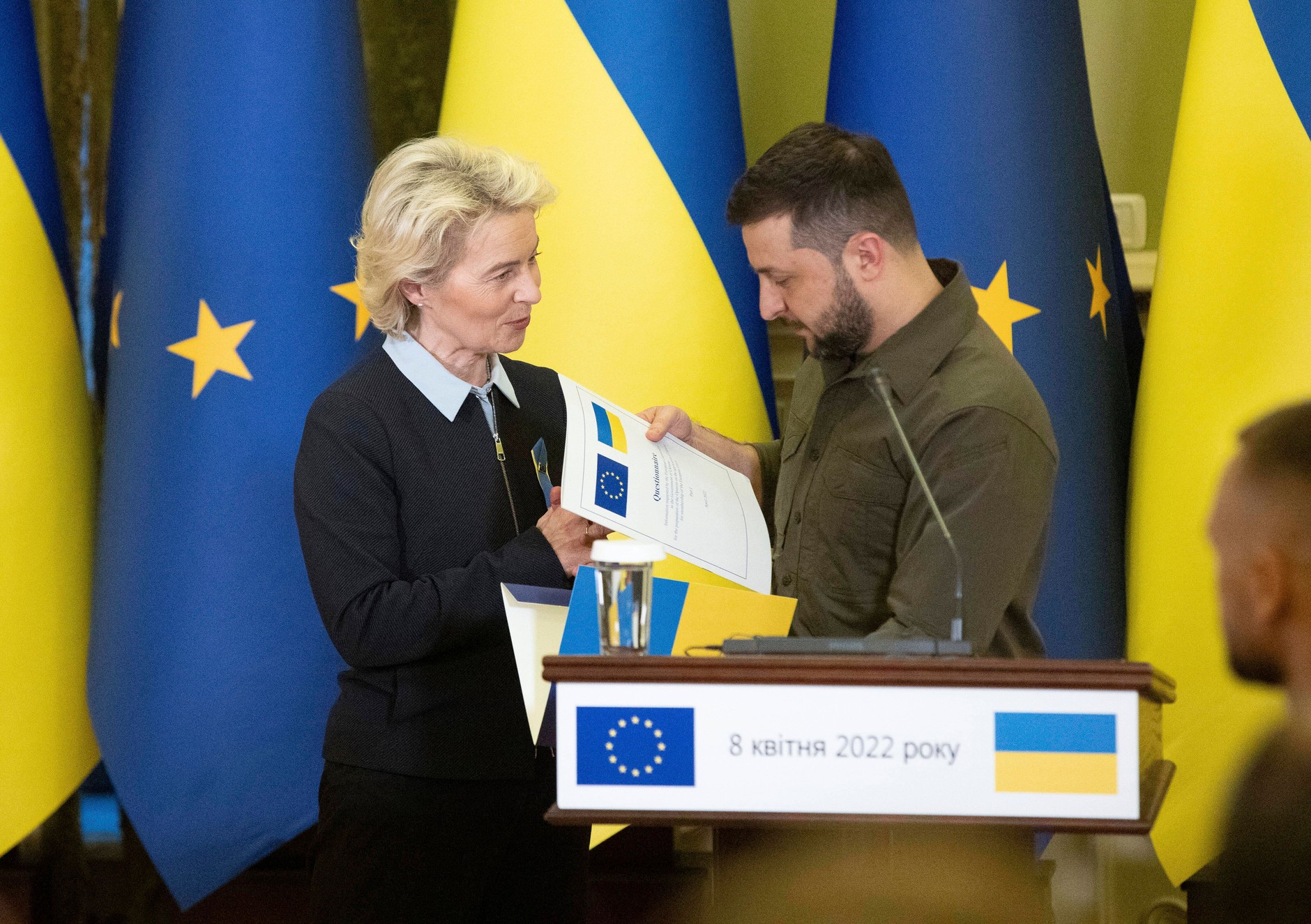
Ursula von der Leyen, President of the European Commission, and Volodymyr Zelensky, President of Ukraine. Kyiv, April 8, 2022The Presidential Office of Ukraine / PAP
Political support still exists, but public enthusiasm has waned. Back in April, von der Leyen suggested that Ukraine could join the EU before 2030. However, as the accession process moves forward, Ukrainians are nervously watching public enthusiasm wane in parts of Europewhich makes it difficult to maintain the old pace.
Neighboring Poland, one of Ukraine's loudest political advocates, is a prime example of this. A survey conducted in early summer found that only 35 percent Poles support Kiev's accession to the EU, compared to 85 percent. in 2022 More than half of the population says they would prefer the war to end, even if it meant giving up territory to Russia.
Most Poles also believe that the scale of aid offered to Ukrainian refugees has already gone too far, according to a study from earlier this year. This is despite evidence that refugees have had a positive impact on the Polish economy, filling employment gaps and boosting economic growth.
This pattern is repeated in other parts of Europe. In Germany, the majority still supports sending aid to Ukraine, but 52 percent Germans believe that Kyiv should give up the occupied lands in exchange for peace. Across the continent, countries such as Italy and France maintain official support, but their citizens are increasingly skeptical about Ukraine's admission to the EU.
— Everyone asks: what is happening in Poland and Germany? Why don't they care like before? – says Avramienko. He knows that EU governments continue to pledge support, but worries that Ukraine has become background noise for the broader public. This sense of waning attention abroad is at odds with the reality in Kiev, where the war remains impossible to ignore.
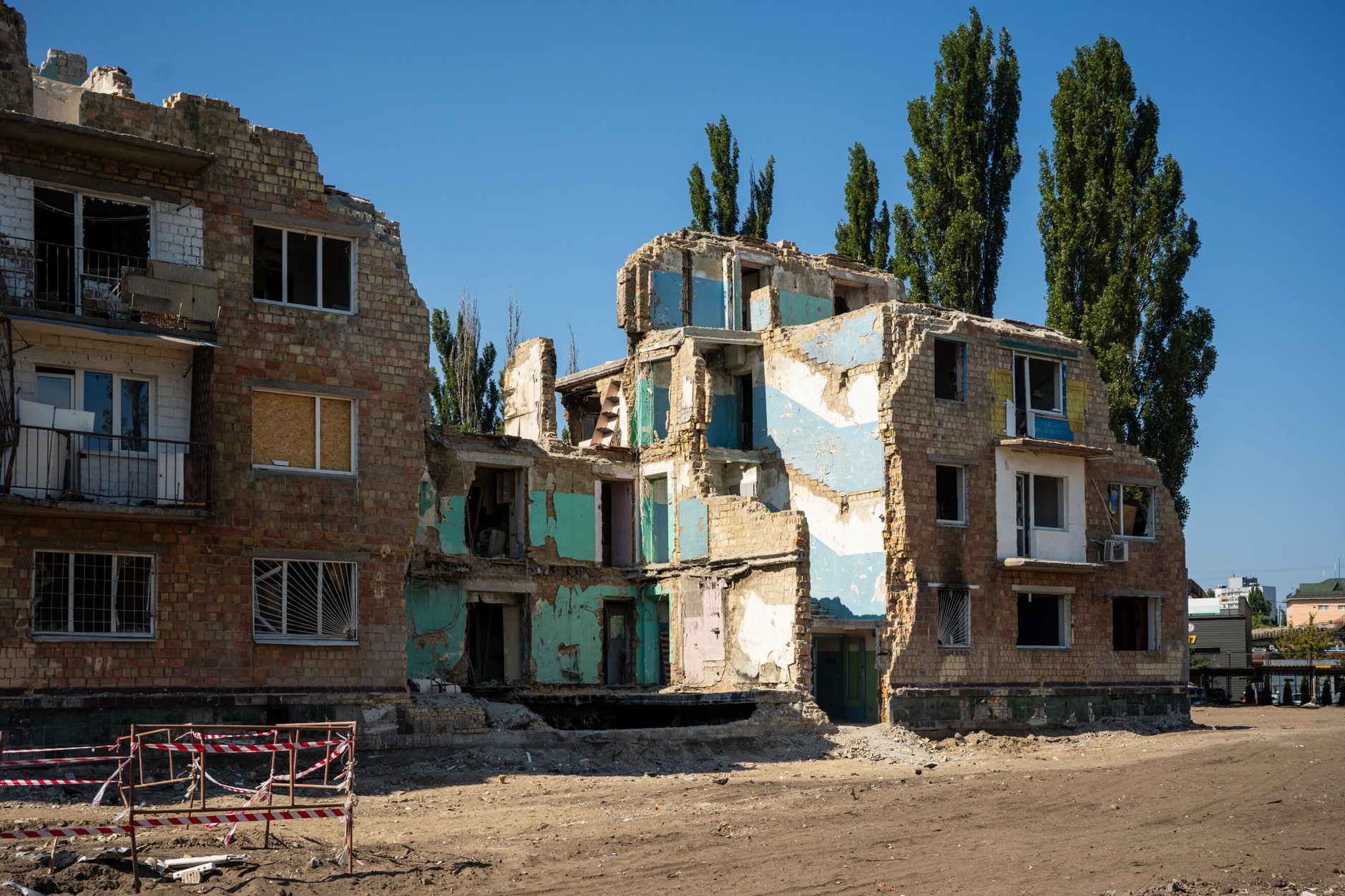
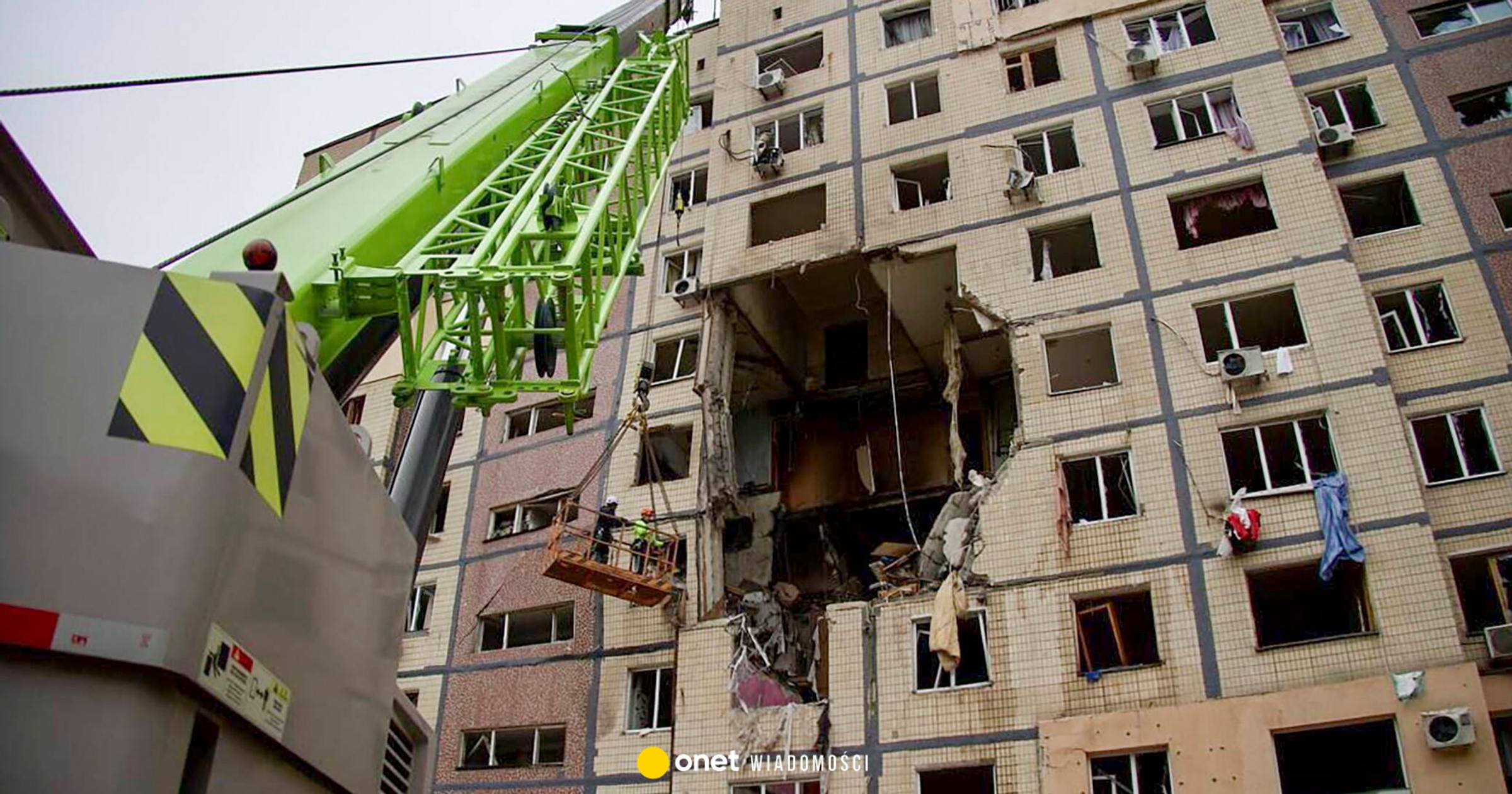
On the left bank of the Dnieper, at the site of one of the most tragic recent attacks on Kiev, there are ruinsBartosz Brzeziński / Politico
On September 7, Russia launched its largest-ever air attack on Ukraine, using 810 drones and missiles that set fire to government offices and destroyed residential areas across the country. Some of them slipped through Kiev's dense anti-aircraft defenses — enough to kill three civilians, including a child. A week earlier, another attack destroyed an apartment block in Kiev, killing 22 people, including four children.
“For us it's like coming back home, to Europe”
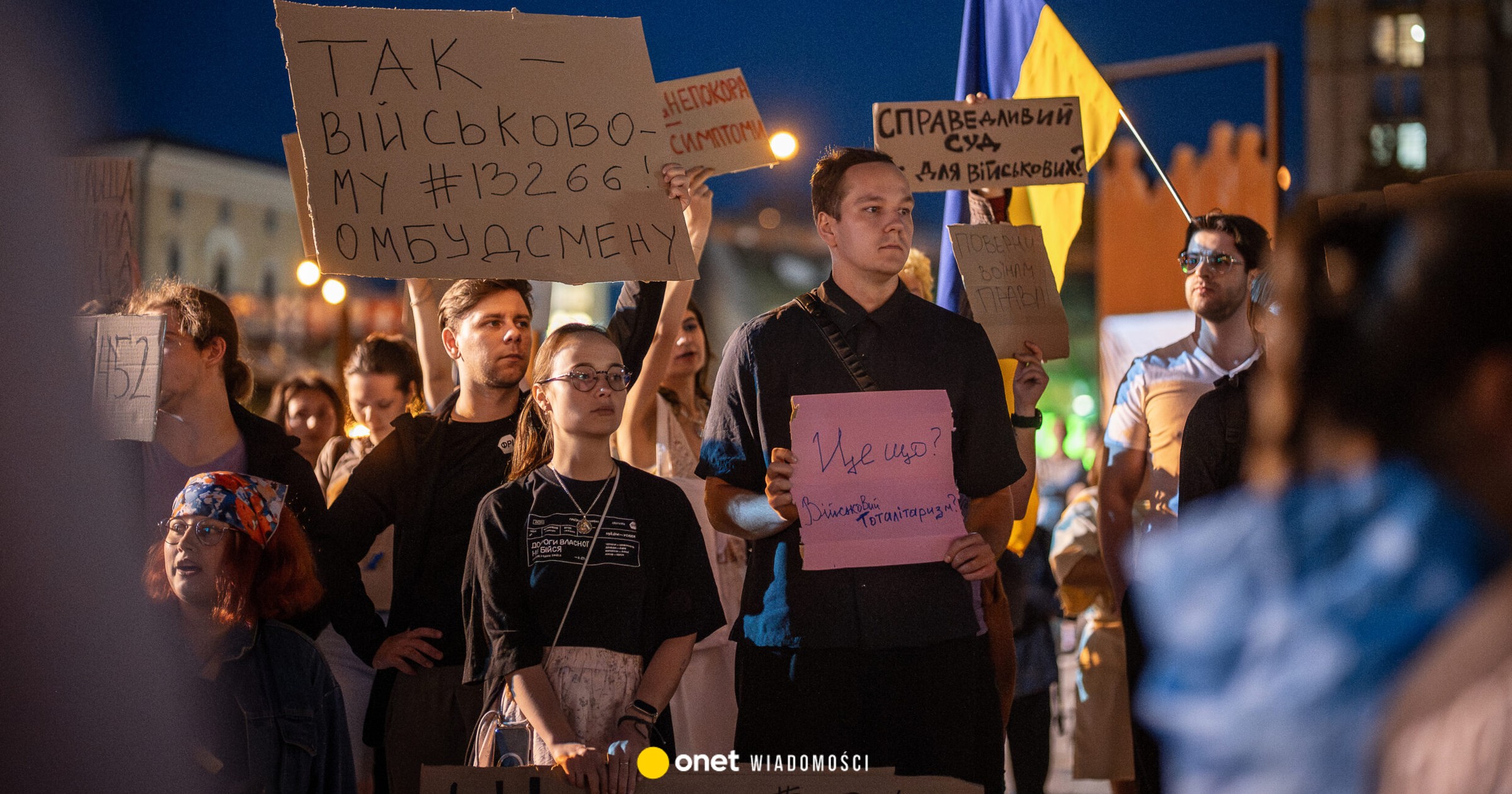
As dusk falls over Maidan, several dozen demonstrators unfurl banners at the foot of the Independence Monument, and their voices echo in the warm evening air. During martial law, protests almost disappeared. This is only the second one allowed since the invasion.
Bohdan Fomin, a 30-year-old soldier from Mariupol, a city in southeastern Ukraine, holds a handwritten banner demanding better treatment of soldiers. His hometown, once a thriving port with half a million inhabitants, was destroyed in 2022 and remains under Russian occupation – which is why believes that Ukraine must resist until the end, without making any concessions.
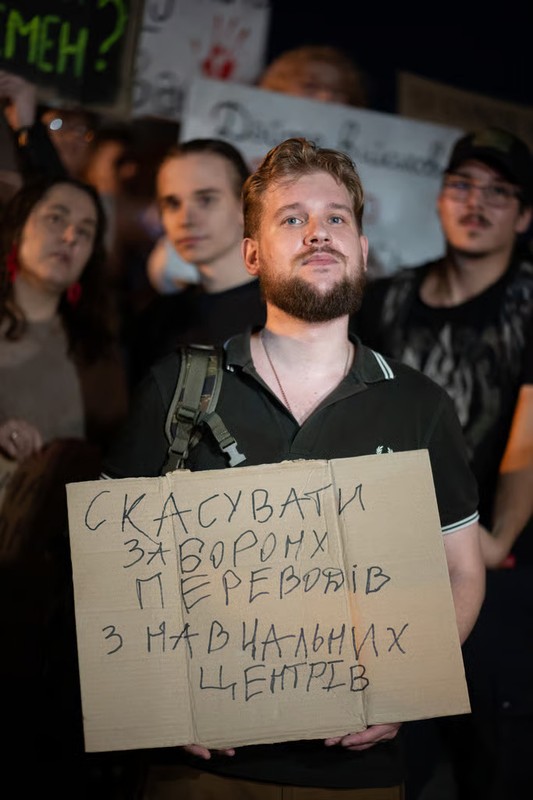
Bohdan Fomin, a 30-year-old soldier from MariupolBartosz Brzeziński / Politico
— If Ukraine is forced to give up its territory, I will have nowhere to return to, he says. — We chose our future over 10 years ago, here on Maidan. For us it's like coming back home, to Europe. I can't imagine Ukraine without it.
Fomin is convinced that the meeting is not directed against the government and President Zelensky. — Protests have been part of our culture since independence – he says, nodding to the “dialogue police” who are calmly watching from the shore, whose task is to talk to the demonstrators, not disperse them. This detail is intended to prove that this is not a rebellion against the state.
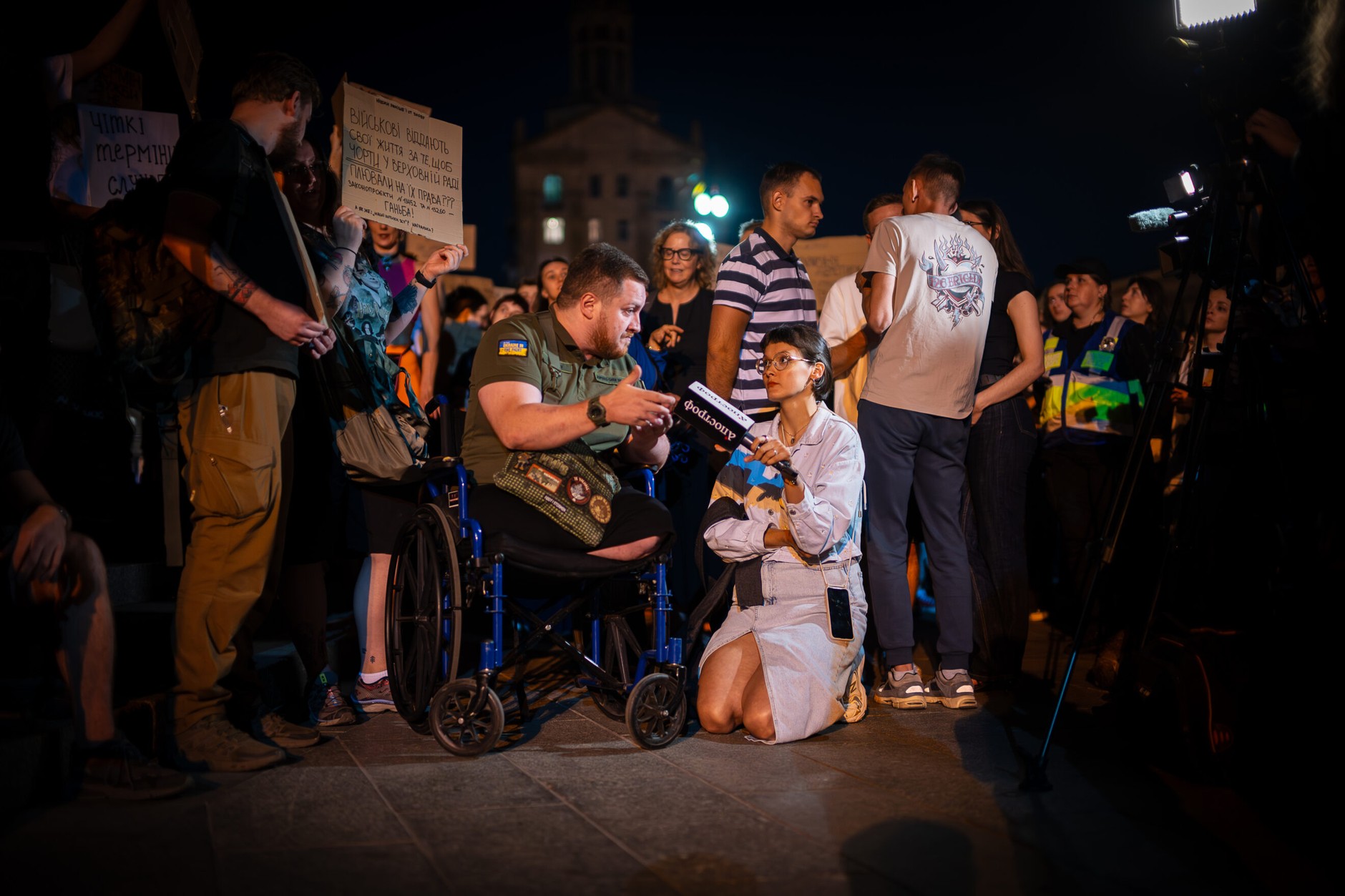
Protest on MaidanBartosz Brzeziński / Politico
Late in the evening, Olena Herasymiuk joins the crowd. The 34-year-old poet's faith has become a milestone in war literature in the countryand she herself spent most of her adult life returning to this square.
As a student in 2014, she was standing there when the first sharp cracks were heard. At first, she didn't realize that it was sniper bullets flying right next to her head. Then she saw people falling, injured and dead. She says that moment has never left her. He pushed her to write poetry as a testimony and to join a volunteer battalion, where she evacuated the wounded from battlefields.
“Ukrainians are Europeans in every respect,” he says. — We don't want to be slaves. We are free, liberal and open. And we only have one path, the European path.
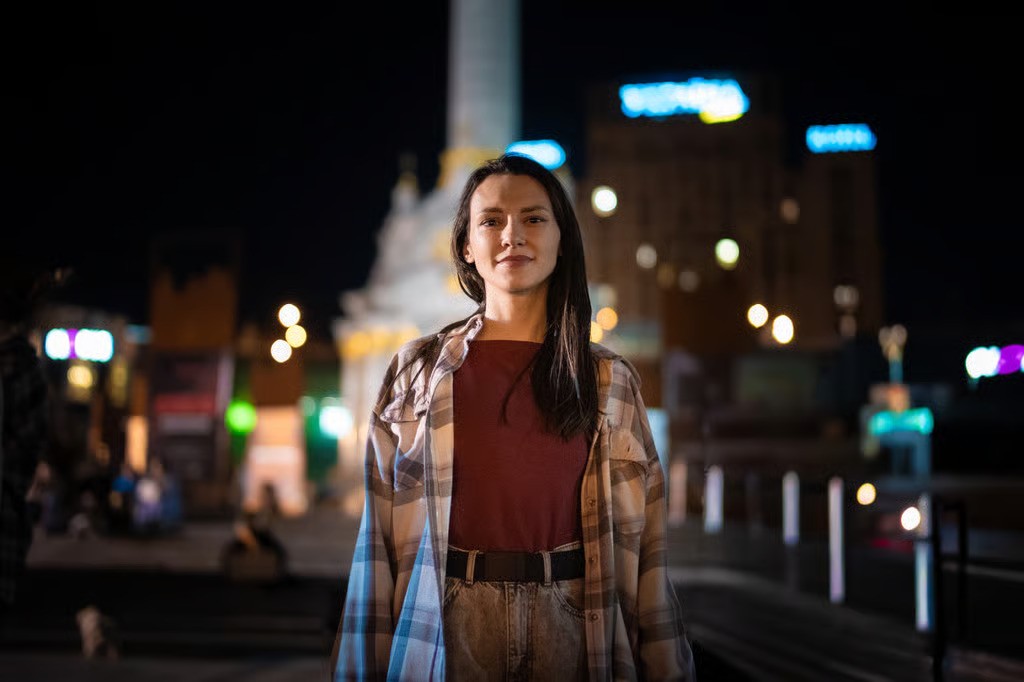
Olena Herasymiuk, poetBartosz Brzeziński / Politico
She buried her friends and wrote poems about them. One of her school friends, Daria, went to war as a drone engineer and never came back. To survive, Olena sticks to small rituals. “Every morning I wake up and my first thought is about the dead,” he says. — That's why I'm making coffee. It's a reminder of how to stay alive, how to stay human. I would go crazy without it.
“These monuments are part of European civilization. If they are erased, Europe will also lose them.”
Emphasizing Ukraine's role in European history moves from the street to Ukrainian culture and politics. On the other side of the Maidan, in a bustling bar with live music, Lina Romanucha is scrolling through her Instagram profile. It's filled with collages cut out from decades-old magazines and sketches drawn over the past three years. As he says, both of these elements help her cope with the experience of war.
When Russian troops attacked Kiev in February 2022, she fled to her parents' home in western Ukraine. Within a few weeks, she returned to the capital, convinced that she could be more useful here.
Now 41, the curator and artist describes nights during drone attacks as “Russian roulette.” At first she went to shelters, but now she doesn't bother. — You can't live like this forever. “If it's coming towards my building, it's coming,” he says.
Her response to this fatalism: culture. Romanucha is the curator of an exhibition that digitizes Ukrainian monumentsand — not only those in Kiev or Lviv, but also in Crimea, Donbas and other territories currently under Russian control.
In the halls of Kiev's Pechersk Lavra – a centuries-old monastery that itself has survived wars and sieges – visitors use virtual reality to enter a reconstruction of the ancient Greek city of Chersonesos in Sevastopol, wander through the Khan's Palace in Bakhchisarai, or stand in front of the Drama Theater in Mariupol, where hundreds of people died in 2022 r. Each reconstruction is accompanied by music by Ukrainian composers: this is Romanucha's way of emphasizing that the culture survived even if the stone and marble did not.
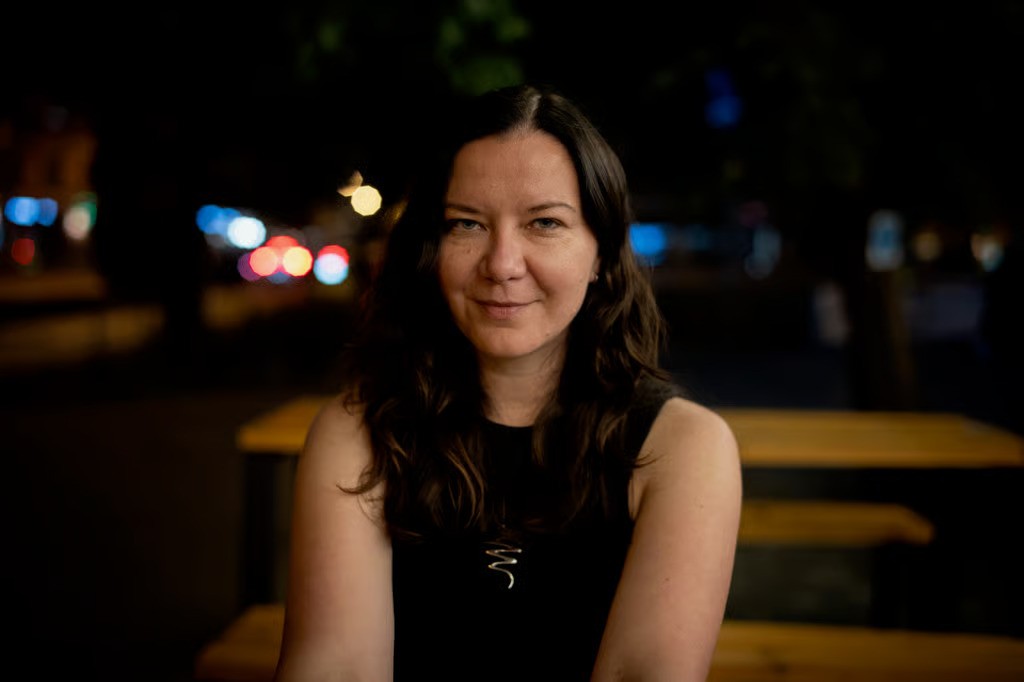
Lina Romanucha, artist and curatorBartosz Brzeziński / Politico
But according to her, the project is not only about the past. This is a way of telling Europeans that Ukraine's heritage is also their heritage, that their future belongs to them. Simply putting occupied places on a map is a form of opposition. Russia may hold the land, but the memory – and European aspiration – remains Ukrainian.
“These monuments are part of European civilization,” says Lina. — If they are erased, Europe will lose them too.
Despite all the uncertainty about her country's future, she calls herself a “blind optimist.” He dreams of Ukraine restored to its 1991 borders.rebuilt with the help of the EU and the international community.
“It's a dream,” he admits. But I don't want to abandon him.