A senior Kurdish opposition figure in Iran linked a potential land invasion of Iran to an important US military decision: establishing a no-fly zone over Kurdish areas in western Iran. This was a necessary step “to prevent the Islamic Republic from attacking from the air and exploiting its military advantage,” explained Reza Kaabi in an interview with WELT reporter Caroline Drueten, who is based in Iraq and who – like Onet – is part of the Axel Springer Global Reporters Network.
Kaabi is the secretary general of the Komala of the Toilers of Kurdistan, a militarized Kurdish separatist party based in the Kurdistan Region of Iraq. The party has its own peshmerga units (formerly Kurdish guerrillas, now called Kurdish soldiers in Iraq) and belongs to Kurdish groups that can provide ground forces in the event of an escalation of the conflict.
As for the further development of the situation, “on the one hand, President Trump's policies will be decisive, and on the other, the Kurds themselves,” Kaabi said. There have been no direct talks with the Trump administration, but the request for a no-fly zone has been “communicated.” – he added. – The request is clear. We expect it to be implemented, he noted.
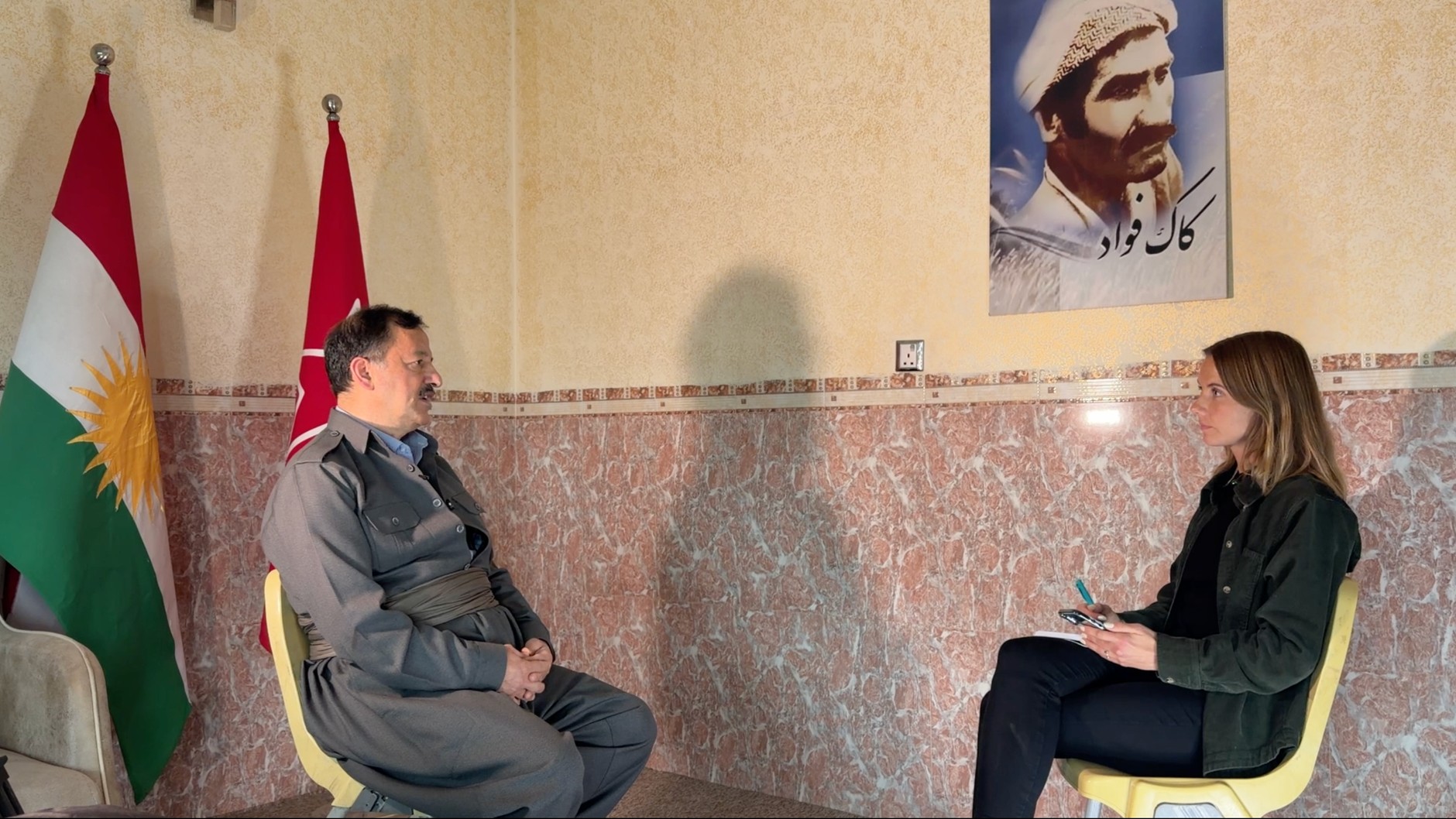
Secretary General of the Kurdistan Workers' Organization Reza Kaabi during an interview with WELT reporter Carolina DruetenDie Welt
Whether and when Iranian Kurdish forces from Iraq “will return to their territory depends on the situation” — I think we're getting close to that [odpowiednich] conditions Kaabi said. According to him, such a step would depend on several factors. In addition to the readiness of the peshmerga, it would be necessary to strengthen political cohesion between Kurdish parties, prepare the population, and, above all, provide international support.
Kaabi also referred to the period after the Persian Gulf War in 1991. At that time, the United States, Great Britain and France established a no-fly zone in northern Iraq to protect Kurdish areas from air attacks by (Iraqi dictator) Saddam Hussein. As a result, the militarily secured space enabled the development of the Kurdish autonomous region.
“We are fighting to overthrow the Islamic Republic”
Kaabi is one of the main leaders of the recently formed alliance of Iranian Kurdish opposition parties, which has been repeatedly mentioned in connection with a possible ground offensive in Iran. “We are fighting (…) to overthrow the Islamic Republic,” Kaabi said about the alliance's goals. “We demand a democratic, secular and federal Iran,” he added.
Komal's party in Iraq is part of this alliance and maintains its own military structures. — We have three camps. Our peshmerga are stationed in these three camps and are trained and ready for action. Currently, about 1,000 fighters are ready to be deployed, Kaabi said. Other groups in the alliance also maintain military forces. They are managed in a decentralized way; According to Kaabi, there are currently no plans to create a central command structure.
The article continues below the video
The United States' position on a possible Kurdish ground offensive in Iran has so far been contradictory. On Thursday, Trump told the Reuters news agency that it would be “great” if Iranian Kurdish militias in Iraq crossed the border into Iran. However, on Saturday he said: “I don't want the Kurds to enter Iran.” Türkiye had earlier warned that “instrumentalization of ethnic or religious groups” could trigger a civil war in Iran, Turkish Foreign Minister Hakan Fidan said in Istanbul on Saturday.
He added that he also discussed this issue with his American counterpart Marco Rubio.
In recent days, Iraq's Kurdish minority has come under Iranian fire. In Erbil, the capital of the autonomous Kurdistan region in Iraq, the airport was attacked by drones. Numerous attacks also took place in Sulaymaniyah, near the border with Iran.
I’m Ashley Davis as an editor, I’m committed to upholding the highest standards of integrity and accuracy in every piece we publish. My work is driven by curiosity, a passion for truth, and a belief that journalism plays a crucial role in shaping public discourse. I strive to tell stories that not only inform but also inspire action and conversation.