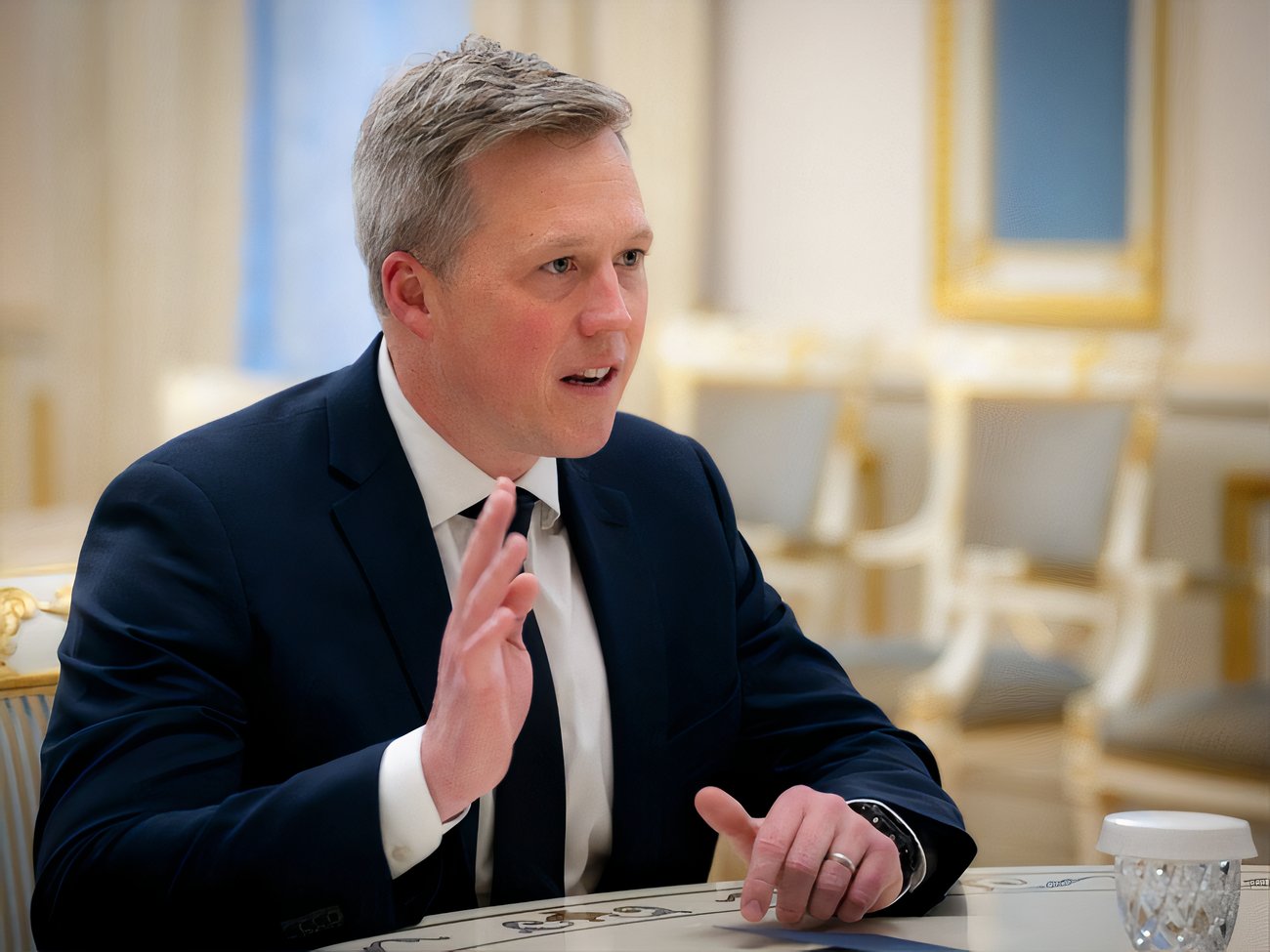
Bessent also stressed that European allies must intensify the pressure campaign not only against Russia, but also against any country that finances the Russian military machine through the purchase of Russian oil.
The American minister’s statements came against the backdrop of a meeting with Ukrainian Prime Minister Yulia Sviridenko in the United States. Bessent reaffirmed the United States' unwavering support for Ukraine's sovereignty and noted the need to ensure a strong and sustainable peace.
The head of the US Treasury also thanked Sviridenko for her work within the framework of the US-Ukraine Subsoil Agreement Investment Fund and noted the importance of regular contacts between the US and Ukraine within the framework of this “vitally important” partnership.
Context
Sanctions against Russia were introduced in response to its attack on Ukraine back in 2014. After the full-scale invasion of Russian troops on February 24, 2022, restrictions were significantly expanded.
In August 2025, US President Donald Trump stated that there could be “very serious consequences” if the aggressor country Russia does not sit down at the negotiating table with Ukraine, and threatened to “intervene” if there is no progress in two weeks (this period has already expired). The next day, Trump threatened the Russian Federation with “economic war” if it refused to negotiate with Ukraine.
On September 7, Trump announced that he was ready for a second stage of sanctions against Russia, but once again did not introduce them, promising to introduce restrictions after Europe also strengthened them. In particular, the head of the White House demands that EU countries refuse to purchase Russian energy resources. The New York Times wrote that Trump voiced a condition that he himself does not believe will be fulfilled. Politico analyzed Trump's conditions and called them “Withfalse and impossible“.
October 1 Bloomberg wrote that the countries of the Big Seven (G7) are approaching an agreement on a “significant increase in sanctions” against Russia due to their reluctance to end the war in Ukraine. Earlier in June, according to CBC News, America didn't agree with the final wording of the G7 joint statement on the war in Ukraine, so it was not made public. Bloomberg, citing sources, wrote that discussions between G7 leaders did not prompt Trump to tighten sanctions against the Russian Federation.