On October 8, Herta Müller, German and Romanian -language writer, originally from Romania received the Nobel Prize for Literature for 2009. On October 8, the Romanian violinist Ion Voicu and the prose writer were born.
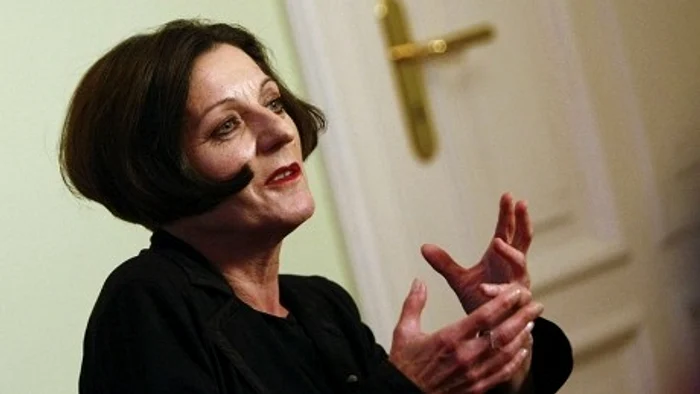
Writer Herta Müller Photo: Adevărul
1914: Dimitrie A. Sturdza-Miclăuşanu died, historian and politician, founder and president of PNL
He was born on March 10, 1833 in Miclăușeni, Iași county, in an important family in Moldova. He was an academic, a Romanian politician and held the position of prime minister of Romania four times, between 1895 and 1909. He was also the president of the Romanian Academy between 1882-1884.
His education included studies at the Mihăilean Academy and a period spent in Germany, where he was involved in the political movements of the time. When he returned to the country, he became the personal secretary of the ruler Alexandru Ioan Cuza. Over time, he became an opponent of Cuza and played a leading role in the monstrous coalition, later becoming a member of the Liberal Government led by Ion Brătianu.
In 1892, he was elected leader of the Liberal Party and held the position of prime minister four times. Although he was known for his work skills, Sturdza was a worsen nationalist and despised everything that was considered “foreign”, which slowed the country's political and industrial development.
In addition to his involvement in politics, Dimitrie A. Sturdza also had a significant contribution in the field of Romanian numismatics. He was appointed permanent secretary of the Romanian Academy and contributed to the publication of important collections of historical documents, such as those made by Constantin Hurmuzachi.
It should be mentioned that Sturdza was known for his anti -Semitic position and took measures to exile Moses Gaster, with the help of Prime Minister Ion C. Brătianu. Also, during his last government in 1907, controversial events took place, such as the repression of the rebel peasants, led by the Minister of Interior Iic Brătianu and General Alexandru Averescu.
Dimitrie A. Sturdza died on October 8, 1914, in a mental illness hospital, being affected by health problems during the period when he was prime minister.
1923: The Romanian violinist Ion Voicu was born was born
The virtuoz Ion Voicu was the first Romanian violinist to play at a Stradivarius violin. The instrument given in 1702 and was not intended for sale when he was noted by Voicu in Bern, in 1956, in the Werro Lutieri house.
However, impressed by the fabulous talent of the young musician, Henri Werro agreed to sell his violin. With this famous instrument, violinist Ion Voicu would have to hold an impressive series of concerts worldwide, which brought him the appreciation of the criticism and the international press.
Ion Voicu was born on October 8, 1923 in Bucharest, in a family of musicians. At only 14 years old, he held the entrance exam at the Royal Music Academy, where, due to his talent, he entered directly in year V, thus graduating the courses of this institution in just two years, instead of seven. Based on the stage of the Romanian Athenaeum at 18, he was soon noticed by George Enescu, who, impressed by his talent, granted lessons in his villa in Sinaia.
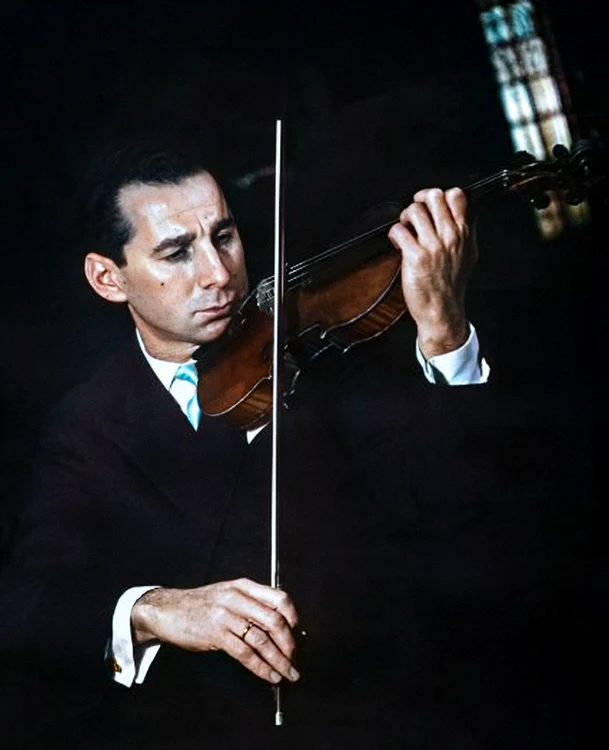
Ion Voicu, violinist
After winning the “Enescu-Menuhin” award in 1946, the violinist left to deepen his studies in Switzerland first, then in Russia, along with David Oistrah, with whom he also tied a close friendship. In 1956, Ion Voicu was beginning to play at the famous Stradivarius, holding concerts with the Philharmonic Orchestra on the most prestigious scenes of the world such as Royal Albert Hall, the Scala in Milan or Carnegie Hall, with virtuosity the great classic scores and achieving performances in works composed by Bach, Mozart, Mozart Mendelssohn-Bartholdy, Paganini, Prokofiev or Enescu.
In a career of over 50 years, Ion Voicu has been distinguished with numerous international prizes, including the diploma and gold medal of the French Academy, becoming a member of the Academy “Arts, Sciences et Lettres”, in 1994. The violinist is the one who set up “The Bucharest Chamber Orchestra”, in 1969. considered by international criticism to one of the first five violinists of the world.
1947: Monica Pillat, writer, poet and translator was born
He was born on October 8, 1947 in Bucharest, Romania. He was part of a family with a rich cultural tradition, being the daughter of the prose writer Dinu Pillat and of Cornelia Pillat, and the granddaughter of the traditionalist writer and poet and the painter Maria Pillat-Brateș.
Monica Pillat attended university studies at the Faculty of Germanic Languages, the English-Romanian section, graduating in 1970. Subsequently, she continued her studies by obtaining a doctorate in comparative literature in 1978. She was involved in higher education, her didactic activity being held first at the Department of Foreign Institute in Bucharest, 1970 of the Faculty of Foreign Languages of the University of Bucharest between 1973 and 2005.
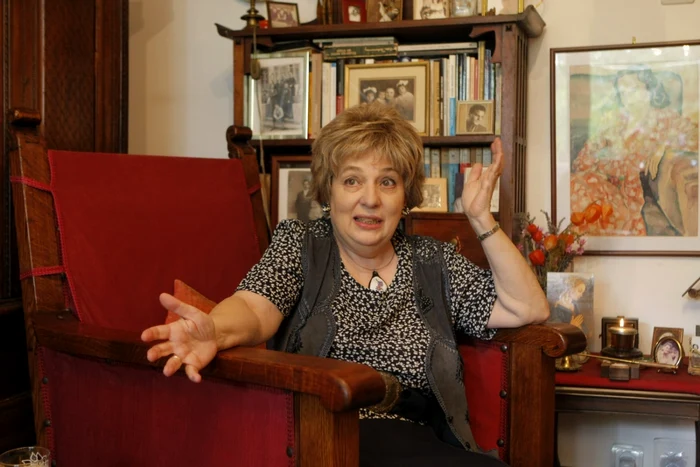
Monica Pillat PHOTO: Adevărul
In addition to the academic activity, Monica Pillat has been dedicated to writing, excelling in poetry and prose. His remarkable works include: Poetry: “ships” (1970), “Imagination of the echo” (1981), “Plural as a wake” (1989), “Suspended sentences” (1998), “Dorul de Rai” (2005), “Duet in White” (2016); Prose: “The 13 and mystery” (1968), “Timpului Corabia” (1976), “Road to Emaus” (2002), “13 and Mystery. The 13 and mystery” (2009), “Visit invitation – eight healing stories” (2014), “Book tailor” (2019), “My grandfather without grave” (2022).
Monica Pillat also made important contributions in the field of literary criticism, with works such as “the modernity of the fantastic novel of EA Poe” and “Exit from the contour”, as well as in translations from French and English.
1967: Communist revolutionary Ernesto Che Guevara and some of his close friends are captured in Bolivia
On October 8, they are surrounded in the area of the Quebrada del Yuro and Guevara, he ordered the group to break up in two, one with patients being sent back, and Che, with the others, remains to hold the Bolivian troops. After three hours of struggles Che is captured with Simón Cuba Sarabia. He was taught after he was injured on his foot, and the rifle was damaged by a bullet. On October 9, the Bolivian government announces the death of Che Guevara in battle. At the same time, the Colonel Joaquín Zenteno Anaya and CIA Félix Rodríguez arrive in Higuera.
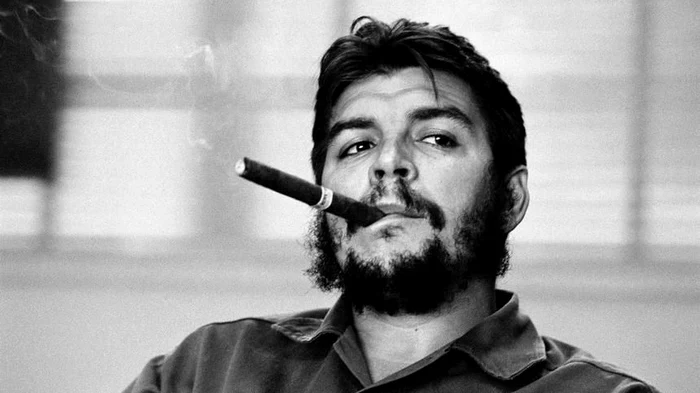
Ernesto Che Guevara Photo: Adevărul
At 13 o'clock, President Barrientos gives the order of execution of the fighters. Even if they never justified their decision, Barrietos' collaborators think he was afraid of a public process that would have drawn international attention to Bolivia, as happened in the case of Régis Debray; He also did not want to be sentenced to a prison sentence, then released, as in the case of Fidel Castro.
2008: George Emil Palade died, biologist and American doctor of Romanian origin
He was born in Iasi, on November 19, 1912 and became one of the most prominent scientists in the field of cellular biology. Laureate of the Nobel Prize for Physiology and Medicine in 1974, Palade left a significant imprint in the world of scientific research.
Both parents were teachers. At the age of 7, he started his education at School no. 33 “Mihail Kogălniceanu” from Iași, and then moved to Buzau, where he continued his studies at BP Hasdeu High School. In 1930, he enrolled in the Faculty of Medicine of the University of Bucharest, graduating in 1940 with the title of doctor in medicine.
In 1941, Palade marries Irina Malaxa, the daughter of industrialist Nicolae Malaxa. The two emigrated to the United States. There, Palade was employed as a researcher at Rockefeller University in New York, where he worked under his mentor, Albert Claude. This collaboration opened the road to his research in the field of cell pathology.
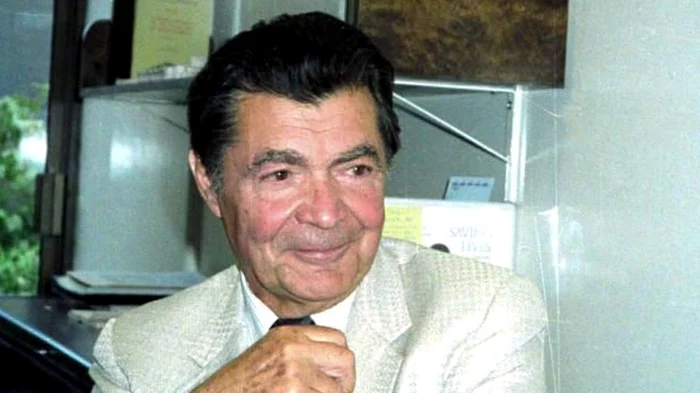
George Emil Palade Photo: Adevărul
George Palade revolutionized the understanding of cellular processes, laying the foundations for research in cytology. Its most important contribution was the elucidation of protein production mechanisms. He discovered intracoplasmic particles rich in RNA, later called ribosomes or Palade's corpuscles, where protein biosynthesis is achieved. This discovery was essential in the development of modern cellular biology.
In 1974, George Emil Palade received the Nobel Prize for Physiology and Medicine for his discoveries related to the functional organization of cells, marking a crucial moment in the development of science. Later, in 1986, the National Medal for Science in Biology in the United States was conferred.
George Emil Palade died on October 8, 2008, at the age of 95.
2009: Herta Muller received the Nobel Prize for Literature
The German writer originally from Romania Herta Müller was born on August 17, 1953 in the village of Niţchidorf.
After graduating from German and Romanian philology studies, he works for a short time as a translator in a factory in Timisoara, from where he is dismissed because of the refusal to collaborate with the Security.
In 1982 he debuted with the volume of stories “Low lands”, very censored, whose whole version would appear in Germany in 1984. The threat from continuing security, forcing Herta Müller to emigrate to the RFG in 1987.
He publishes the novels: “Man is a great pheasant in the world” (1986), “Travel in one foot” (1989), “Since then the fox was the hunter” (1992), “the animal's animal” (1994), “today I would not have met with me” (1997), “The cradle of breathing” (2009), ” (2003), volumes of stories. It is a laureate of numerous important prizes, including the Kleist Prize (1994), the European Prize for Literature Aristion (1995), Impac Dublin (1998), the Literature Prize of the Konrad Adenauer (2004).
In 2009 the Nobel Prize for Literature attributes to him.