The story of the man who survived the Holocaust and exile to Siberia to die a hero in the armed attack in Australia. His daughter's testimony

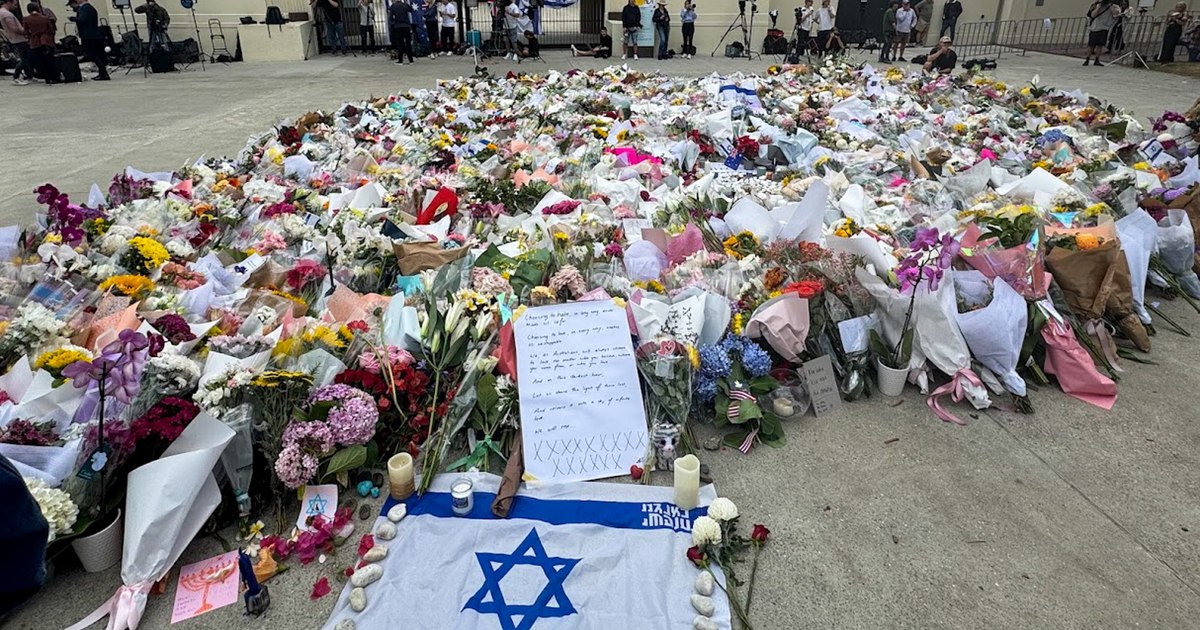
Alex Kleitman, an 87-year-old Ukrainian immigrant born in Odesa, Ukraine and a Holocaust survivor, was killed while trying to shield his wife from bullets in the gun attack that targeted a Jewish Hanukkah gathering on Sydney's Bondi Beach, NBC News reports.
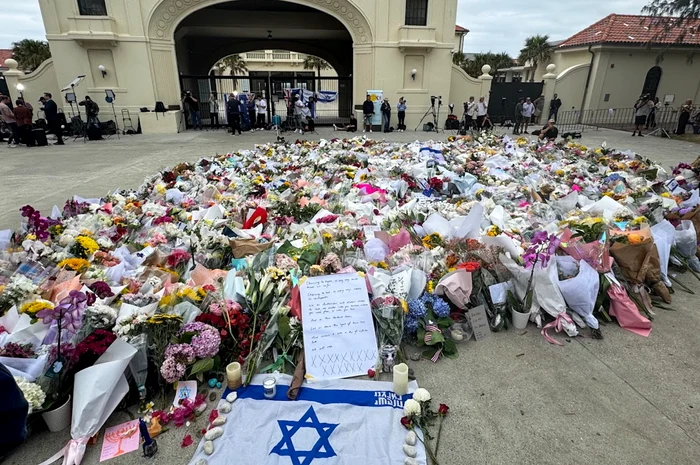
15 people were killed in the armed attack in Sydney PHOTO profimedia
15 people were killed on December 14 when two suspected ISIS radicalized attackers opened fire on about 1,000 people gathered for the Jewish holiday of Hanukkah. Australian police classified the attack as a terrorist act and an anti-Semitic incident.
Alex Kleitman survived the Holocaust with his mother and younger brother, enduring Soviet terror in Siberia. This region of Russia served as a site for political repression during the USSR, hosting vast networks of exile settlements, labor camps and gulags. After World War II, he emigrated from Ukraine to Australia.
His death was confirmed by his wife, Larisa Kleitman, herself a Holocaust survivor. The couple had been together for almost 60 years.
Moments before the tragedy, she heard several loud noises like “bangs” and immediately saw her husband fall to the ground.
After the attack, the woman said she was “shocked” and “confused” and trying to understand what had happened.
The story of Alexander Kleitman
Alexander Kleitman was just a boy when he fled the Holocaust and then endured a harrowing train journey to Siberia, where years of starvation left him permanently hunched. He endured decades of anti-Semitism in the Soviet Union but never stopped being “a proud Jew,” his daughter Sabina recalled Tuesday.
Year after year he attended the Hanukkah celebration at Sydney's Bondi Beach, where he had brought his family to live in 1992.
“Dad died doing what he loved most” Sabina said excitedly in an interview. “Protecting my mother – probably saved her life – and standing up and being a proud Jew: turning on the light, bringing light to this world.”
Fifteen people were killed on Sunday when two gunmen, apparently motivated by Islamic State ideology, opened fire on the festive gathering. Among the dead were a 10-year-old girl who had been happily eating cake moments earlier, an assistant rabbi known for his optimism and a 62-year-old man who threw bricks at one of the gunmen in a desperate bid to defend his community.
But perhaps no death reflects the shock of the gun attack in Australia more than that of Kleitman, who survived the Holocaust and a difficult childhood, only to die in the country she considered a safe haven.
“He lived a remarkable life,” said his daughter, “and he could have lived another 10 years if it hadn't been for this horrible atrocity.”
Australia has a long Jewish history, dating back to the arrival of the First Fleet in 1788, said Andrew Markus, professor emeritus at Monash University in Melbourne and an expert on Jewish migration. But the biggest wave of Jewish immigrants came after World War II.
“Many people felt that Europe was the feast of the world after what had happened to them, so getting as far away as possible was part of the appeal of Australia.”he said.
In Australia, Kleytman became a collector of stories of Jews in the former Soviet Union, writing two books about them, while resisting his family's pleas to write his own memoirs.
Still, bits and pieces of that remarkable life crept into reluctantly told stories. He was born in 1938 in a territory that is now part of Ukraine. When World War II broke out, his parents, younger brother and he fled to Siberia on a long and arduous journey with other evacuees.
“They were on a train, bombs were falling, so many people died”Sabina said.
On the way, her father fell ill and had to be hospitalized. He was separated from his family and feared he would never see them again. But he managed to reunite with them and make it to Siberia, where they shared a small room.
“They had 'very little food, almost no heat,' Sabina said. Years of malnutrition and cramped conditions left her father with a deformed spine, she said.
After the war, he eventually managed to move back to what is now Ukraine – then part of the Soviet Union – where he met Larisa, the daughter of Holocaust survivors. They had Sabina and her brother and built a life there, although they could not openly celebrate being Jewish, she said.
In 1992, after the fall of the Soviet Union, Kleitman took his family to Australia. There, the civil engineer built a successful career, contributing to major projects including the Sydney Olympic Stadium.
Retired at 76 years old
“He didn't want to write a book about himself”Sabina said laughing. “I asked him many times. He didn't want to do it. He wanted to write books about the life of Jews in the Soviet Union and the terrible things we went through.“
In Australia, Kleitman was finally able to fully celebrate her Jewish pride, she said. But in the two years since the October 7 attack on Israel, her father began to worry that Australia was becoming less safe for Jews.
On Sunday, however, he went to the Hanukkah event at Bondi Beach with his wife.
When the attackers – father and son, identified as Sajid Akram, 50, and Naveed Akram, 24 – opened fire on the festival, Kleitman covered his wife with his body.
Sabina, who was supposed to go with her parents but couldn't attend, got a call from her cousin who told her to call her mum because there was bad news about Bondi Beach.
“I called my mother and she said, 'Your father is gone. Your father was just killed.'”Sabina recalled.
“I was screaming non-stop because you don't expect it,” she said. “You go to a fun family cultural event with hundreds of people, a quiet event where we sing, eat donuts and dance. Everyone brings their kids.”
“After that, it was a nightmare I can't wake up from,” she said, crying.
Part of the pain for the victims' families is the ongoing struggle to receive the bodies of their loved ones, which, according to Jewish custom, must be buried as soon as possible. This tradition collided with a complex crime scene investigation.
In the meantime, Sabina said, she tries to console herself with the “outpouring of love” her family has received and memories of a cheerful, kind man: a youth chess champion who taught her to read at age 3 and spent countless hours playing table tennis with her and her brother in their apartment in Ukraine; a grandfather who taught his family to be proud of their Judaism and was looking forward to lighting the first Hanukkah candle with them – only he never got the chance.