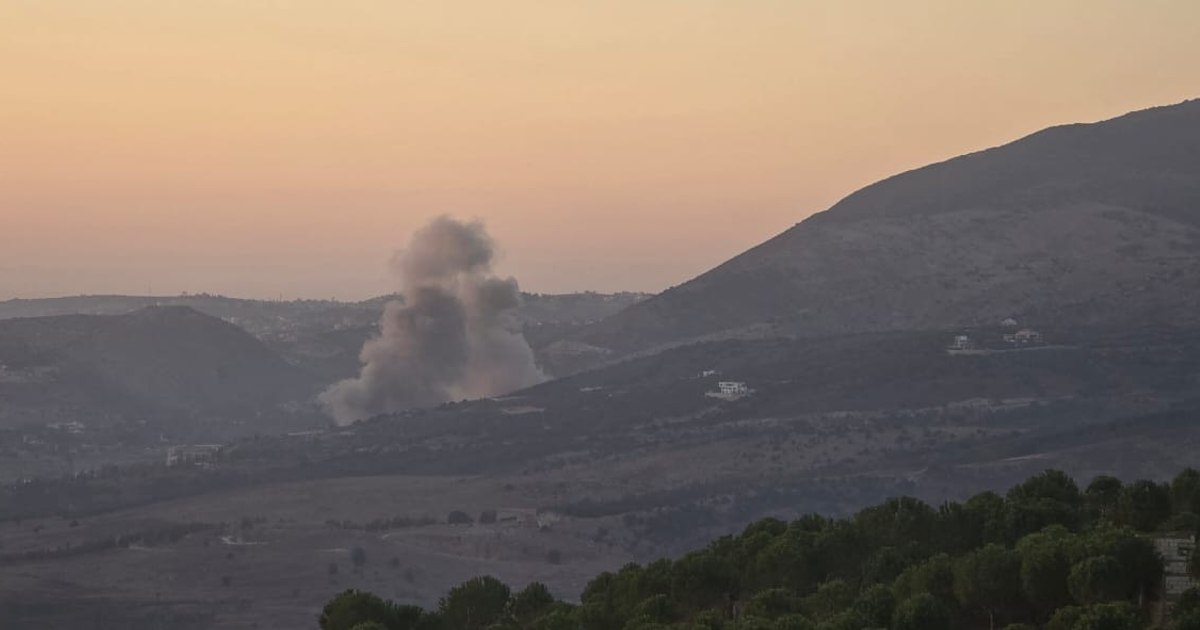
The new Lebanese government, formed as a result of the ceasefire between Israel and Hezbollah last year, is considering an ambitious plan supported by the US, disarming all non-state armed groups, Foreign Policy reports, in an analysis of the current stage of this effort.
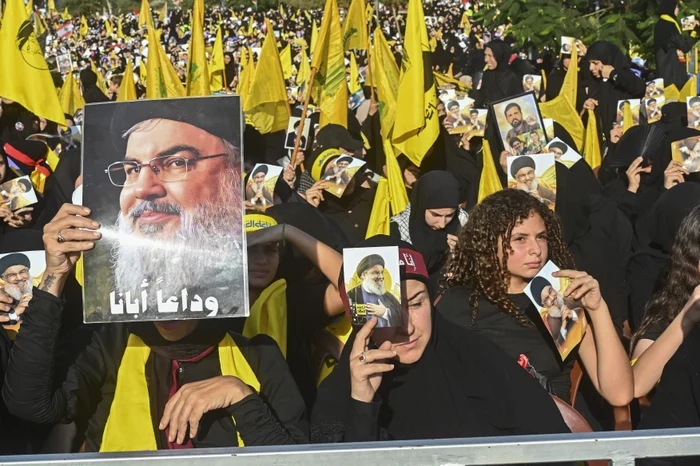
The most important of these groups is Hezbollah, and the emblematic figure of the Shiite group, Hassan Nasrallah, remains the spiritual leader of Hezbollah.
“We must continue to fight,” said Ali Nassif, the owner of a restaurant in Dahiyeh, the Hezbollah bastion in the southern suburbs of Beirut. “We must honor his martyr.”
When Israel killed Nasrallah in Dahiyeh in September last year – hitting an underground command center with dozens of projectiles capable of destroying bunker – the feeling of pride and invincibility was shattered, but Hezbollah remains defiantly.
The new leader of the group, Naim Qassem, said that “there will be no life” in Lebanon if the government would try to face or eliminate Hezbollah. The Lebanese Prime Minister, Nawaf Salam, has listed the statement as a “veiled threat of civil war”. On the other hand, the group has been firm: it will not discuss disarmament as long as Israel occupies and bombarded in Lebanon.
At the beginning of August, the Trump administration presented to Lebanon a step -disarming plan, during which Israel would stop attacks on the country and withdraw from five positions in the south of Lebanon. On August 7, the Lebanese office approved a plan of the Lebanese army aligned closely with the US proposal. US emissary Tom Barrack welcomed the decision as a “first step” that requires “Israel to respect that equal hands.”
Last week, however, Barrack made an amazing confession in an interview with The National News. Asked what motivation Hezbollah has to disarm, he said: “Zero, that is, this is the problem, especially when Israel attacks everyone … As things advance, the argument [Hezbollah] It becomes more and more powerful, this being: we are here to protect the Lebanese from Israel. “
In the absence of the lack of compliance of Hezbollah towards the disarmament, the Lebanese government is now preparing the army for the possibility of using the force-a perspective considered an anathema in a country marked by 15 years of civil war (1975-1990). But while Hezbollah refuses to cooperate, the government has obtained limited concessions from moderate Palestinian factions to teach some of the weapons in exchange for vague promises to improve their civil rights.
The attempt to persuade the Palestinian militant factions to disarm, but the Hezbollah, has proved futile. And if, under these conditions, the state is not willing to engage in an armed confrontation, Lebanon will remain in a state of uncertainty, in which Israel continues to selectively attack Hezbollah, increasing the risk that the situation will degenerate into another war.
Confrontations between camps in refugee camps
On September 3, battles broke out in Burj Al-Barajneh, a Palestinian refugee camp, resulting in the injury of two people. Armed clashes are shockingly frequent in camps, where the government and the army do not have a significant presence, leaving various factions to fight for control and legitimacy.
Less than a week before, Fatah militants had met with the Lebanese army right in that place to teach a number of weapons, including racquest grenades and other small caliber weapons. It has been such a third action since Palestinian President Mahmoud Abbas, himself a Fatah member in the West Bank, concluded an agreement with Lebanese President Joseph Aoun for disarmament cooperation. In a common statement, the two leaders said they share “the belief that it was weapons outside the control of the Lebanese state has ended.”
Once you pass the gate, the factual diversity of Burj Al-Barajneh becomes obvious. Portraits of martyrs, banners and other iconographs are everywhere. The entire constellation of Palestinian parties is represented: Hamas, Palestinian Islamic Jihad, Popular Front for Palestine and many more. A refugee camp can lead to the rows of tents, but in Lebanon, most Palestinian camps have been around for more than 75 years and there are now dense groups of two or three floors.
In Lebanon, the Palestinians are still considered refugees by the state, even though most were born here and inherited the status since their families fled in 1948. The government plans to adopt a legislation by the end of improving Palestinians to work and property, but will not grant them citizenship.
The clash on September 3 took place between two families, one of which was affiliated Fatah, said a local Palestinian, Taha Ashi, 22, who lives in Dahiyeh. In the videos that circulate online, you can hear automatic gunfire and explosions.
“The crimes in the camp make the disarmament a welcome perspective,” Ashi said. “I was robbed under threat to the weapon in Dahiyeh before. I defended myself,” he said. “It will be much better when we have the army and the police will prevent these incidents.”
How to report the main Palestinian coalitions to disarmament
But the two major Palestinian coalitions in Lebanon have opinions divided in terms of disarmament cooperation.
Oep, which also includes Fatah, is aligned with Abbas and generally cooperates in the field of disarmament. The Alliance of Palestinian forces (APF), which includes Hamas, is vehemently opposed to this policy. The APF was established in Damascus in 1993 by factions that rejected the Oslo agreements and was strongly supported by the Assad regime.
“Since the fall of Bashar al-Assad in December last year, the ONE has become the dominant force in Burj al-Barajneh,” said Badie Al-Habet, a local representative of Fatah. It stopped at a monument dedicated to the Palestinians killed in 1985, when the Lebanese militias supported by the Assad regime besieged the camp to drive away the EPO loyalists. Habet's uncle is buried there.
“As our president said [Abbas]these weapons have fulfilled their purpose and are no longer useful for confrontation with Israel. On the contrary, they represent a burden for Palestinians, ”said Habet. The 1969 Cairo agreement recognized the armed status of Palestinians in Lebanon and allowed them to carry out cross-border raids against Israel. But Palestinians in Lebanon no longer have or, for many, the desire to launch Israel.
“We believe in the Lebanese army and the Lebanon government and we have established new relations with all the Lebanese parties – from the far right to the far left,” he added.
On September 5, an armed conflict broke out in the Shatila refugee camp, this time following a dispute between drug dealers, resulting in the injury of three people. Shatila is known for one of the greatest atrocities of the Lebanese civil war, when a Christian militia allied with Israel, Lebanese forces, stormed the camp and massacred thousands of people in September 1982. The massacre took place shortly after the United States mediated an agreement to disarm the camp – an argument. disarmament supported by the US.
Today, Lebanese forces are a political party instead of a militia and are one of the most important supporters of disarmament. “There is no way to return to a situation in which to have the militias with the army – whether it is Hezbollah, Palestinians or any other group,” said Marc Saad, a party spokesman.
About 25,000 people live in Shatila, who is less than a tenth of a square kilometer, according to Naji Dawali, a Fatah member and secretary of the People's Committee of the Camp, aligned with the EPO. Hamas and his APF allies have their own rival committee in Shatila – who is responsible for water management – while the OEP committee deals with electricity, Dawali said. Both groups are coordinated in external and security issues, he said, without giving details.
Mahmoud Hashem, 62, survived the Shatila massacre and still lives in the camp. “These clashes cause people to declare themselves tired and ask to take their weapons and let the state enter. But we have always asked for real assurances that we will not be killed,” he said.
According to Habet, it is possible that the Lebanese army will begin to patrol the camps with the Palestinian security forces, but such a decision has not been taken. If the Government cannot impose a new security paradigm in camps and cannot strengthen the girl, then a strong armed harness could take advantage of the weakened condition of Fatah.
The Lebanese army confiscates weapons
After the November 2024 armistice and the fall of the Assad regime shortly thereafter, the Lebanese army began to confirm weapons from Hezbollah and Palestinian factions, before at least an official disarmament plan was presented.
“In Lebanon there were five tunnels affiliated with the Syrian regime, some in the southern suburbs of Beirut, others in the Bekaa Valley, which were used by [APF]. After the fall of the Syrian regime, the Lebanese army took over the tunnels and confiscated the weapons, “said Ahmad Loufti, a representative of PFLP in Shatila.
In the south of Lebanon – where Hezbollah suffered the greatest losses in last year's war – the army says it has disassembled hundreds of weapons, warehouses and tunnels, many of them abandoned. The army described them as “search and research” missions. The degree of information or cooperation of Hezbollah is unclear, but the group has not officially taught any of its arsenals.
On August 9, shortly after the Lebanese office asked the army to develop a disarmament plan, the army tried to conquer a Hezbollah weapon warehouse in southern Lebanon. While the troops entered the installation, an explosion took place, killing six soldiers. According to Hanin Ghaddar, a senior researcher at the Washington Institute (USA), citing army sources, the explosives were Hezbollah's hand. This incident could foreshadow the bloody cost of a large -scale confrontation with Hezbollah, which seems willing to fight to keep the most important parts of its arsenal.
Hezbollah also opposes resistance through its influence within the state. On September 5, the Lebanese office met again to discuss the army plan. But before it could be presented, five Shiite ministers, including those in Hezbollah, went in protest. The Lebanese Minister of Information, Paul Morcos, said that the army will begin the implementation of the plan, “but according to the available capacities, which are limited in terms of logistics, material and human resources.” The plan stipulates that the disarmament in the south of Lebanon will be completed by the end of the year, but does not offer a calendar for the rest of the country. The details of the implementation are secret.
That night, military helicopters were heard flying over Beirut, while the streets of Dahiyeh were flooded by Hezbollah supporters. “With our soul, with our blood, we sacrifice for you, Nasrallah,” they were chasing.
“What I foresee is a prolonged process,” said Jazeera journalist Ali Harb, in a recent podcast. “The Lebanese army will find weapons hiders, perhaps in choreographed way, and will confiscate them. But I do not see a … collision between the Lebanese army and Hezbollah.”
But Ghaddar says that if the Lebanese army does not disarm Hezbollah, then Israel will. “A confrontation between the army and Hezbollah is not as expensive as a confrontation between Hezbollah and Israel,” she said.
The anarchy and sectarian division have marked Lebanon for decades, and at the current pace of disarmament, the situation will remain the same. The disarming girl in Beirut shows that it can be negotiated with the non-state armed groups, but only with those in a poor negotiation position. If the disarmament remains tributary to the political impasse – Hezbollah insisting that its weapons are essential for resistance to Israel, and the state remaining cautious in front of the confrontation – the perspective of peace, both Israel and Lebanon, remains impalpable.