When preparing modifications, the government relied on several key pillars, which The implementation is to contribute to the creation of a school more friendly for both students and teachers – First of all, safe. They include a change in the core curriculum:
In order not to cause a sudden revolution in schools, it was decided that the reform would be implemented in stages, according to a set schedule – This school year, the dimension of religion and ethics classes up to one hour a week was reduced. However, new subjects were introduced: civic education, health education and the PE core curriculum has changed – There was more emphasis on the development of motor competences and a healthy lifestyle.
According to assumptions, health education is implemented in grades IV-VIII of primary school and in two selected classes of secondary schools, including broadly understood health. It should be emphasized, however, that Health education was introduced to schools as an optional subject. This means that for home education students, there is no classification exam in this subject.
On the other hand civic education This is a new, compulsory subject in secondary schools that replaced history and present (hit). Its purpose is to prepare students for conscious and responsible civil involvement in a democratic society, including through civic activities and educational projects. The item puts emphasis on shaping practical skills and competences.
Domestic homework or forbidden
For the next school year, the implementation of new core curriculum in kindergarten and grades 1 and 4 of primary school was planned. In the 2027/2028 school year, new core curricula will appear in the first secondary school classes, in 2031 – the first eighth grade and high school diploma exams in the new formula (LO) and finally in 2032 – the first exams in the new formula for technician graduates.
Importantly-in the start of the school year there are still optional homework in grades I-VIII of primary school.
- In grades I-III of primary school, domestic works are prohibited -both written and practical and technical homework-except for exercises developing small motor skills, e.g. hand efficiency exercises.
- In grades IV-VIII, homework is voluntary – Their performance or non -performance does not affect the assessment, and instead of assessing the student receives feedback on his work.
The government emphasizes that one of the most important elements of the new MEN guidelines is the introduction of the institution of the Student Rights Ombudsman. According to the bill, which is to enter into force on January 1, 2026, Each school will be obliged to appoint the School Student Ombudsman. Its main task will be to take care of respecting students' rights that will be regulated in the statutory catalog.
The spokesman is to be elected by the school council, he will be able to participate in meetings of the School Council with an advisory voice, and the rights of students, their freedoms and obligations will be clearly defined in the Act. Educators will be obliged to familiarize students with the catalog of rights and obligations.
This is obviously related to the fact that From January 1, 2026, the Council of Schools and Institutions will become mandatory. They will include students, teachers and parents – in an equal number. Councils are to increase self -government, democracy and influence of students on school life.
The key tasks of school councils will include the choice of the School Student Ombudsman, giving opinions on the introduction of a uniform school outfit and co -deciding on important school matters. School councils must be appointed until September 30, 2026, and the statutes updated until August 31, 2026.
Education reform. Reduced thresholds of absence from school
Education reform of the MEN 2025 also introduces significant changes in the attendance of students and classification rules. According to the new regulations, the thresholds of absence will be reduced resulting in the recognition that the student does not fulfill the school obligation: from 50 percent. absences a year at 25 percent or 50 percent absences in one month, as well as not classifying a student in the subject: from 50 percent. up to 25 percent unjustified absences.
In the event of justified absences, a classification exam will still be possible. Schools retain freedom in determining the rules for justifying absence – they will be determined by the statute, but the excuse must include the reason for absence.
An important change that can affect the work of educators is the introduction of provisions on the protection of the privacy of adults. According to the new guidelines, adult students will gain the right to object to the provision of grades and work to their parents. Opposition can be raised at any time after the age of 18.
Thus, educators will be obliged to inform adult students about the possibility of raising an objection at the beginning of the school year. Of course, the school may still provide parents with information about the student's grades and work by default, and The new regulations compromise between the right to privacy and the maintenance obligation of parents.
Work is underway on the new core curriculum
The Ministry of National Education ordered the Institute of Educational Research – the National Research Institute to develop a new core curriculum. Expert teams working on grounds for individual subjects have already passed the first sketches, which are currently consulted and corrected.
The main directions of changes in the core curriculum relate to slimming curricula by about 20 percent:
- elimination of unnecessary, outdated or too detailed content,
- greater emphasis on key competences – learning skills, digital competences, entrepreneurship, social and civic competences,
- introduction of elements of climate education and sustainable development,
- Reducing the number of compulsory reading for a larger autonomy of teachers in the selection of texts.
The reform also assumes continuing the support program for students from Ukrainewhich originally functioned under the name “school for all” and will now be implemented as a “friendly school”. The program includes school years 2024/2025, 2025/2026 and 2026/2027.
It is about funding for employment of intercultural assistants in primary and secondary schools – It is planned to support at least 1179 schools by employing a minimum of 1490 intercultural assistants. The budget of the program is PLN 500 million for three years of implementation, the costs of employing intercultural assistants incurred from January 2025 by local government units will be reimbursed from the program.
New prize – 400 percent monthly salary
The new ordinances of the Ministry of National Education 2025/2026 also introduce significant changes in the teacher's card that can affect the work of educators. They include a change in the principles of hiring beginner teachers – from September 1, 2025:
- Preparation for the profession,
- limit of oversized teachers in the 2025/2026 school year,
- A new award for teachers in the amount of 400 percent monthly salary and
- Changes in remuneration for oversized hours and substitutions.
Moreover, one of the important organizational changes is to give up the obligation to give opinions on the school's organizational sheets by the school superintendent. This change aims to increase school autonomy and reduce bureaucracy.
The MEN 2025 program also provides for changes in the external examination system: The eighth grade exam will be moved to April (instead of May), the time will be shortened to inspect the matura exam, the new formula of the eighth grade exam and the final exams will be introduced only in 2031, which gives schools time to adapt to the new core curriculum.
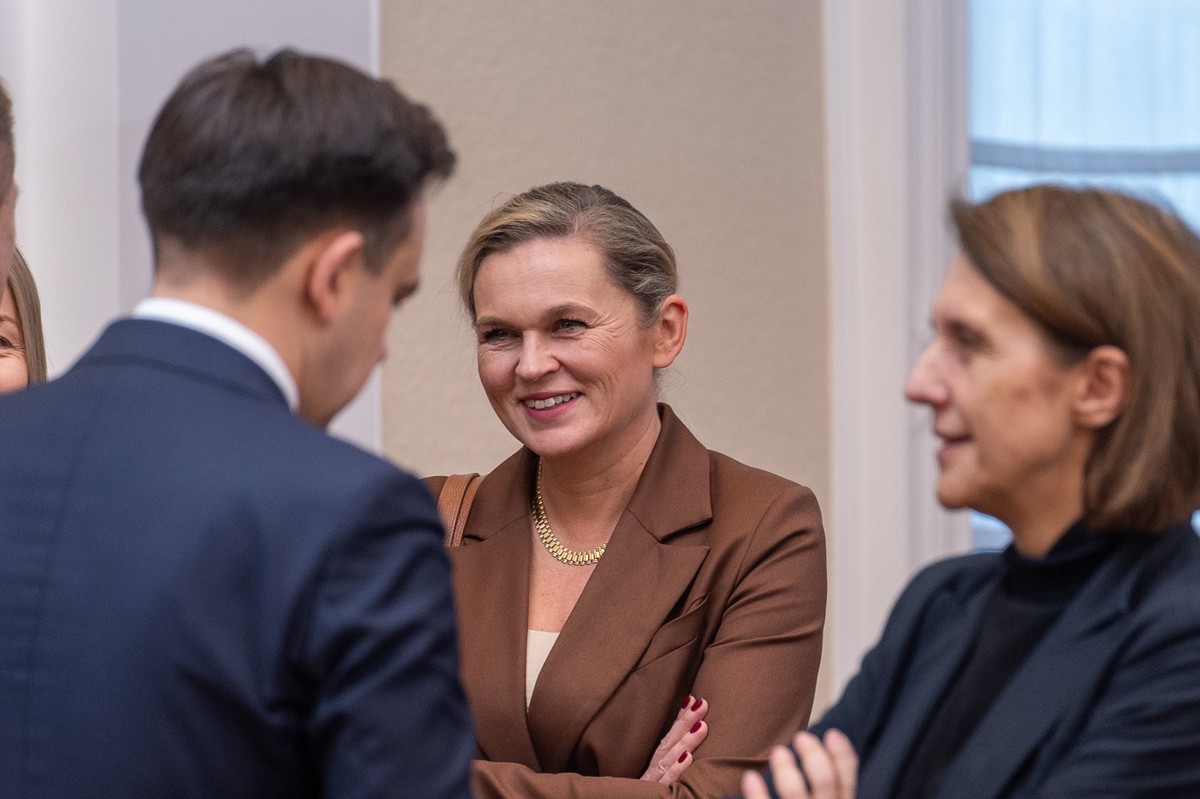
The head of the Ministry of National Education Barbara Nowacka during the inauguration of the 2025/2026 school year at the Hotel and Gastronomy School Complex in Gdynia assured that Certainly, this state of madness, which was until 2024, would not come back, that the children returned home and did their homework for hours, because the materials were not converted during the lesson. However, the very idea of homework still requires refinement, and the report of the Institute of Educational Research, which is in preparation, will indicate how the reform influenced the everyday life of students and teachers.
In the opinion, the Minister's discussion about homework must also take into account new technological challenges – In the world of artificial intelligence, teachers must have tools to verify who he did.
Education in the change process. Opposition in the absence of subsidies
The change that worried schools is a radical reduction of educational subsidy for schools receiving students in home education mode. Until now, schools have received financing at 0.8 – if the number of students in home education did not exceed 200 people.
The new regulations provide that the full subsidy will only be entitled to up to 96 students. Each subsequent student above this limit will be covered by much lower support, of only 0.2 subsidies, and in institutions with the participation of home education students below 30 percent. – 0.4 conversion rate. The Ministry of National Education explains these changes with the desire to balance financing with the actual costs of the school's functioning, claiming that the costs of educating home students are lower.
Monika Kamińska-Wcisło, spokeswoman for the home teaching center, writes on the center's website that home education is an integral part of the education system in Poland, functioning for nearly 34 years. He assesses these changes as “a form of discrimination and searching for finances among the weakest”, warning that “such restrictions will bring us to a place where domestic education is threatened”. Home education, like systemic, generates costs related to the preparation of state exams, educational materials, consultations with teachers, psychological and pedagogical support and administrative service. This decision, made without broad public consultations, is a surprise to the whole environment and faces us from the challenge of planning the future in uncertainty. Parents must take into account additional fees that they did not plan.