How does the Russian press present the Russian press the elections in the Republic of Moldova?


The parliamentarians in the Republic of Moldova, scheduled for September 28, are treated in the Russian press as a geopolitical event with major implications. The central theme is that the poll would not be a democratic confrontation between parties with different visions, but a battle between the pro-European government, accused of using “authoritarian means” to maintain its power, and the “pro-pruroic” opposition, portrayed as a defender of the interests of the citizens.
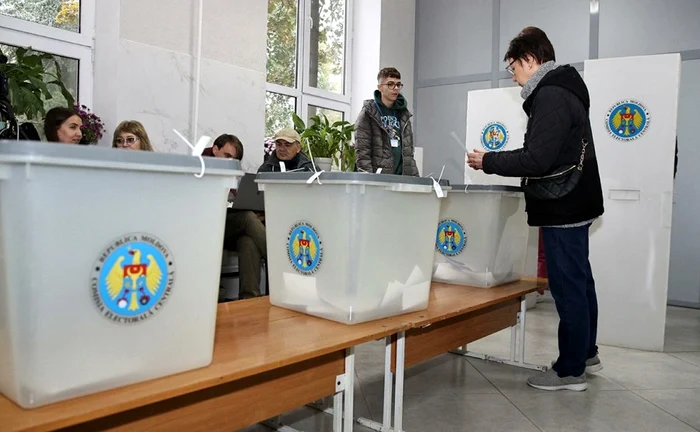
Moldovans have a choice between East and West/Photo: Archive
As with the previous scrutins, Russia remains one of the central themes. The Chisinau authorities accuse Moscow of attempts to influence the vote through illegal financing and misinformation campaigns. President Maia Sandu recently warned that “the Kremlin spends hundreds of millions of euros to buy votes and destabilize the country,” RBK, Novaia Gazeta Europe and Kommersant write.
For his part, the Russian Ministry of Foreign Affairs accuses the governance of “Russophobia” and trying to manipulate the electoral process with the support of European partners.
The political commentators quoted by the Russian press emphasize that the central stakes of the election is the geopolitical orientation of the Republic of Moldova. “It is again a confrontation between the east and the west,” says analyst Alexei Tulbure.
However, other observers believe that the role of Russia is sometimes amplified in the internal debate, being used as a political tool.
“Dictatorship under the mask of democracy”
The obedient press of the Kremlin plays the plaque of the Russian Foreign Ministry who insists that the current government in Chisinau would have mobilized “the entire arsenal of the totalitarian methods” to block the opposition. Among the accusations constantly resumed are:
-the reasons and searches politically motivated,
-the closure of the independent press, especially the Russophone,
-limiting the access of some parties in the electoral competition.
Thus, the conduct of the elections is described as being vitiated from the beginning, and the victory step would be the result of a “political engineer” supported by Brussels.
“Sandu dictatorship under the mask of democracy”: how the elections in Moldova are held, “he titles another publication affiliated with the Moscow Power, those at Komsomolskoe Pravda talk about” the mask of Moldovans in the European Diaspora “. “The Moldovan diaspora in Europe is a bribe, taken to the polling stations and trained: everything was prepared in advance, which is why observers are not allowed to participate in the elections. In Europe, after a few hours of voting sections, the ballot boxes are already full of ballots-they have prepared well.” “Magic photographs appear from the polling stations in different European countries. The sections only work a few hours, and the ballot boxes are already full of ballots. And yet, according to the CEC data, the voting presence in the diaspora is not as great as in the previous elections. Miracol, and nothing else.”
Appeal to protests and the narrative of “Euromaidan”
Another propaganda line highlighted by the Russian press is the thesis that the Moldovan authorities would prepare massive fraud. The External Intelligence Service of the Russian Federation has publicly transmitted that “desperate Moldovans” could go out to defend their vote. The Russian press amplifies this message, suggesting that the power in Chisinau could call “European troops” to suppress the protests. The parallels with the Ukrainian maidan of 2014 appear frequently, but with an inverted direction: while in Kiev the protests were presented by Russia as “coup”, in Chisinau they are described as a legitimate reaction to the “pro -European dictatorship”.
The image of the pro -Opposition
The opposition leaders of the Republic of Moldova are portrayed by the Russian press as victims of political repression. The case of the fugitive oligarch Ilan Șor, sanctioned by the US and the EU for involvement in Kremlin influence operations, is under silence or reinterpreted: in the interviews given to Russian television, it is presented as a “future premier” and promoter of an economic and political Moldova with Russia.
Also, the parties within the Patriots Block, led by Igor Dodon and Vladimir Voronin, are presented as “peace forces” that oppose the “militarization” of Moldova and “NATO interference”.
Information War and Religion
A topic with high visibility in the Russian press is the involvement of the Orthodox Church. While international investigations are talking about the financing of the Moscow clergy to spread anti-EU messages, the Russian press insists on the role of the Church as a “defender of traditional values” in front of “Western propaganda”.